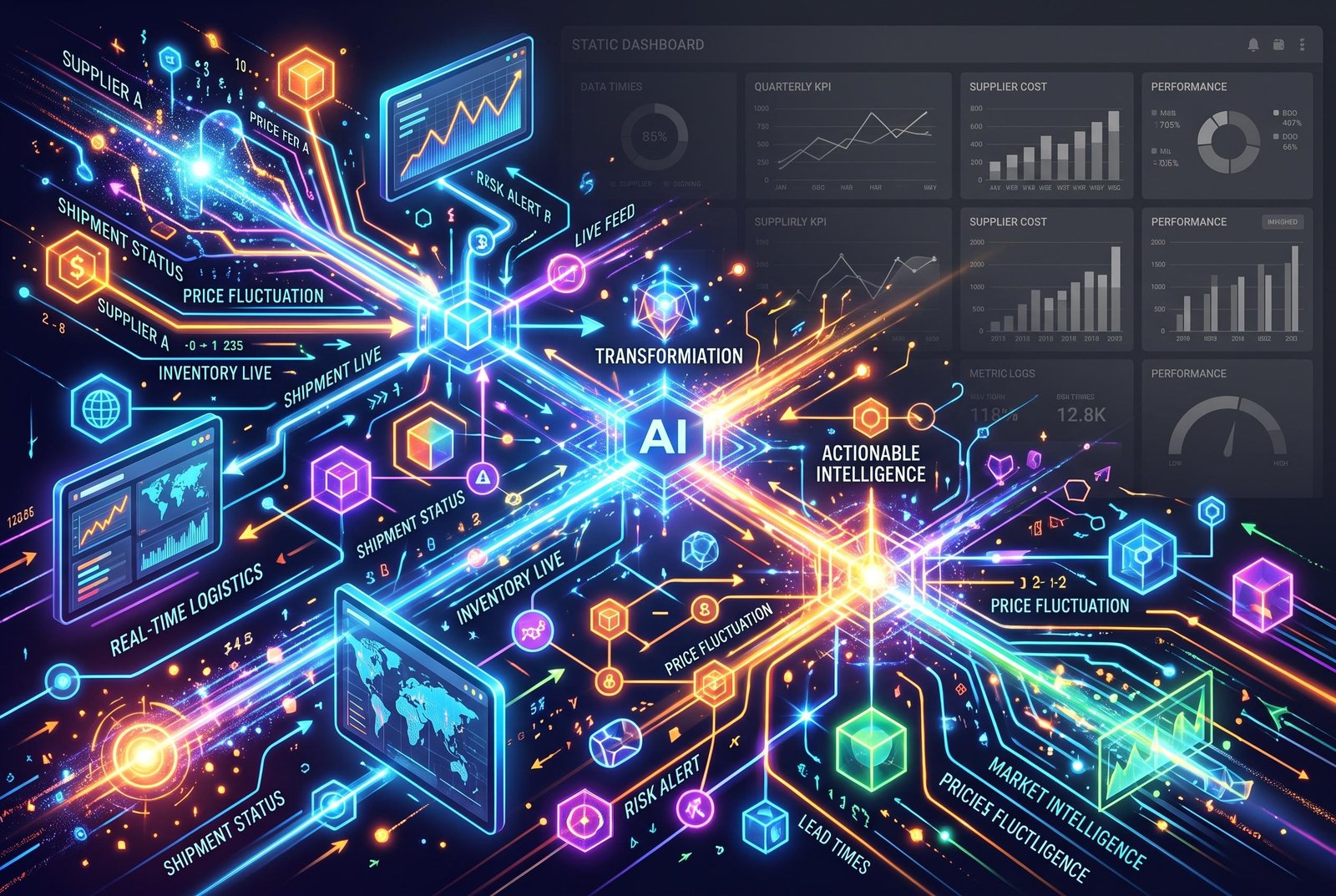
The emphasis is shifting from static Key Performance Indicator (KPI) dashboards to dynamic, real-time operational data. Traditional KPIs often fail to capture the complexities and nuances of supplier relationships, potentially overlooking significant value opportunities. Suppeco, an AI-driven Supplier Relationship Management (SRM) platform, addresses this gap by focusing on live operational data and introducing a digital relationship layer to organise unstructured data, thereby unlock...
Continue Reading This Article
Enjoy this article as well as all of our content, including reports, news, tips and more.
By registering or signing into your SRM Today account, you agree to SRM Today's Terms of Use and consent to the processing of your personal information as described in our Privacy Policy.
ing substantial insights and value creation.
A striking statistic underscores the importance of this approach: 80% of enterprise value flows through suppliers, yet 90% of supplier data remains ignored. This oversight is not merely a data management issue but a strategic concern, as it means that a vast majority of potential insights and value are left untapped. (suppeco.com)
Suppeco’s platform is designed to bridge this gap by capturing and analysing unstructured operational data in real time. Unlike traditional SRM tools that rely heavily on static reports and dashboards, Suppeco provides a dynamic environment where procurement teams can engage with suppliers continuously, fostering collaboration and transparency. This real-time interaction allows for the identification and resolution of issues as they arise, rather than after the fact, ensuring that value is not lost in the interim. (suppeco.com)
Central to Suppeco’s approach is the concept of the digital relationship layer. This framework structures and manages the myriad interactions between procurement teams, business functions, and suppliers, transforming unstructured data into actionable insights. By organising these interactions, the platform enables a more nuanced understanding of supplier performance, beyond what traditional KPIs can reveal. This structured approach ensures that the operational narrative, comprising daily communications, decisions, and actions, is captured and analysed, providing a comprehensive view of the supplier relationship. (suppeco.com)
The digital relationship layer is built upon four key pillars:
- Relationship Lens: Focuses on qualitative aspects such as trust, communication, and strategic alignment.
- Commercial Lens: Addresses financial metrics, including cost management and invoicing efficiency.
- Projects Lens: Emphasises quality standards, process audits, and product delivery.
- Service Lens: Concentrates on performance metrics like service level agreements (SLAs) and support efficiency.
Each pillar provides a structured approach to assess and enhance specific facets of the supplier relationship, ensuring a holistic view that drives continuous improvement. (suppeco.com)
By integrating these pillars, Suppeco enables procurement professionals to move beyond reactive management. The platform’s real-time collaboration tools facilitate proactive engagement, allowing teams to address issues promptly and collaboratively. This proactive approach not only mitigates risks but also uncovers opportunities for innovation and value creation that might otherwise remain hidden. (suppeco.com)
The impact of this approach is evident in the experiences of organisations like BAE Systems. By adopting Suppeco’s platform, BAE Systems has enhanced its supplier relationship management, leading to improved performance and increased value through collaborative and open working methods. (suppeco.com)
The traditional reliance on static KPIs and dashboards in supplier relationship management is increasingly inadequate in capturing the full spectrum of supplier performance and potential value. Suppeco’s focus on live operational data and the digital relationship layer offers a transformative approach, enabling procurement professionals to gain deeper insights, foster stronger supplier collaborations, and drive sustained value creation.