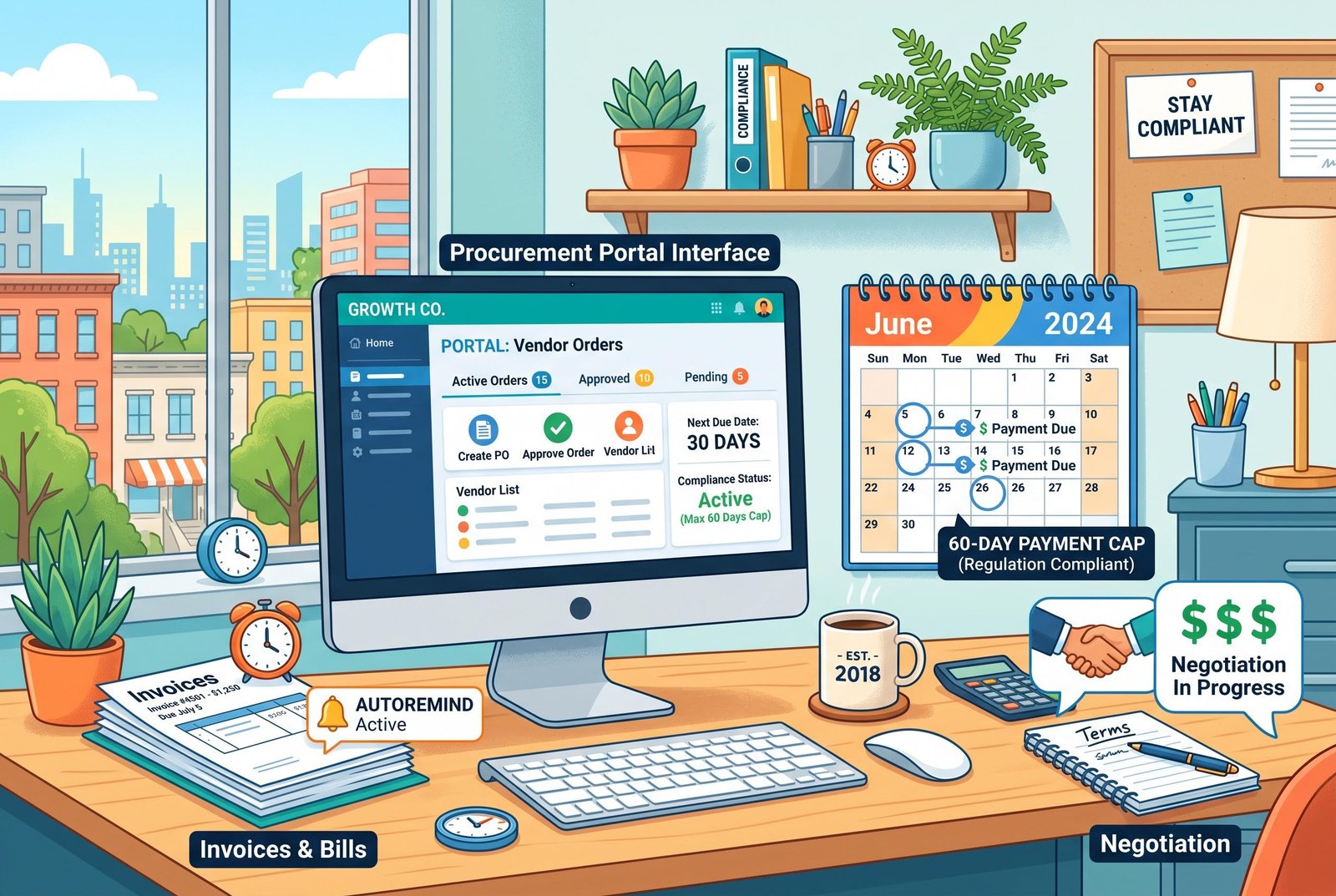
For small firms, being paid on time is rarely the result of luck. It is usually the outcome of careful preparation long before an invoice is raised, from the first supplier registration to the wording of the contract and the systems used to chase payment.
Emma Jones CBE, the Small Business Commissioner, argues that businesses can improve their chances by tackling the administrative friction that often slows payment down. One early step is to prepare supplier information in adva...
Continue Reading This Article
Enjoy this article as well as all of our content, including reports, news, tips and more.
By registering or signing into your SRM Today account, you agree to SRM Today's Terms of Use and consent to the processing of your personal information as described in our Privacy Policy.
nce, rather than waiting until a deal has been won. Uploading company details and relevant policies on to procurement systems can shorten onboarding and help secure a purchase order number more quickly. For suppliers to the public sector, that means creating a profile on the Central Digital Platform. For those selling to larger companies, it means understanding which procurement portals they use and pre-registering where possible. Among the best-known are Coupa, Jaggaer, SAP Ariba and Oracle.
That matters because payment delays often begin before the work itself. If a supplier is still waiting for approval to join a customer’s system, the invoice cycle is already slipping.
The next safeguard is to scrutinise the contract before agreeing to it. Jones says firms should check whether the payment terms align with their own cashflow needs, rather than assuming they are negotiable after the fact. Where buyers are offering more than 60-day terms, she suggests pointing to the government’s plan to cap payment terms at a maximum of 60 days and using that as the basis for discussion. Small businesses, she says, are already reporting that this approach is helping them secure better terms.
That policy backdrop is becoming more significant. According to the government’s Commercial Payments Bill overview, the proposed legislation is intended to address late payment, which officials say costs the UK economy £11 billion a year and contributes to 38 business closures every day. The bill would set a maximum payment term of 60 days, require interest on late payments at 8% above the Bank of England base rate, and give suppliers the right to a fixed sum where disputes are raised too late or without adequate information. It would also prevent the deduction or withholding of retention payments under construction contracts.
The legislation follows a consultation on poor payment practices that attracted 867 responses from businesses and other stakeholders. The government published its response on 24 March 2026 and said the Commercial Payments Bill would form a central part of its attempt to improve payment behaviour and support a more productive economy.
Jones’s advice also focuses on the practicalities that can derail payment after work has been completed. She recommends checking, before invoicing, exactly what information must appear on the invoice and how it should be submitted. A missing reference number, the wrong contact point or an incorrectly formatted document can delay payment by days or weeks, and sometimes force a supplier to start the process again. In the worst cases, the issue is only discovered when the payment deadline has already passed.
Technology can also help. Businesses using cloud accounting software are being urged to activate automated invoice-chasing tools, which can take some of the burden of credit control off the owner’s shoulders. These systems can send reminders and track overdue bills without requiring constant manual follow-up, which is especially useful for smaller teams with limited administrative capacity.
The broader procurement market is also moving towards greater automation and integration. SAP describes its buying and invoicing tools as designed to improve visibility, compliance and supplier collaboration across procure-to-pay processes, while other platform guides stress that user adoption and supplier enablement are often more important than the sophistication of the software itself. In other words, the most advanced system is only useful if both buyer and supplier actually use it properly.
Transparency is another lever. The government has already required large firms to publish payment practices, including average payment times and the share of invoices settled within agreed terms or within 30 days. The aim is to make late payment harder to hide and to encourage better behaviour through public reporting.
Taken together, the message for small businesses is straightforward: prompt payment is easier to secure when the groundwork is done early. Those that register with the right systems, negotiate workable terms, get invoicing details right and use technology to chase bills are likely to spend less time waiting and more time trading.
Source: Noah Wire Services