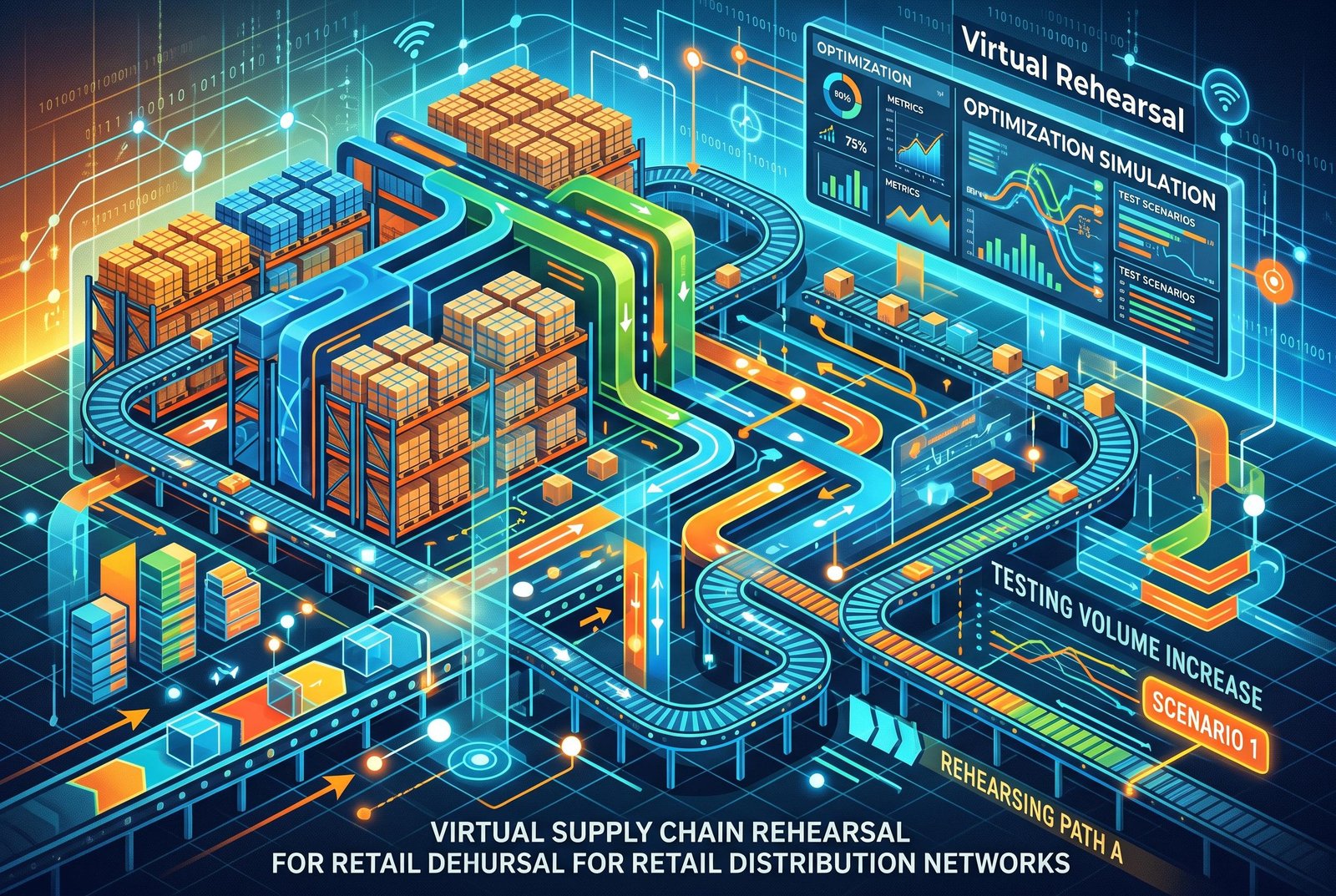
Primark has turned to Kallikor in a move that underlines how large retailers are increasingly using simulation and digital twin technology to take some of the uncertainty out of supply chain planning.
According to the company, the partnership will see Primark adopt a simulation-led approach to major operational decisions, beginning with digital replicas of its distribution centres. Those models will allow teams to trial different layouts and working methods in a virtual setting...
Continue Reading This Article
Enjoy this article as well as all of our content, including reports, news, tips and more.
By registering or signing into your SRM Today account, you agree to SRM Today's Terms of Use and consent to the processing of your personal information as described in our Privacy Policy.
before any changes are made in the real world, helping the retailer judge in advance how a proposed shift might affect service levels, costs and capacity.
The aim is not simply to model what a warehouse looks like, but to reproduce how it behaves. Primark said the simulations will reflect factors such as pick routes, labour limits, throughput variation and service performance, giving decision-makers a more detailed view of how a change could play out across the wider network and into stores. By testing multiple scenarios side by side, the retailer expects to be able to compare trade-offs more clearly and reduce the risk of committing capital to a strategy that underperforms once implemented.
Adam Hoccom, Primark’s supply chain director, said the retailer’s growth across markets made it essential that its network remained aligned with store demand. He said the work with Kallikor would enable Primark to examine different operating set-ups, from internal site changes to broader network considerations, before committing to spend. He added that the approach should give the business greater confidence in its choices as it continues to develop its supply chain.
Kallikor describes itself as a simulation-first platform built to help organisations design and rehearse supply chain decisions before putting them into practice. Its software is intended to model suppliers, warehouses, networks and stores within a single environment, so businesses can explore structural changes without relying on static planning tools or assumptions. The company says the system is designed to be scalable, starting with a single site or decision and extending across regions as requirements grow.
Retail Technology Innovation Hub reported that the partnership is intended to support both operational and capital decisions, with Primark using the models to test alternatives before authorising investment. The publication said the collaboration is designed to help the retailer maintain customer service while identifying more efficient operating methods and avoiding unintended downstream consequences across its store estate.
The move also reflects a broader shift in supply chain management towards what software vendors often call “decision environments” or digital twins: living models built on operational data that can be reused as conditions change, rather than one-off analyses produced for a single problem. In Kallikor’s framing, that matters because supply chains are increasingly exposed to disruption and interdependence, making linear planning less reliable than scenario-based testing.
For Primark, the appeal is likely to lie in being able to challenge plans earlier, before they become expensive to reverse. For a retailer with a large store network and a fast-moving operational footprint, the value of that approach may be less in predicting a single correct answer than in narrowing the field of bad ones.
Source: Noah Wire Services