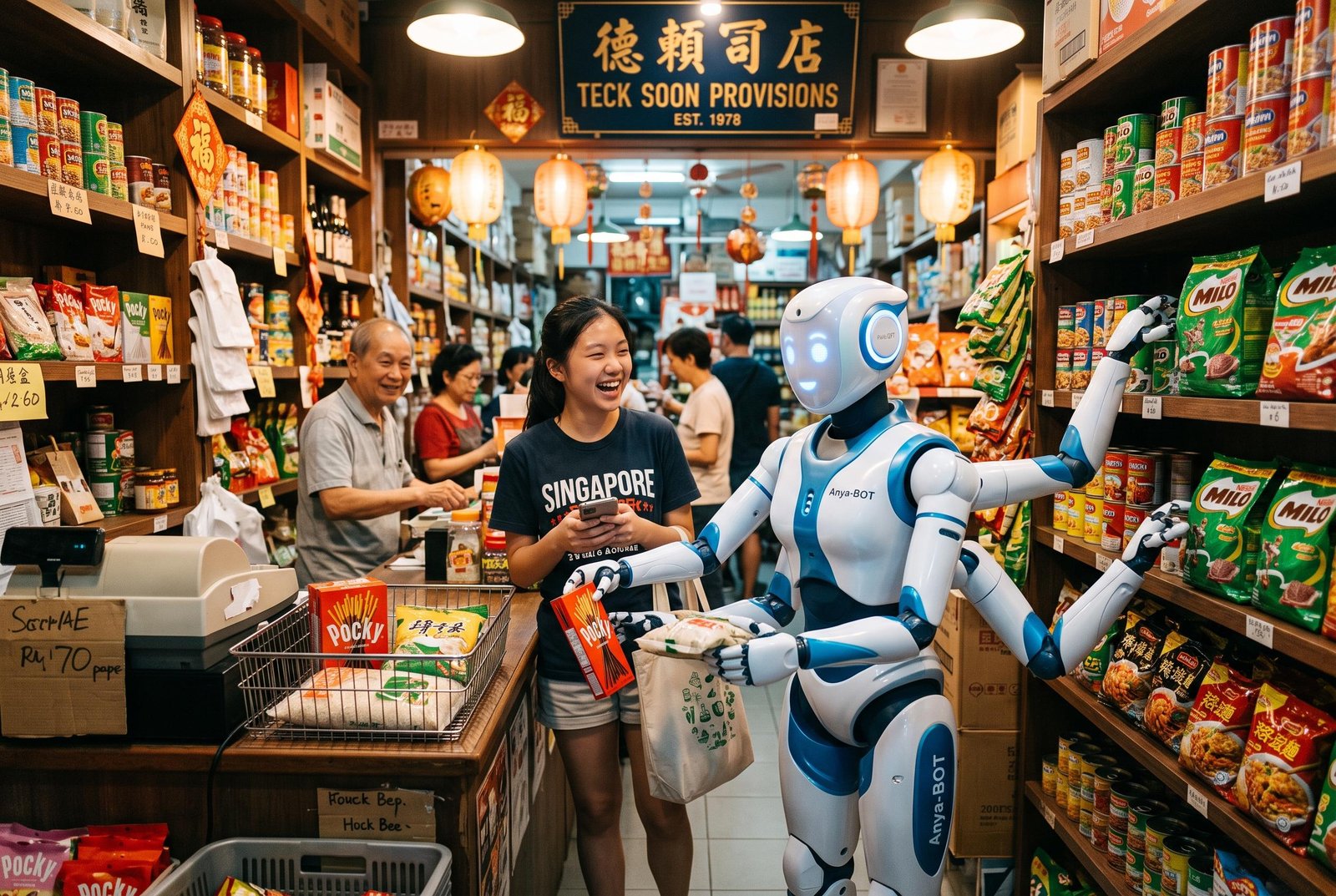
What began as a family emergency has become a striking example of how artificial intelligence is being folded into everyday retail.
According to CNA Insider, as reported by Moneycontrol, Lin Enqi, a 21-year-old student in Singapore, stepped in to help run her family’s neighbourhood grocery shop when she was 18, just as the business was weighed down by debts of more than S$30,000 and struggling with falling sales. Rather than treating technology as an optional extra, she began...
Continue Reading This Article
Enjoy this article as well as all of our content, including reports, news, tips and more.
By registering or signing into your SRM Today account, you agree to SRM Today's Terms of Use and consent to the processing of your personal information as described in our Privacy Policy.
using ChatGPT as a practical assistant for the shop’s day-to-day problems.
One of the earliest tests was inventory. After the business moved to a new point-of-sale system, more than 8,000 products had to be sorted and labelled correctly. Enqi said the task would have taken nearly a week by hand, but with ChatGPT’s help she cut the work to around two days. That kind of time saving is one reason small retailers are starting to see generative AI less as a novelty than as a labour-saving tool.
The chatbot also helped her think more strategically about sales. Rather than pushing discounts that might damage margins, she used AI-generated suggestions to test promotions such as vouchers tied to minimum spending. The aim was simple: lift average basket sizes without undermining profitability. Enqi credited those ideas with helping improve the store’s finances.
Her use of AI did not stop there. With support from Nanyang Polytechnic’s Centre for Applied AI, she built a custom GPT model trained on the shop’s operations, past promotions and customer behaviour. The tailored assistant could suggest campaigns around holidays and seasonal events, trimming the time needed to prepare marketing plans and making it easier to act on customer trends.
Enqi also uses ChatGPT as a research aid, drawing on it to summarise retail trends, sift through information and support business decisions. In a small shop where time is scarce, that has given her a faster way to turn scattered information into something usable.
Her experience comes as AI is becoming more closely tied to grocery shopping in both business and consumer settings. Recent coverage by Tom’s Guide and Archyde described households using ChatGPT to plan meals from ingredients already in the fridge, cutting food bills and waste. In a separate sign of where the technology is heading, Digit and TechCrunch have reported on integrations linking ChatGPT with Instacart, allowing users to move from meal ideas to grocery purchases in the same chat. The broader shift suggests AI is moving beyond recommendation into execution, a trend sometimes described as agentic commerce.
There are also more experimental signs of what retail could look like if AI takes on a larger operational role. Coverage from Slashdot described an AI-run shop in San Francisco, while Supermarket News recently reported on growing interest in quantum computing as another long-term technology for grocery supply chains and efficiency. Taken together, the developments point to a sector testing how far automation and data-driven tools can go.
For Enqi, though, the lesson is more immediate. AI did not erase the pressures facing the business, but it did give her a faster way to organise, plan and decide. In a shop fighting for survival, that has proved valuable in itself.
Source: Noah Wire Services