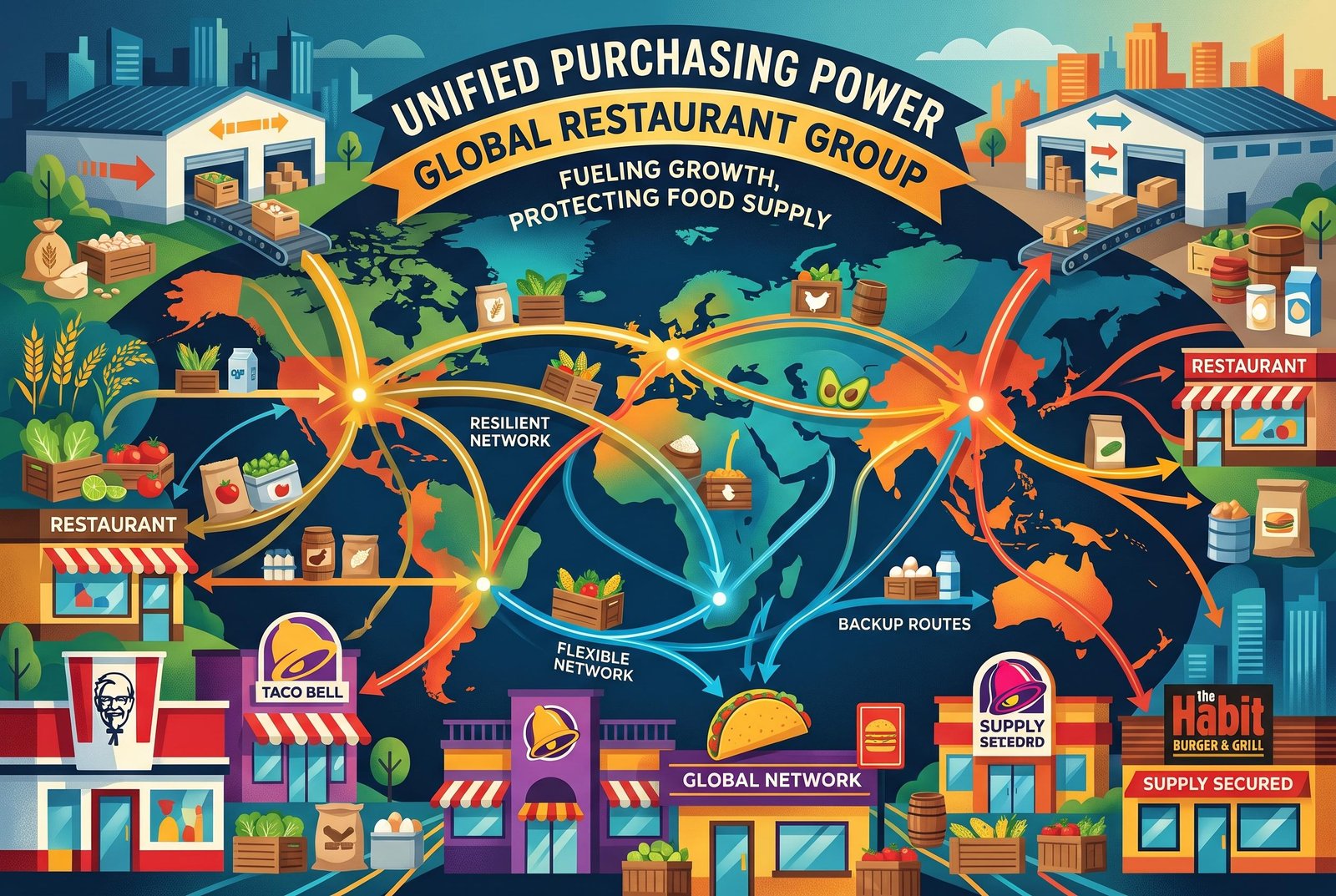
Yum! Brands is reshaping procurement around the scale of its restaurant empire, using a more unified supply chain model to support KFC, Taco Bell and Habit Burger & Grill across a network of more than 44,000 restaurants in 151 countries and territories. The company says it opens a new restaurant roughly every three hours, a pace that helps explain why procurement has become not just an operational function but a strategic lever for growth, resilience and franchisee economics.
...
Continue Reading This Article
Enjoy this article as well as all of our content, including reports, news, tips and more.
By registering or signing into your SRM Today account, you agree to SRM Today's Terms of Use and consent to the processing of your personal information as described in our Privacy Policy.
According to Logistics Insider and Supply Chain Dive, the shift is built on a simple idea: Yum! wants to be treated by suppliers as one customer rather than several separate brands. Instead of negotiating in silos, the company is coordinating purchasing across its portfolio, pooling demand for shared ingredients such as poultry while still allowing for brand-specific menu requirements and regional tastes.
That balance is central to the model. KFC, for example, may need suppliers able to meet exacting specifications for boneless chicken and tenders, while other markets require products tailored to local preferences or regulatory conditions. The result is a procurement structure that seeks to capture the bargaining power of a global buyer without forcing every brand into a one-size-fits-all sourcing plan.
Regional sourcing also plays a defensive role. Supply Chain Dive reports that Yum! relies on local and strategic suppliers to create backup options when weather disrupts ports or geopolitical developments interfere with transport routes. Rather than scrambling for substitutes after a crisis has already hit, the company is building alternative supply lines in advance, giving it a better chance of keeping restaurants stocked when primary channels are strained.
That emphasis on preparation extends to product development. Yum! now involves suppliers earlier in the process for seasonal launches and limited-time offers, sharing plans before purchase orders are issued. The aim is to give food and packaging partners enough warning to identify possible capacity bottlenecks, spot availability issues and propose alternatives before a new item reaches market. In practice, that means supply chain teams are working alongside innovation, food safety and marketing functions much earlier than in a more traditional procurement model.
Chief supply chain officer Eric Craft has framed the approach as a way to strengthen collaboration rather than simply squeeze costs. Supply Chain Dive reported that the company wants its supplier base to see a clearer, more consistent customer, with the supply chain acting as a source of efficiency, price discipline and innovation at the same time. The same logic also supports franchisees, for whom better procurement terms and more reliable supply can improve restaurant economics and create room for reinvestment.
The company’s broader corporate changes have not derailed the strategy. After Yum! sold Pizza Hut, it kept the underlying supply chain model largely intact, making only limited adjustments to procurement categories. Yum! later said in its announcement of the Pizza Hut sale that the transaction would allow it to sharpen its focus on the remaining portfolio, while the sourcing architecture that underpins the business would continue to serve the group’s wider international network.
Taken together, the changes show how a fast-growing restaurant group is trying to use procurement as more than a back-office cost centre. Yum! is tying together scale, flexibility and supplier collaboration in a single operating model, one designed to support expansion while still leaving room for regional variation, menu innovation and resilience when the global logistics picture turns unpredictable.
Source: Noah Wire Services