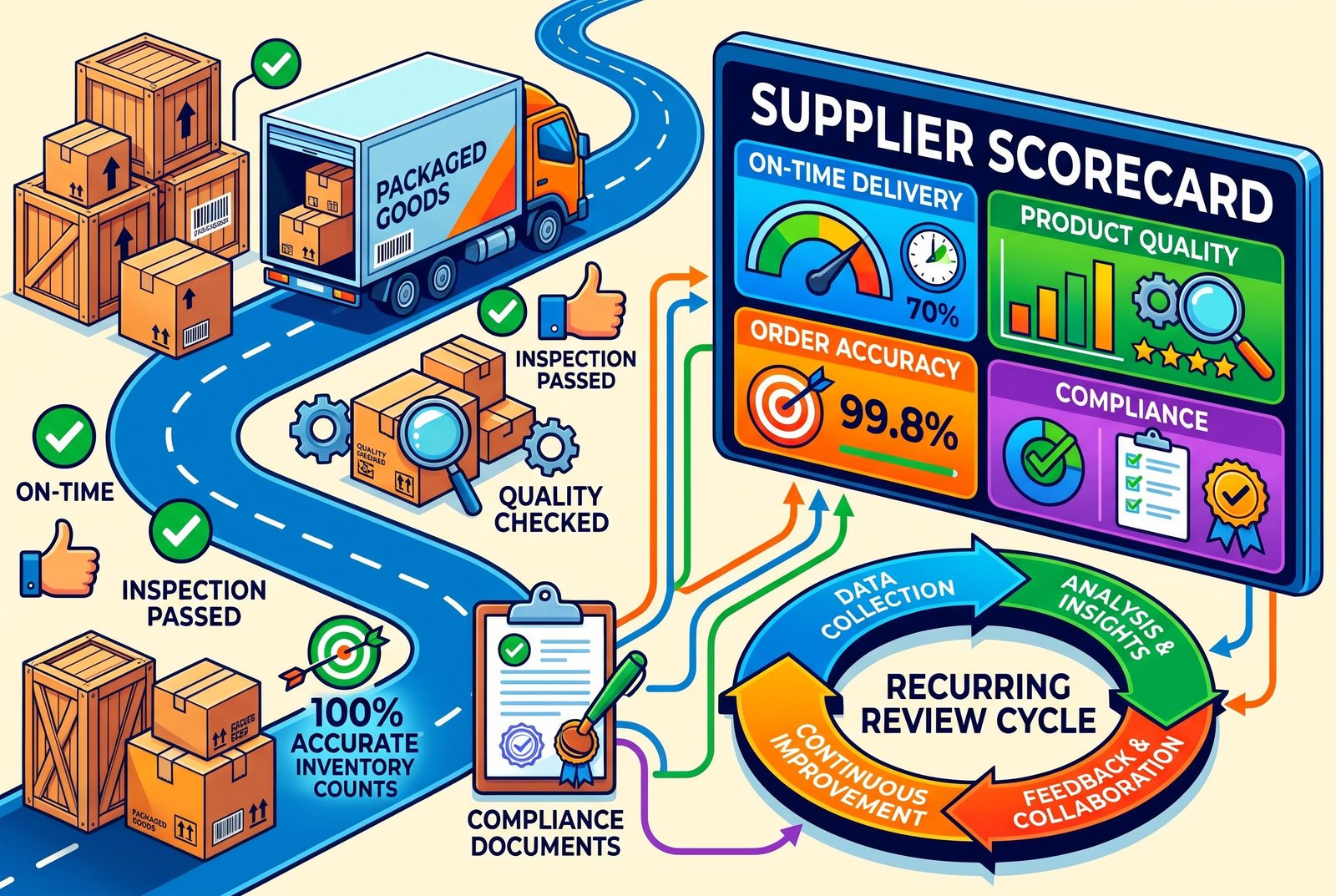
Supplier performance metrics are more than an administrative exercise. Used properly, they provide a structured way to judge whether vendors are meeting business expectations, where they are falling short and what needs to change. The most useful measures tend to centre on delivery, quality and order fulfilment, but the strongest scorecards also take in cost, responsiveness, compliance and risk.
Among the most widely used indicators is on-time delivery rate, which shows whether...
Continue Reading This Article
Enjoy this article as well as all of our content, including reports, news, tips and more.
By registering or signing into your SRM Today account, you agree to SRM Today's Terms of Use and consent to the processing of your personal information as described in our Privacy Policy.
suppliers are meeting agreed shipment dates. That measure matters because delays can ripple through production schedules, inventory planning and customer service. The United States Postal Service says supplier performance measures should help organisations compare suppliers objectively, inform future sourcing decisions and align procurement activity with business standards. It also stresses that metrics should be specific, measurable, actionable, relevant and timely, rather than merely easy to collect.
Quality is usually tracked through defect rate, a figure that reveals how often delivered goods fail to meet specification. A rising defect rate can point to process problems, weak quality control or inconsistent raw materials, all of which create hidden costs through rework, returns and replacements. APQC recommends that supplier scorecards balance delivery and service with quality and compliance, because a supplier that ships quickly but repeatedly sends faulty goods is still underperforming.
Order accuracy is another core measure, and it is often more revealing than a simple delivery statistic. The Association for Supply Chain Management’s SCOR framework distinguishes between delivery performance, item accuracy and quantity accuracy, underlining the importance of measuring whether suppliers sent the correct products in the correct quantities, not just whether something arrived on time. APQC similarly describes perfect order performance as combining several fulfilment elements, including accurate documentation, complete orders and damage-free delivery. In other words, the real test is whether the order was fulfilled correctly from end to end.
That broader view is important because supplier performance is rarely captured by a single number. Cost savings analysis can show whether a supplier is genuinely efficient or simply cheap on the surface while generating avoidable downstream expenses. Compliance metrics, meanwhile, help ensure that suppliers are meeting contractual, regulatory and quality requirements. The Institute for Supply Management has argued for scorecards that also include transparency, continuity, pricing competitiveness and quality resolution, reflecting the fact that strong supplier management is about resilience as much as it is about delivery.
The key to making these measures useful is consistency. Small Business Trends recommends establishing a baseline for each metric, collecting data regularly and reviewing trends over time so that problems can be identified early. That approach is echoed by the USPS guidance, which notes that choosing what to measure is often the central challenge. A focused set of indicators is usually more effective than a long list of vague measures that no one acts upon.
Regular review is just as important as the metric itself. APQC advises organisations to keep dashboards concise and to use review meetings to examine targets, root causes, corrective actions and deadlines. That creates accountability without turning the process into a box-ticking exercise. It also helps procurement teams identify whether a supplier’s problems stem from capacity constraints, poor internal controls, weak communication or something more structural.
Communication with suppliers can make a substantial difference to performance. Clear expectations, regular scorecards and periodic review meetings help turn performance data into a shared improvement agenda. The USPS says involving suppliers in reviewing measures can improve acceptance, while APQC recommends that strategic suppliers be brought into discussions about which indicators matter most. That collaborative approach is especially useful when a supplier is important to continuity or carries significant operational risk.
When suppliers are underperforming, the right response is usually a combination of diagnosis and discipline. Open discussion can clarify whether delays, defects or inaccuracies are the result of process failures, resource shortages or misaligned expectations. From there, businesses can set improvement targets, provide support such as training or system upgrades and agree a timetable for progress. If performance does not improve, the record of measurement provides a firm basis for escalation or replacement.
The most effective supplier scorecards therefore do more than track numbers. They create a framework for better decisions, stronger relationships and lower operational risk. Used well, metrics such as on-time delivery, defect rate and order accuracy do not simply measure performance; they help improve it.
Source: Noah Wire Services