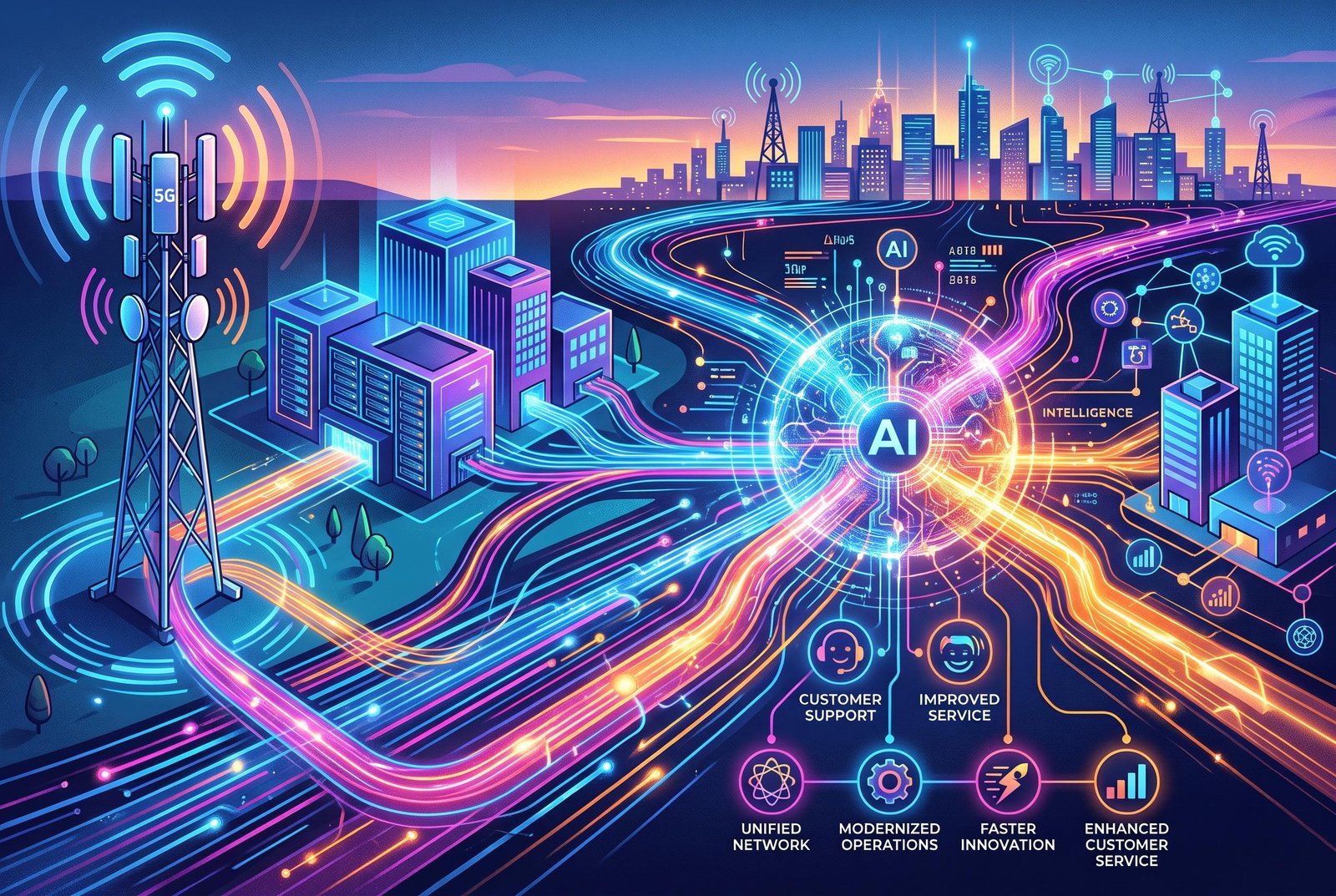
AT&T and Amdocs have deepened a long-running partnership with an eight-year agreement that is intended to use artificial intelligence to modernise the American telecoms group’s business and customer operations.
According to the companies, the arrangement brings together Amdocs’ aOS platform, which the vendor describes as an agentic operating system for telecommunications, and AT&T’s AI-enabled delivery framework. The two firms said they will operate as a single de...
Continue Reading This Article
Enjoy this article as well as all of our content, including reports, news, tips and more.
By registering or signing into your SRM Today account, you agree to SRM Today's Terms of Use and consent to the processing of your personal information as described in our Privacy Policy.
livery team, combining AT&T’s technology priorities with Amdocs’ telecoms and engineering expertise in an effort to simplify complex workflows, speed up delivery and reduce the cost of maintaining and modernising critical systems.
The deal extends a relationship that has already spanned many years, but the latest agreement is more ambitious in its scope. Rather than treating AI as a bolt-on tool, the companies are presenting it as a core part of how they intend to design, build and run operations. They say the aim is not only to improve efficiency behind the scenes, but also to bring new products and services to market faster and improve the experience for customers.
Jeremy Legg, AT&T’s chief technology officer, said the company was changing the way it builds and operates technology so it can move faster and deliver more to customers. He added that AI creates the most value when it is grounded in the business, technology and people it supports. Shimie Hortig, Amdocs’ chief executive, said the real test of AI in telecoms is whether it can transform mission-critical systems and reshape how communications companies operate, and said the partnership would combine the two companies’ capabilities to create a new way of working.
Amdocs has been positioning aOS as a platform designed specifically for telecoms providers, with capabilities spanning agentic AI, generative AI, workflow automation and telecom-specific orchestration. The company says the system is intended to sit on top of existing business and operations support systems rather than requiring a wholesale replacement, which could make it more practical for large operators that need to modernise while keeping networks and customer systems running. AT&T’s responsible AI materials also show that the group has been building governance and internal oversight around AI use, underscoring how seriously it is treating the technology across its operations.
The commercial backdrop is significant. Amdocs reported revenue of about $4.53 billion for fiscal 2025 in its latest annual filing with the US Securities and Exchange Commission, and it continues to lean heavily on managed services and long-term transformation work with major communications providers. The company’s shareholder letter said managed services accounted for roughly two-thirds of fiscal 2025 revenue, while also highlighting its role in digital transformation and customer experience work for telecoms clients around the world.
For AT&T, the agreement fits a broader effort to streamline operations while pushing forward with network and customer-service transformation. The company has repeatedly framed AI as a tool for improving both productivity and service quality, while maintaining human oversight and security controls. For Amdocs, the partnership offers another high-profile example of how its software and services are being used in a highly regulated, mission-critical environment where reliability and scale matter as much as innovation.
The companies are betting that closer integration between AI systems, delivery processes and telecoms domain expertise will help them cut through operational complexity, move faster on modernisation and, ultimately, create better outcomes for customers. In an industry where even small gains in efficiency can translate into large financial and service improvements, the agreement suggests both companies see AI not as an experiment, but as an operating model.
Source: Noah Wire Services