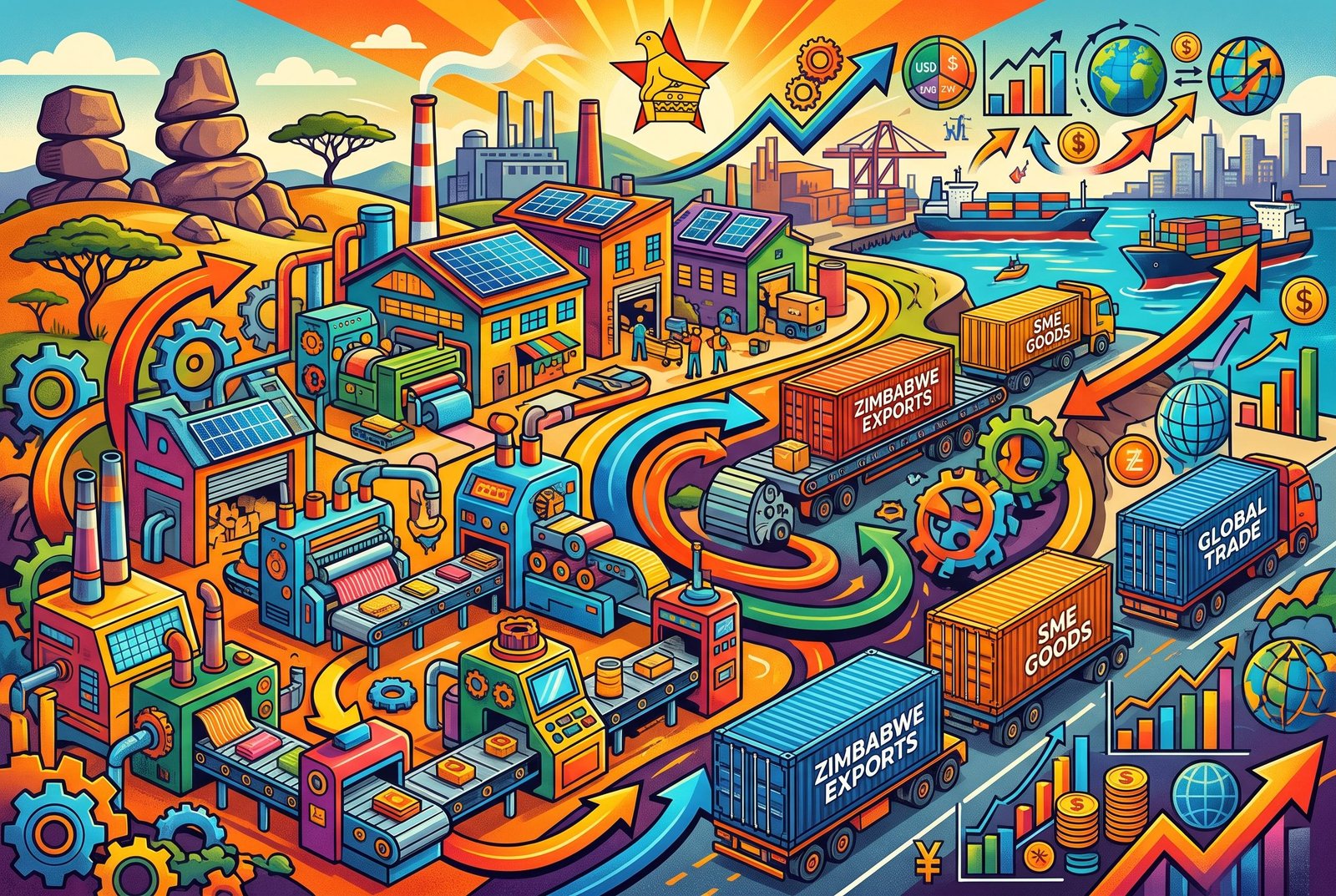
Zimbabwean entrepreneurs are seeking deeper partnerships with Chinese firms in a bid to give small and medium-sized enterprises access to modern machinery, technical know-how and export channels, as the country steps up efforts to shift from raw commodity sales towards more value-added production.
The initiative fits into Zimbabwe’s broader industrial agenda under Vision 2030 and the National Development Strategy 2, the government’s medium-term blueprint for economic transf...
Continue Reading This Article
Enjoy this article as well as all of our content, including reports, news, tips and more.
By registering or signing into your SRM Today account, you agree to SRM Today's Terms of Use and consent to the processing of your personal information as described in our Privacy Policy.
ormation. According to Zimbabwe’s United Nations office, NDS2 runs from 2026 to 2030 and is intended to accelerate the country’s push towards an upper-middle-income economy by supporting growth in areas including manufacturing, infrastructure, agricultural productivity, science and technology, devolution and job creation.
At the Changsha International Business Marching Event in China, entrepreneur Sithabile Gandi-Ndlovu argued that Zimbabwean SMEs could become a much stronger force in local industry if they were linked to Chinese capital and expertise. She said the country was already undergoing a structural economic shift and that small businesses were central to the next phase of industrial development.
Gandi-Ndlovu said opportunities for cooperation were especially strong in processing and value addition, where Chinese companies could help local firms expand production rather than simply export primary goods. She described the relationship as one that could benefit both sides, while also helping Zimbabwe develop a stronger industrial base.
She identified four areas where cooperation could have the greatest impact: the supply or leasing of machinery and other capital equipment, hands-on technical training, improvements to factory standards and quality control, and better access to regional and international markets for finished products. In her view, those elements would help Zimbabwean manufacturers become more competitive across the Southern African Development Community and under the African Continental Free Trade Area.
The proposal comes as Zimbabwe continues to present industrialisation as a central pillar of its development strategy. Government-linked messaging on NDS2 has repeatedly emphasised the importance of local production, while agriculture remains a key source of raw materials for processing and manufacturing. Officials have also stressed mechanisation, irrigation and local beneficiation as tools for driving economic growth.
The broader policy direction is consistent with the government’s long-running call for greater local ownership of value chains. For many Zimbabwean entrepreneurs, the attraction of Chinese partnerships lies not only in access to machinery, but also in the possibility of scaling up production, improving standards and opening the door to wider markets. In that sense, the discussion is not just about investment, but about whether Zimbabwe’s SMEs can be turned into the backbone of a more industrial economy.
Source: Noah Wire Services