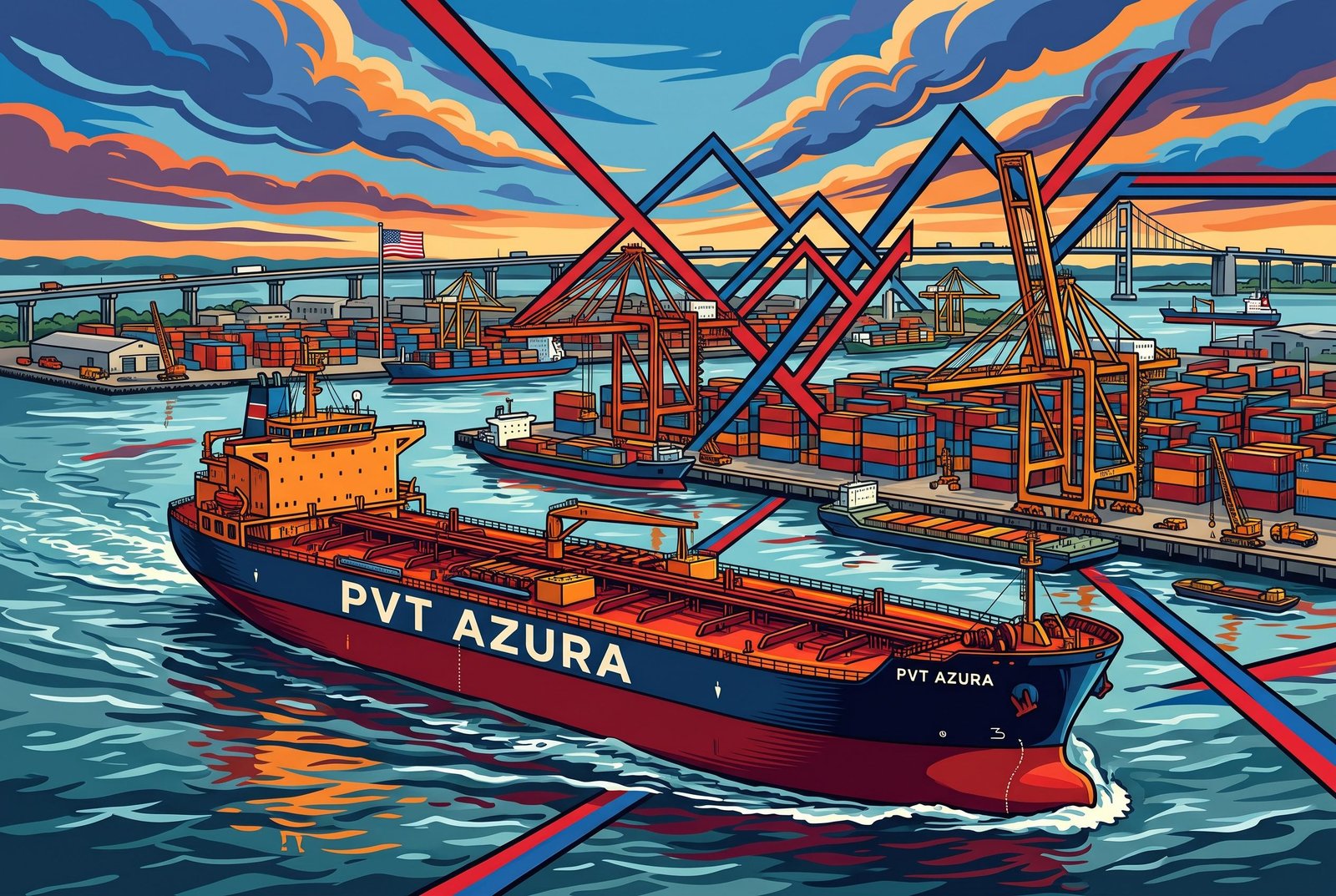
On 15 October, the Vietnamese-flagged tanker PVT Azura left St Petersburg carrying about 109,000 barrels of Russian diesel, according to shipping data cited by Shadow Fleet Monitor. The vessel is expected to reach Norfolk, Virginia, on 2 November, where it is said to be bound for a facility linked to US military activity, although that detail has not been independently confirmed. If the shipment arrives as planned, it would be the first Russian diesel to land at an American port since...
Continue Reading This Article
Enjoy this article as well as all of our content, including reports, news, tips and more.
By registering or signing into your SRM Today account, you agree to SRM Today's Terms of Use and consent to the processing of your personal information as described in our Privacy Policy.
2023.
That cargo matters less for its scale than for what it signifies. The shipment comes after the US Treasury issued General License 135 on 9 October, authorising dealings in Russian-origin diesel until 7 April 2027. In practice, what began as a policy shift in Washington appears to have become a commercial arrangement with Moscow, one that would place the United States among the customers of the very energy system it has spent years trying to constrain.
The Kremlin has already presented the broader picture in triumphant terms. On 15 October, Russian officials said diesel exports had resumed after an agreement with US President Donald Trump, with Kremlin spokesman Dmitry Peskov claiming the fuel had begun flowing back on to global markets and could help stabilise oil prices, even if only partially. LSEG data showed loadings from the Baltic port of Primorsk restarting, including a tanker carrying roughly 40,000 metric tonnes of ultra-low-sulphur diesel towards Morocco.
The Norfolk shipment is only one part of a larger pattern. The author of the lead piece argues that the United States is now buying, or depending upon, several things from rivals or strategic competitors at once: Russian diesel, Chinese-made magnets used in drones, foreign financing through Treasury debt markets, and the still-unresolved diplomatic space around a proposed summit involving Donald Trump, Vladimir Putin and Xi Jinping. The point is not simply that adversaries have leverage, but that the buyer increasingly does too little to define the terms.
That argument extends beyond fuel. China exported 6,165 tonnes of magnets in September, its highest monthly total this year, according to the article, at a time when those components remain crucial to drone motors and other defence systems. Beijing’s licensing pause is due to expire on 10 November, while the Pentagon’s own ban on some of those imports does not take effect until 1 January. The result, the piece suggests, is a dangerous gap in which dependence persists even as restrictions loom.
The financial backdrop is no less revealing. The lead article says the US Treasury sold 20-year bonds on 21 October at a record yield of 5.469 per cent, with demand from foreign buyers below average, before the 10-year yield slipped back under 5 per cent the following day as investors moved out of private artificial-intelligence debt and into government paper. In that telling, the market is not simply financing the state; it is also determining how much room Washington has to manoeuvre abroad.
For the author, the central lesson is that sanctions and restrictions only work when the buyer is willing to wield them as instruments of policy rather than as habits of dependency. That is why the article argues the forthcoming plan for the Autonomous Warfare Command, due on 30 October, should settle not only how the new command buys drones and related equipment, but who decides, who allocates, and who has authority across services and theatres. It is also why the writer says supply lines must be secured before bans take effect, rather than after shortages appear.
Seen in that light, the PVT Azura is more than a tanker on a schedule. It is a test of whether Washington can use its own demand as a strategic tool, or whether it will continue to let suppliers, markets and rivals dictate the conditions. The piece’s final warning is blunt: in this kind of economic warfare, the side doing the buying should be writing the terms, not discovering them once the contract is already in motion.
Source: Noah Wire Services