


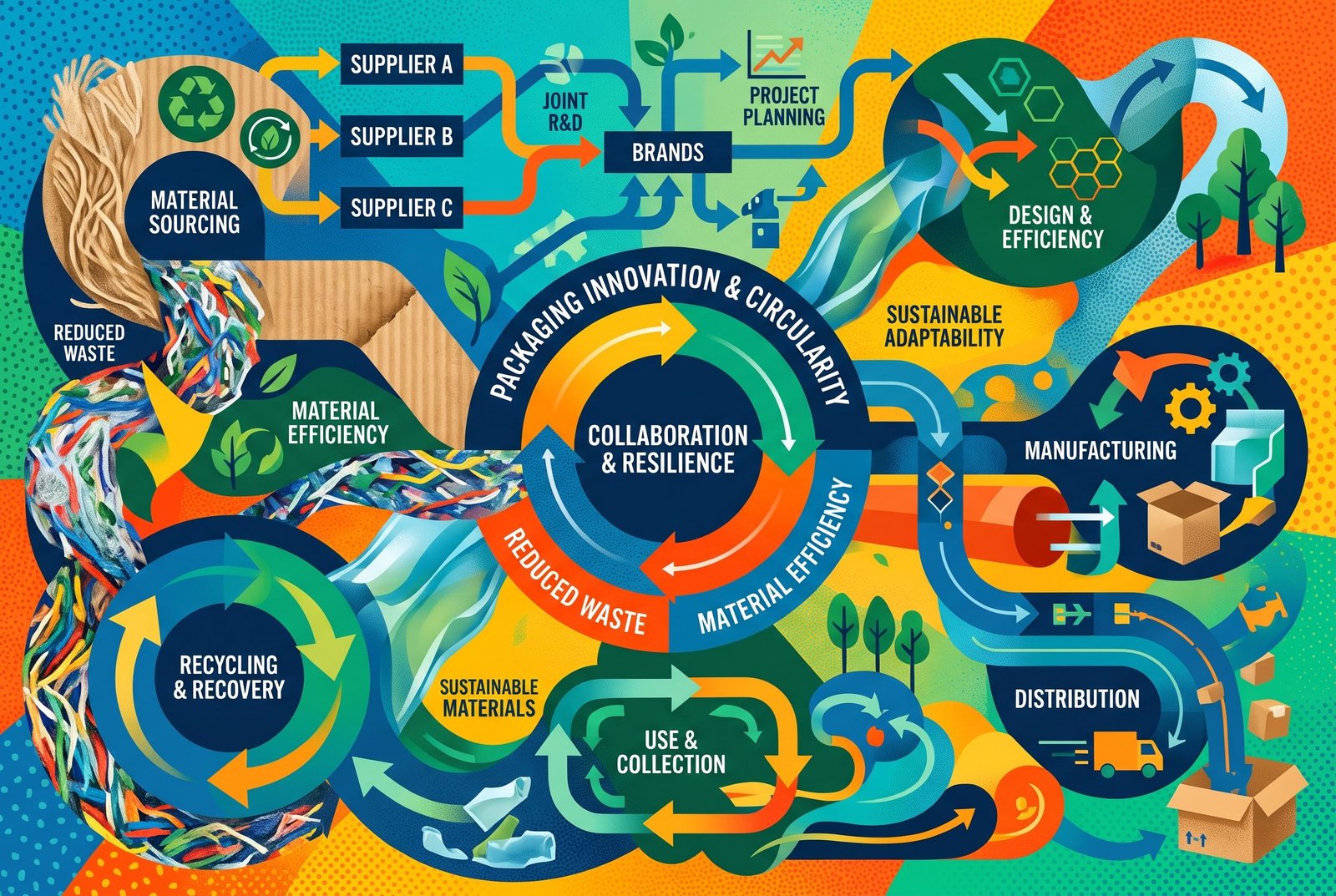
Packaging suppliers and brand owners need to work far more closely if they are to cope with volatile raw material costs, strengthen sustainability efforts and build more resilient supply chains, executives said at the Packaging South Asia Conference in Mumbai on 9 October.
In a fireside discussion on the shift from vendor to strategic partner, industry leaders argued that packaging companies can no longer be treated as simple order fillers. Instead, they should be involved much...
Continue Reading This Article
Enjoy this article as well as all of our content, including reports, news, tips and more.

By registering or signing into your SRM Today account, you agree to SRM Today's Terms of Use and consent to the processing of your personal information as described in our Privacy Policy.
Sanjay Ghosal, head of packaging at Diageo, chaired the session, which featured Naveen Stuart, head of packaging development at Marico; Dr Surendra Agarwal, founder of Creative Technologies; and Manish Desai, director of Mudrika Labels.
Their remarks came against a backdrop of persistent cost pressure across the sector. Resin and other input costs have remained highly unstable, leaving manufacturers with limited room to absorb shocks. Agarwal said resin can account for more than 90% of the cost of rigid packaging in some applications, making polymer price swings particularly painful for producers. In such conditions, he argued, the immediate priority is to keep supply flowing so brand owners can continue production and protect shelf space.
“If we don’t supply the package to our brand owners, they cannot fill the shelf space, and they will start losing their market share,” he said.
Agarwal added that the relationship between the two sides must be commercially sustainable for both. “If anybody in the supply chain doesn’t make a profit, he’s not going to last very long,” he said, making the case for suppliers to act as long-term partners rather than transactional vendors.
He said Creative Technologies had set up an expert panel to track developments in raw material markets and supply conditions. The group provides customers with regular updates on pricing, availability, possible shortages and substitute polymers that could be used if specific grades become harder to source. Agarwal also pointed to lightweighting as one of the few direct levers suppliers can use to offset inflation. “If we use less material, we are going to have less impact of the cost increase,” he said.
Desai said Mudrika Labels had increased its stocks of raw materials to help maintain continuity amid market volatility. He warned that even a relatively small packaging component can stop production if it is unavailable, which makes supply assurance critical. He said the company’s role now goes beyond supplying labels and extends to solving customer-specific production problems. Changes in raw materials, he noted, can require adjustments to label specification, adhesive selection and release liner performance if packaging lines are to keep running smoothly.
The discussion also widened into the question of how brands can reconcile cost, function and environmental responsibility. Stuart said the packaging industry must confront rising plastic consumption while also addressing the environmental consequences that come with it. He argued that collaboration should begin at the design stage, with suppliers and brand owners working together to optimise packaging rather than adding material simply to create a premium look.
“Nobody says that I have to increase the packaging component to make it premium,” he said, suggesting that visual impact and practical performance can be achieved without automatically increasing material use.
Agarwal said the industry still needs to do more to explain the practical advantages of plastics, including their light weight, low cost and versatility. “The best thing we can do as an industry is educate the people on the benefits of plastics,” he said. He also said that using plastic closures on plastic containers can simplify recycling by avoiding the need to separate different materials at the end of life.
Desai cautioned that less material does not automatically mean better recyclability. Multilayer flexible packaging remains difficult to recycle, he said, and the industry needs to do more to educate consumers about both the value of plastics and the importance of proper disposal and recycling practices.
The panel agreed that no single material or decoration method is suitable for every application. Whether brands choose plastic or metal, rigid or flexible formats, or one label technology over another depends on product specifications, consumer expectations, cost constraints and sustainability targets.
Desai set out a range of decoration options available to brands, including self-adhesive labels, cut labels, shrink sleeves, heat-transfer films, direct printing and in-mould labelling. In his view, suppliers should recommend technologies based on the specific product rather than pushing one universal solution. He cited in-mould labelling in ice cream packs as an example of how decoration has evolved to meet demanding performance conditions while enabling more elaborate designs. He also described in-mould labelling and heat-transfer films as potentially sustainable choices for suitable applications, though their usefulness depends on the container, the end use and the expected shelf life.
Stuart said the choice between direct printing and labelling also reflects brand positioning and the price point consumers are willing to accept. “There is no right or wrong decision there. It all depends on product to product and what your business strategy is all about,” he said. He pointed to Marico’s Parachute Blue bottle as an example of a mass-market product where direct printing helps keep costs down, while other products in the company’s portfolio use more elaborate packaging to match their market positioning.
The speakers were united on one central point: suppliers should be brought into the process much earlier, ideally from concept stage rather than after packaging specifications have already been fixed. Agarwal said early engagement can help brands refine package dimensions, improve material efficiency and reduce wall thickness where possible. Even small adjustments, such as a 1mm to 2mm change in bottle diameter, can improve manufacturing efficiency by allowing more cavities in a mould. “Working with the brand owners as a strategic partner from the concept to commercialization is the key to success,” he said.
Desai also urged brand owners to consult packaging and decoration specialists before designs are locked in, warning that some concepts created without technical input can be difficult to reproduce with the intended process.
Stuart echoed that view, saying suppliers should feel able to challenge a brand owner’s brief rather than simply execute it. “They should also question our specifications,” he said, arguing that the best outcomes come from two-way discussion rather than one-sided instruction.
Ghosal closed the session by stressing that collaboration and co-creation are essential to resilient supply chains. Packaging decisions, he said, must ultimately serve consumers while creating value for suppliers, brand owners and trade partners across the value chain.
The broader industry context supports that emphasis on partnership. Walki Group says it works closely with suppliers to improve responsible sourcing and aims to make all its fibre-based materials certified renewable by 2030. L.E.K. Consulting has reported that 91% of brand owners now use multisourcing strategies to reduce exposure to disruption, a sign that resilience has become a mainstream procurement priority rather than a niche concern. At the same time, sustainability specialists continue to warn that many packages that are technically recyclable remain difficult to process in practice because of multilayer structures, adhesives and mixed-material formats.
That tension between operational resilience, cost discipline and circularity was at the heart of the Mumbai discussion. The message from the panel was clear: as packaging becomes more complex, the route to better outcomes lies not in isolated purchasing decisions, but in earlier, deeper and more open collaboration across the entire supply chain.
Source: Noah Wire Services
Subscribe to Industry Updates
Get the latest news and updates directly to your inbox.

