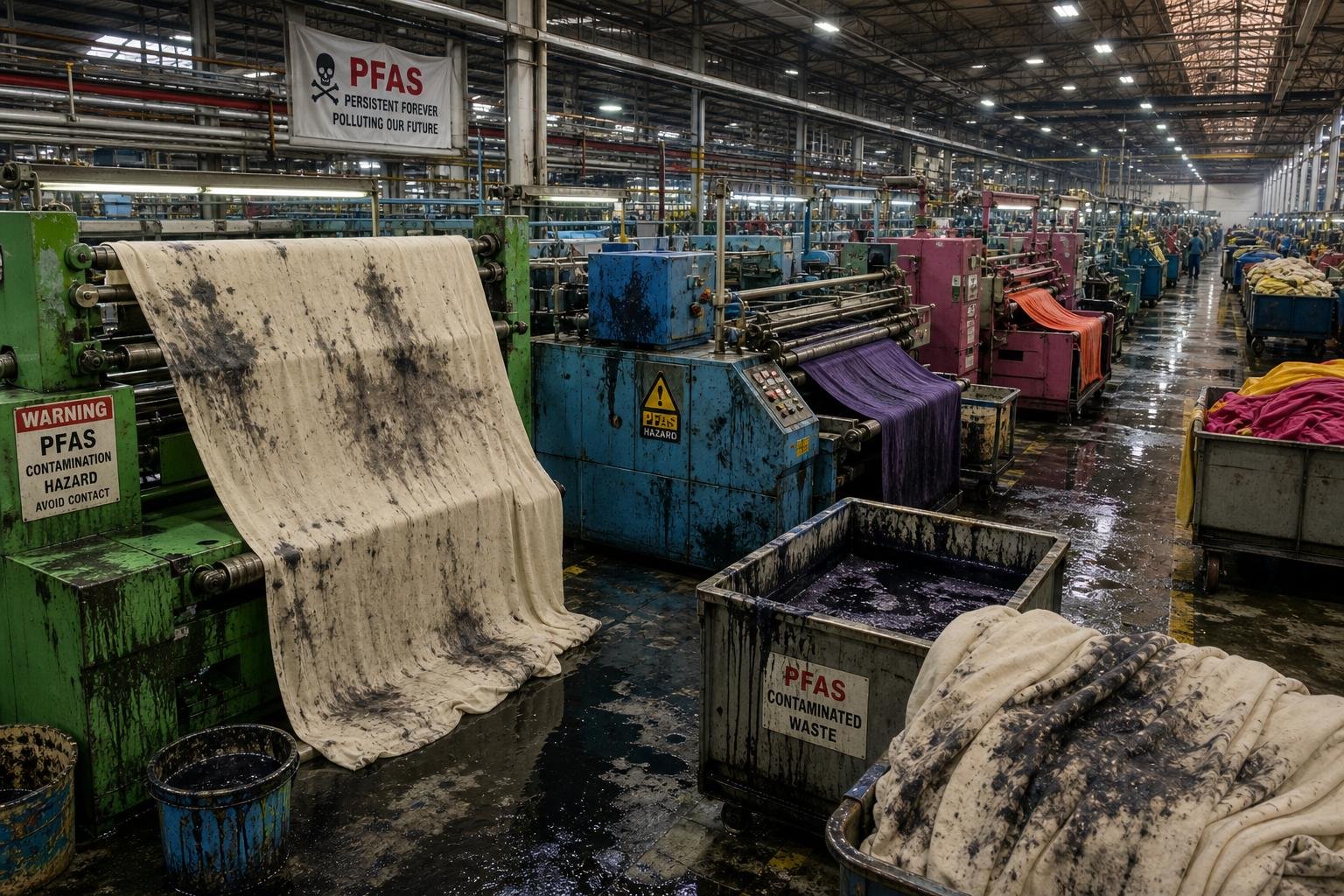
The textile industry’s long reliance on PFAS is entering a more difficult phase: not simply reducing visible chemical use, but confronting how deeply these substances are embedded in production systems, from dyeing and finishing to shared equipment and wastewater streams.
For decades, PFAS helped give garments the water-, oil- and stain-resistant qualities consumers came to expect from outdoor wear and everyday clothing. But as concern has grown over their persistence in the ...
Continue Reading This Article
Enjoy this article as well as all of our content, including reports, news, tips and more.
By registering or signing into your SRM Today account, you agree to SRM Today's Terms of Use and consent to the processing of your personal information as described in our Privacy Policy.
environment and their possible effects on health and ecosystems, the sector is being pushed towards a more fundamental reset. What was once treated as a performance issue is now increasingly viewed as a supply-chain and environmental risk.
That shift is reflected in the growing number of rules and standards targeting the chemicals. OEKO-TEX has introduced a general ban on the intentional use of PFAS in textiles, leather, apparel and footwear, and says certified products will face further limits from 1 January 2026 on regulated PFAS substances and total fluorine content. According to the certification body, testing will be based on EN 17681-1:2025, while California’s legislation is also driving tougher fluorine thresholds.
The broader regulatory picture remains uneven. A recent review in the Chemical Engineering Journal described global rules on PFAS in textiles as fragmented and insufficient, even as the chemicals continue to be used for waterproofing, stain resistance and heat stability. The European Environment Agency has gone further, warning that textiles are among the largest sources of PFAS pollution in Europe and arguing that the substances can undermine efforts to build a more circular fashion system.
That circularity problem is significant. PFAS can linger in fabrics through repeated use, ageing and disposal, creating secondary emissions and complicating recycling and reuse. The EEA says alternatives already exist for most textile categories, strengthening the case for substitution where feasible. But experts also caution that switching chemistry is not enough if the replacement substances are poorly understood or introduce new risks.
The challenge is partly technical and partly structural. PFAS may enter production through auxiliaries, surfactants and other inputs, but also via contamination in shared facilities, recycled water or legacy residues in machinery. That means a product can appear compliant at the end of the line while still carrying risk from earlier stages of manufacture. In the US, the Environmental Working Group has said more than 1,500 textile mills may be discharging PFAS, underscoring how widespread the problem can be in industrial supply chains.
As a result, companies are moving away from end-product checks alone and towards fuller chemical oversight. That includes tighter supplier disclosure, better traceability, wastewater controls and more rigorous screening of inputs before production begins. The aim is not just to meet thresholds after the fact, but to prevent pollution at source.
For the textile sector, the next phase of PFAS elimination is therefore less about a single substitute and more about redesigning how chemicals are managed across the value chain. The companies best placed to adapt are likely to be those that treat PFAS not as an isolated compliance issue, but as part of a wider shift towards safer materials, cleaner production and more resilient supply networks.
Source: Noah Wire Services