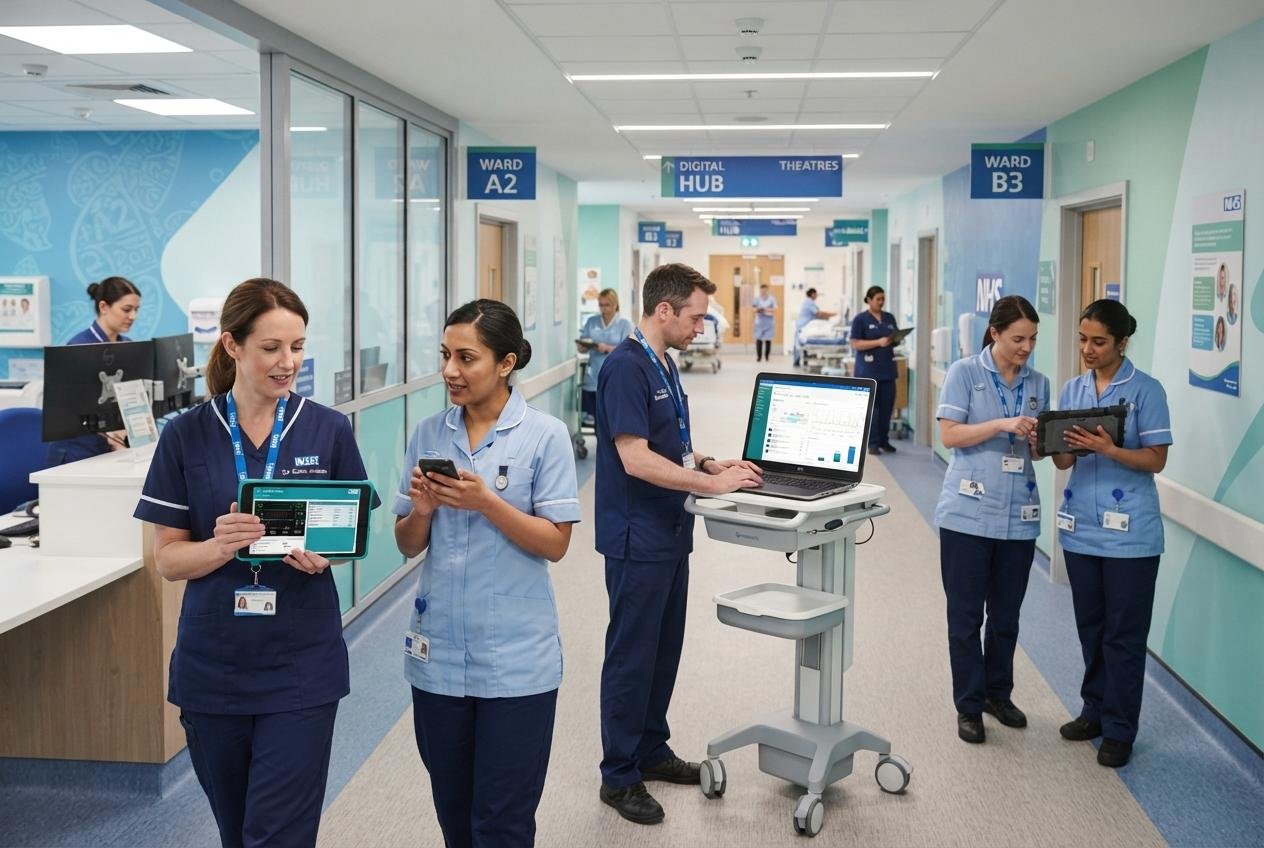
The NHS’s long-term performance will depend not only on doctors, nurses and other frontline clinicians, but on whether its corporate machinery can support them properly. A new paper from the HPMA argues that workforce, payroll, finance and procurement systems are not peripheral functions but the operational backbone that shapes how far clinical investment translates into better care.
That argument lands at a moment when NHS productivity remains under strain. An analysis publi...
Continue Reading This Article
Enjoy this article as well as all of our content, including reports, news, tips and more.
By registering or signing into your SRM Today account, you agree to SRM Today's Terms of Use and consent to the processing of your personal information as described in our Privacy Policy.
shed in November 2025 pointed to a marked slowdown in productivity growth across the acute sector, with efficiency gains estimated at about 2.7% in 2024/25 before easing sharply towards the end of the year and into early 2025/26. The weakest performance was in emergency inpatient care, where staffing growth ran ahead of activity. The broader lesson, the analysis suggested, is that simply adding labour is not enough if processes and deployment remain clumsy.
The King’s Fund has reached a similar conclusion, describing NHS productivity as a stubborn challenge with multiple causes. It has pointed to years of inadequate capital investment, ageing equipment and too few managers relative to staff, all of which make it harder to streamline work and reduce waste. In other words, the productivity puzzle is not just about effort; it is also about infrastructure, information and how work is organised.
The administrative burden is affecting patients as well as staff. The King’s Fund said nearly two-thirds of patients and carers had experienced problems with NHS administration over the previous year, including lost test results and difficulty changing or cancelling appointments. Such failures matter beyond inconvenience: the organisation said they left many people less willing to seek care again.
Against that backdrop, the HPMA paper makes a case for shared services and common systems as a route to better outcomes. Its central claim is that shared data and shared platforms can free up time, improve decision-making and give local leaders a more reliable basis for running services. Rather than imposing uniformity for its own sake, the paper presents integration as a way to reduce friction, strengthen workforce experience and allow staff to concentrate on care.
That is especially relevant given the pressures on retention and capability across the health service. If technology is badly implemented, it can become another source of frustration. If done well, the same tools can support staffing decisions, cut duplication and modernise the way the NHS manages its most valuable resource: its people.
The wider reform debate has often focused on the visible parts of the system. The HPMA’s intervention is a reminder that what sits behind the scenes may be just as important. If the NHS is to become more productive, more resilient and better for staff and patients, it will need to treat its corporate services not as overhead, but as part of the solution.
Source: Noah Wire Services