Tradeshift has overhauled its analytics stack by moving from an ageing in-house business intelligence system to Amazon Quick, in a shift the company says has sped up queries, cut costs and turned reporting into a revenue-generating product.
The move matters because Tradeshift sits at the centre of a complex accounts payable and e-invoicing network spanning more than 70 countries. Its users include both buyers and sellers, which means its analytics requirements are broader than ...
Continue Reading This Article
Enjoy this article as well as all of our content, including reports, news, tips and more.
By registering or signing into your SRM Today account, you agree to SRM Today's Terms of Use and consent to the processing of your personal information as described in our Privacy Policy.
those of a typical single-sided software business. As the company’s data volumes and customer expectations grew, its legacy reporting setup became increasingly hard to maintain and too limited for serious trend analysis, anomaly detection or predictive work.
According to Tradeshift’s account of the transition, the old system imposed severe constraints: it could not cope with large datasets, capped scheduled reports at 25 MB and retained only six months of history. Maintaining it absorbed roughly half of one employee’s time. Teams across Customer Success, Data and Analytics, Finance and Commercial were also spending hours each week manually exporting data, running spreadsheets and stitching reports together, while customers with more detailed questions had to wait for bespoke output from internal specialists.
Amazon Quick offered Tradeshift a different model. The AWS service combines embedded business intelligence with agentic AI features, including natural-language querying, workflow automation and long-form research capabilities. Tradeshift used those tools to build a new reporting platform for internal staff and external customers, including an AP Auditor chat agent and automated reporting flows.
The company says the results have been substantial. Query response times are now up to 30 times faster, total cost of ownership is down by 40%, and routine maintenance has fallen to 0.5 of a full-time role. Tradeshift also says its internal teams save 8.5 hours a week on manual reporting, while customers save six to eight hours a week per user. Time spent on manual manipulation in Excel has fallen sharply, and the company reports that identifying operational bottlenecks now takes seconds rather than days.
The rollout was staged. Tradeshift began with a proof of concept in early 2024, followed by an embedded analytics minimum viable product between August 2024 and March 2025. It launched a full Reporting and Analytics app in June 2025 and says Quick had replaced its internal BI tooling by August 2025, with 98% internal adoption.
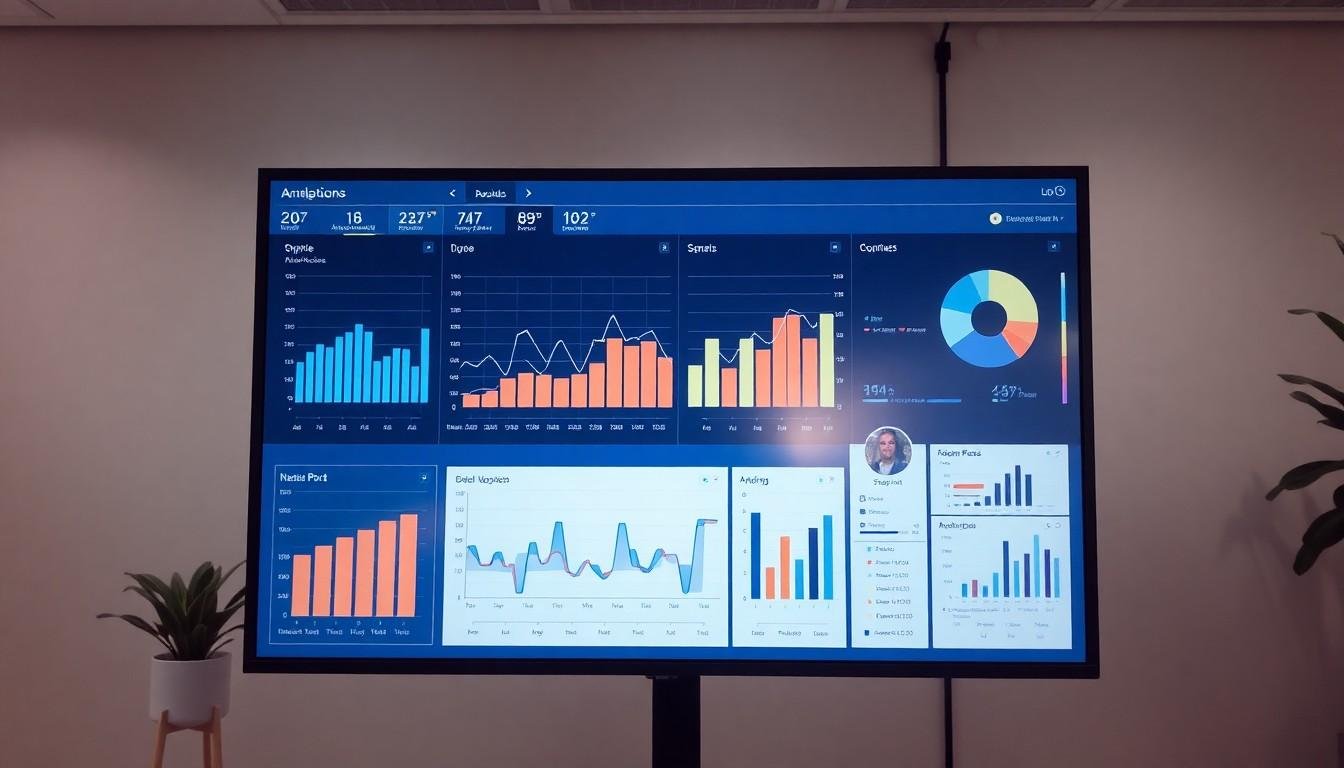
The new platform is built in layers. Tradeshift says it has 16 embedded Quick dashboards delivered through secure iframes across nine business areas, from invoicing and purchase orders to compliance and anomaly detection. Those dashboards cover datasets ranging from one million to one hundred million transaction records and, the company says, return results in under three seconds. A conversational layer lets users ask questions in plain English, while a third tier adds custom dashboards, what-if modelling and other advanced features.
Security and tenant isolation were central to the design. Tradeshift says it uses Okta single sign-on, Quick custom namespaces, signed URLs and around 14,000 row-level security rules to make sure each user only sees authorised data.
One of the more striking uses of the system is the AP Auditor chat agent, which Tradeshift built with Amazon Quick’s custom chat capability. The agent allows auditors to ask questions such as pending invoice status or purchase order details without needing SQL or analyst support. Tradeshift says the agent is grounded in permissioned data and backed by a knowledge base containing reference documents, dashboards, curated query topics and automated action tools.
The company has also used Quick to support more traditional analytics workloads. In one case, it built a reporting solution for a client that needed visibility into the manual effort behind invoice processing and approval workflows. Using Quick’s in-memory SPICE engine, Tradeshift says it was able to process line-level coding data quickly, separate manual corrections from AI-generated codes and track approval chains with near real-time visibility.
Internally, the platform has consolidated more than 40 dashboards into over 100 queryable datasets that can be accessed through natural language. Quarterly market analysis, which once took weeks, now takes days or hours using Quick Research. Recurring reporting is automated through Quick Flows, with more than 270 SPICE datasets refreshing daily and reports distributed on scheduled cadences without manual intervention.
Tradeshift says the business impact has gone beyond efficiency. It claims a 2% annual recurring revenue uplift from premium reporting, a 10% higher 12-month retention rate among accounts using embedded analytics and an 80% reduction in analytics-related support tickets. The company also says it became the first in the AP automation and e-invoicing market to embed Amazon Quick for natural-language querying in 2025, and later integrated its Model Context Protocol server with Quick to let AI agents interpret schema metadata and produce written insights more autonomously.
The roadmap now points towards write access through the MCP server, a generic chat agent for all Standard-tier users and wider deployment of the analytics app to sellers as well as buyers. For Tradeshift, the broader aim is clear: move analytics from a back-office cost into a customer-facing product that delivers faster answers, less manual work and more direct value from data.
Source: Noah Wire Services