


Automotive suppliers have spent years wrestling with a harsh cost environment. Inflation, labour shortages, energy volatility, semiconductor shortages, higher borrowing costs and fractured supply chains have all squeezed operations. Yet the industry’s margin problem is now wider than the cost base alone.
According to Roland Berger and Lazard’s Global Automotive Supplier Study, average industry EBIT margins were 4.7% in 2024, around two percentage points below pre-pandemic l...
Continue Reading This Article
Enjoy this article as well as all of our content, including reports, news, tips and more.

By registering or signing into your SRM Today account, you agree to SRM Today's Terms of Use and consent to the processing of your personal information as described in our Privacy Policy.
That matters because costs often reveal the strain, but do not always explain it. More of the pressure is being shaped earlier in the chain by shifts in technology adoption, regional demand, programme volumes, pricing assumptions, capital efficiency and product mix. A savings drive can improve performance, but it cannot fully offset capacity built for volumes that never arrive, assets committed to the wrong technology path, or a portfolio whose economics have quietly deteriorated.
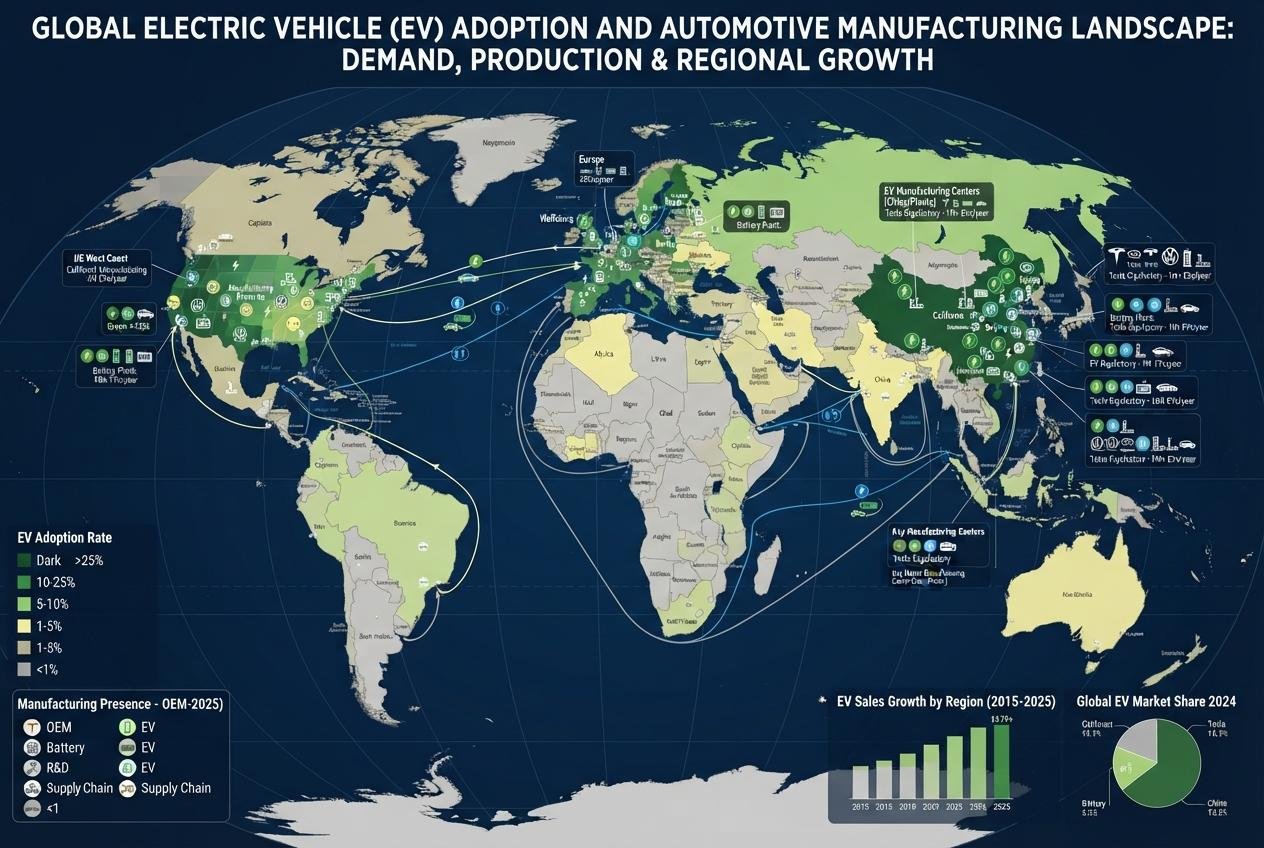
The electrification shift is a good example. It is still one of the most important forces reshaping the supply chain, but it no longer follows a single global pattern. S&P Global Mobility expects battery-electric vehicles to make up roughly 6% of North American production in 2026, compared with 17% in EMEA and 24% in APAC. By 2030, those shares are forecast to rise to about 10% in North America and 34% in both EMEA and APAC. The broad direction is the same, but the pace and shape of change differ sharply by region.
Europe illustrates the point. Through the first five months of 2026, battery-electric vehicles accounted for 20% of EU registrations, while hybrids represented 37.8%, showing that electrification is advancing through a mixed powertrain market rather than a simple leap from combustion to fully electric. For suppliers, that means multiple technologies, production systems and supply networks must coexist for longer than many investment cases assumed.
The risk is especially acute when capital decisions are made against volumes that later shift. Boston Consulting Group found that in the first half of 2025, several battery-electric models across China, Europe and North America were deviating from original sales forecasts by as much as four times in either direction. Investments in batteries, power electronics, thermal systems, tooling and plant capacity are usually front-loaded and difficult to redeploy quickly, so changes in demand can leave suppliers with idle capacity in one area and shortages in another.
That does not mean electrification was a misplaced bet. It remains a structural change in automotive value creation. The problem is that the transition is less uniform, less predictable and more regional than many business plans assumed. Profitability now depends not just on whether growth arrives, but on where it arrives, which technologies win share and how effectively assets are utilised.
China has become the centre of gravity in that shift. The International Energy Agency estimates that it produced almost three-quarters of the world’s electric cars in 2025. Chinese EV exports doubled to more than 2.5 million units, while Chinese imports accounted for 55% of EV sales in markets outside Europe and the United States. China also made more than 80% of global battery-cell output.
Its influence is not only about scale. AlixPartners says leading Chinese automakers can develop vehicles twice as fast, with 40% to 50% less investment and roughly a 30% cost advantage. Whether every company can match those figures is less important than the signal they send: expectations around speed, freshness, cost and technology content are being reset across the industry.
For suppliers, China offers access to the world’s largest EV market and some of its fastest-growing customers. But it also brings intense price competition, shorter development cycles, localisation demands and the spread of Chinese automakers and suppliers into global markets. That combination is pressuring traditional business models.
Europe faces a different mix of constraints. Electrification is progressing, but production remains subdued, costs are comparatively high and spare capacity persists in parts of the supply base. Roland Berger and Lazard said average EBIT margins for European automotive suppliers were 3.6% in 2024, versus 5.7% for Chinese suppliers. They also found that 76% of European suppliers surveyed expected profitability below 5% in 2026, while about a quarter expected negative margins.
North America presents another set of economics. Battery-electric adoption is slower, larger vehicles remain important and hybrids are regaining relevance. That forces suppliers to stay flexible across multiple powertrains at once. PwC says OEM profitability in the region is also under strain, with EBITDA margins falling from nearly 11% in the third quarter of 2024 to below 8% a year later, as flat volumes, higher input costs and rising freight and tariff expenses weighed on results.
Bain has also noted that, for the first time since the pandemic, automakers’ margins fell below those of suppliers in the third quarter, highlighting how the strain is moving through the value chain. The firm said many OEMs are pursuing efficiency programmes and material-cost reductions, which may push pressure further downstream.
Ultimately, the economics feed through to pricing and mix. Programme pricing is usually built around assumptions on volume, content, launch timing, sourcing and duration. When those assumptions change, the original deal economics change too. A programme can run well operationally and still underdeliver on EBIT if the real-world mix is weaker than the business case suggested.
Mix is broader than product mix alone. It includes customer mix, platform mix, regional mix, technology mix, plant utilisation and the balance between mature programmes and new launches. Revenue can grow while shifting towards higher-complexity, more capital-intensive business. By contrast, slower-growing legacy technologies can still generate strong returns when investment is largely depreciated and demand remains stable.
BCG’s latest supplier analysis underlines how much dispersion is now embedded in the sector. Semiconductor and battery suppliers grew revenue far faster than traditional component groups between 2019 and 2024, while top-quartile companies are expected to keep outpacing bottom-quartile peers. The study also found Chinese suppliers have overtaken European rivals on profitability. The lesson is that the location and composition of growth matter almost as much as growth itself.
That is why a supplier can look healthy in aggregate while the quality of its earnings is weakening. Strong regions, customers or product lines can mask underperforming investments elsewhere. Consolidated EBIT may remain acceptable even as complexity rises, utilisation slips or lower-return work takes a bigger share of the portfolio.
The answer is not to chase every programme or abandon every marginal one. It is to test whether the assumptions behind the portfolio still fit the market. A customer’s platform timing may have slipped. A powertrain mix may now be split across battery-electric, hybrid and combustion variants. A new line may be running below plan. A product category may still be growing, but in a far more competitive pricing environment.
That is why portfolio discipline must start with a fresh reading of the market, not just a review of historical decisions. Suppliers still need cost control, purchasing discipline, quality improvement and footprint competitiveness. But cost management alone is unlikely to solve a problem driven by changing market structure.
For chief executives, finance chiefs and commercial leaders, the more important questions are where EBIT is really being made, whether revenue growth is improving or diluting returns, and whether pricing, mix and portfolio assumptions are being scrutinised as carefully as costs. The industry is not moving along one technology path or one global adoption curve. It is moving through several transitions at once. Suppliers that understand the economics beneath the headline numbers will be better placed to distinguish a cost problem from a pricing, mix or portfolio problem.
Source: Noah Wire Services
Subscribe to Industry Updates

