Corporate commitment to sustainability has reached its highest level yet, but many companies are still struggling to turn ambition into measurable progress, according to the 2026 State of Supply Chain Sustainability Report from the MIT Sustainable Supply Chain Lab at the MIT Centre for Transportation and Logistics.
The study, based on responses from 1,810 supply chain professionals in 91 countries, found that 83% now regard sustainability as important or very important to long-...
Continue Reading This Article
Enjoy this article as well as all of our content, including reports, news, tips and more.
By registering or signing into your SRM Today account, you agree to SRM Today's Terms of Use and consent to the processing of your personal information as described in our Privacy Policy.
term business success. That is the strongest reading recorded in the report’s seven-year history, suggesting that environmental priorities have remained resilient even as politics and markets have become more volatile. MIT said 59% of respondents reported becoming more committed to sustainability, compared with just 13% who said their commitment had weakened.
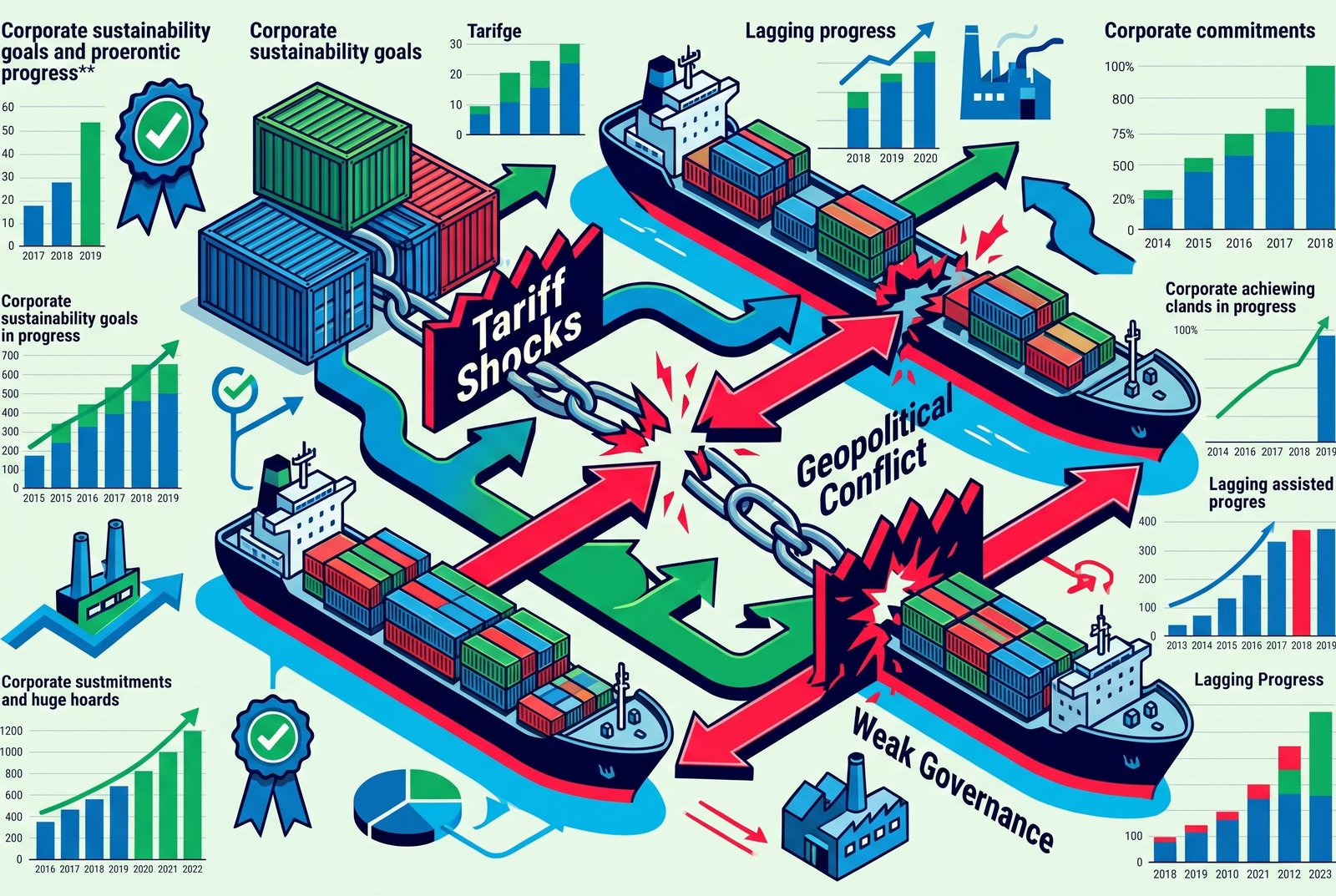
Yet the report also paints a picture of momentum being checked by disruption. Nearly 70% of respondents said tariff uncertainty had forced their organisations to delay, reduce or compromise sustainability initiatives, while more than four-fifths said geopolitical conflict was undermining the effectiveness of climate action. The findings suggest that external shocks are no longer a peripheral concern but a direct constraint on how companies pursue decarbonisation and wider environmental goals.
The research also highlights a persistent internal gap between ambition and execution. While many firms have made public sustainability pledges, fewer have built the structures needed to implement them consistently. The report said that companies with formal cross-functional sustainability teams were far more likely to embed sustainability into day-to-day decision-making, yet only 51% of organisations with public sustainability goals had created such a team. Even fewer, just 33%, placed oversight at board level. In practical terms, MIT’s researchers said, many businesses have set a direction without fully developing the governance to follow through.
This year’s report also examined where sustainability efforts are taking hold within supply chains. According to the study, companies are making the most progress in operational areas such as transport and logistics, procurement, warehousing, and product and packaging design. By contrast, sustainability is less embedded in capital investment, network design and risk planning. That pattern, the researchers said, indicates that firms are adopting greener practices in how supply chains run before they are redesigning the systems themselves.
The report suggests that the business case for sustainability is being shaped more by operational advantages than by direct financial savings. Compliance, efficiency and better visibility were among the most frequently cited benefits, while resilience and risk reduction were also rated highly. Direct cost cuts, by comparison, ranked lower. That finding points to a more nuanced corporate calculation: sustainability is increasingly seen not only as a reputational or regulatory issue, but as a way to improve control and performance across the supply chain.
The MIT team also assessed the role of artificial intelligence, as well as progress on freight transport and warehousing decarbonisation. Those areas are becoming more central as companies try to reconcile sustainability targets with rising complexity across global logistics networks. The report is the seventh annual edition of the survey, underlining how the debate has evolved from broad commitments towards more specific questions about governance, execution and operational design.
MIT said the full report is available for download through the centre’s supply chain sustainability research programme.
Source: Noah Wire Services