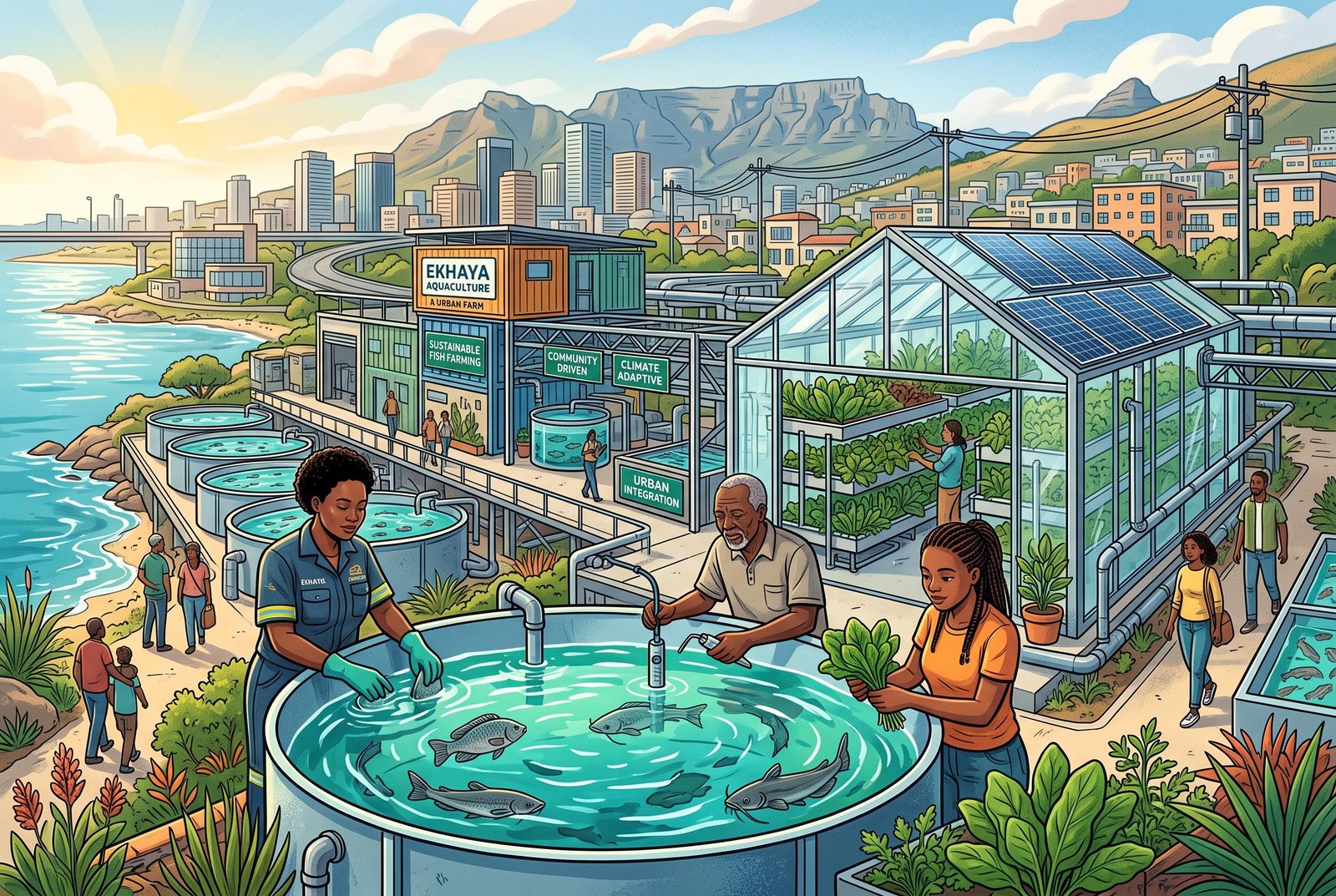
South Africa’s aquaculture sector is increasingly being cast as a strategic part of the country’s food system, but its long-term resilience is being framed less as a matter of individual farm performance than of collaboration across government, research bodies, producers and communities.
That message has emerged strongly from a series of recent industry and development initiatives, including a fish cluster information day in Limpopo, a global workshop on urban aquaculture i...
Continue Reading This Article
Enjoy this article as well as all of our content, including reports, news, tips and more.
By registering or signing into your SRM Today account, you agree to SRM Today's Terms of Use and consent to the processing of your personal information as described in our Privacy Policy.
n Johannesburg and climate-adaptation work involving small-scale fisheries. Together, they point to a sector that is still relatively small in volume, yet carries outsized importance for food security, jobs and rural livelihoods.
According to the Department of Forestry, Fisheries and the Environment, South Africa’s aquaculture industry produces about 6,000 tonnes a year, a fraction of the country’s roughly 700,000-tonne wild marine catch. Even so, officials and researchers argue that the sector has room to grow if it can overcome bottlenecks around skills, infrastructure, market access and climate pressures.
At the Musina Fish Cluster Information Day, held on 11 June at the Zevhezevhe Aquaculture Project in Limpopo, farmers, officials and prospective producers gathered to discuss production systems and opportunities in the province. The event underlined a recurring theme in the sector: that knowledge-sharing between provinces and among different parts of the value chain can help smaller projects become more commercially durable. The gathering also reflected the broader role aquaculture is expected to play in food security, employment creation and rural economic activity.
That view aligns with the work of the Council for Scientific and Industrial Research, which has been collaborating with multiple partner organisations to support aquaculture development. The CSIR says the sector’s output has risen by almost 75% since 2013, while the industry’s sales value was estimated at about R1 billion in 2018. It also notes that marine aquaculture, especially abalone farming, accounts for the bulk of sector value.
Climate change is sharpening the case for cooperation. CLIMARES, a climate adaptation initiative focused on South Africa’s small-scale fisheries, is using local, data-driven methods to capture how coastal communities are experiencing changes in the ocean. Through the Abalobi Ulwazi Network, fishers and other stakeholders are working as co-researchers, sharing short narratives about conditions on the water and in their households. Advocates say these community-led accounts can reveal realities that conventional surveys miss, and may help shape more responsive policy.
The government is also looking beyond traditional rural production zones. In March, Johannesburg hosted a global inception workshop on urban aquaculture development, convened by the UN Food and Agriculture Organization with South African authorities. The discussions centred on how aquaculture can be integrated into urban and peri-urban landscapes to support nutrition, employment and environmental sustainability as cities grow and water and land pressures intensify. Acting Deputy Director-General for Fisheries Management Saasa Pheeha said urbanisation and climate stress make it necessary to rethink food systems.
For industry participants, the direction of travel is clear. Recirculating aquaculture systems are being promoted by some private operators as a way to scale production while reducing environmental pressure, though the model remains capital-intensive and technically demanding. The broader lesson from recent initiatives is that South African aquaculture is unlikely to become more resilient through isolated investment alone. Its future, stakeholders suggest, will depend on coordinated planning, shared expertise and a willingness to treat fish farming as part of a wider economic and ecological system.
Source: Noah Wire Services