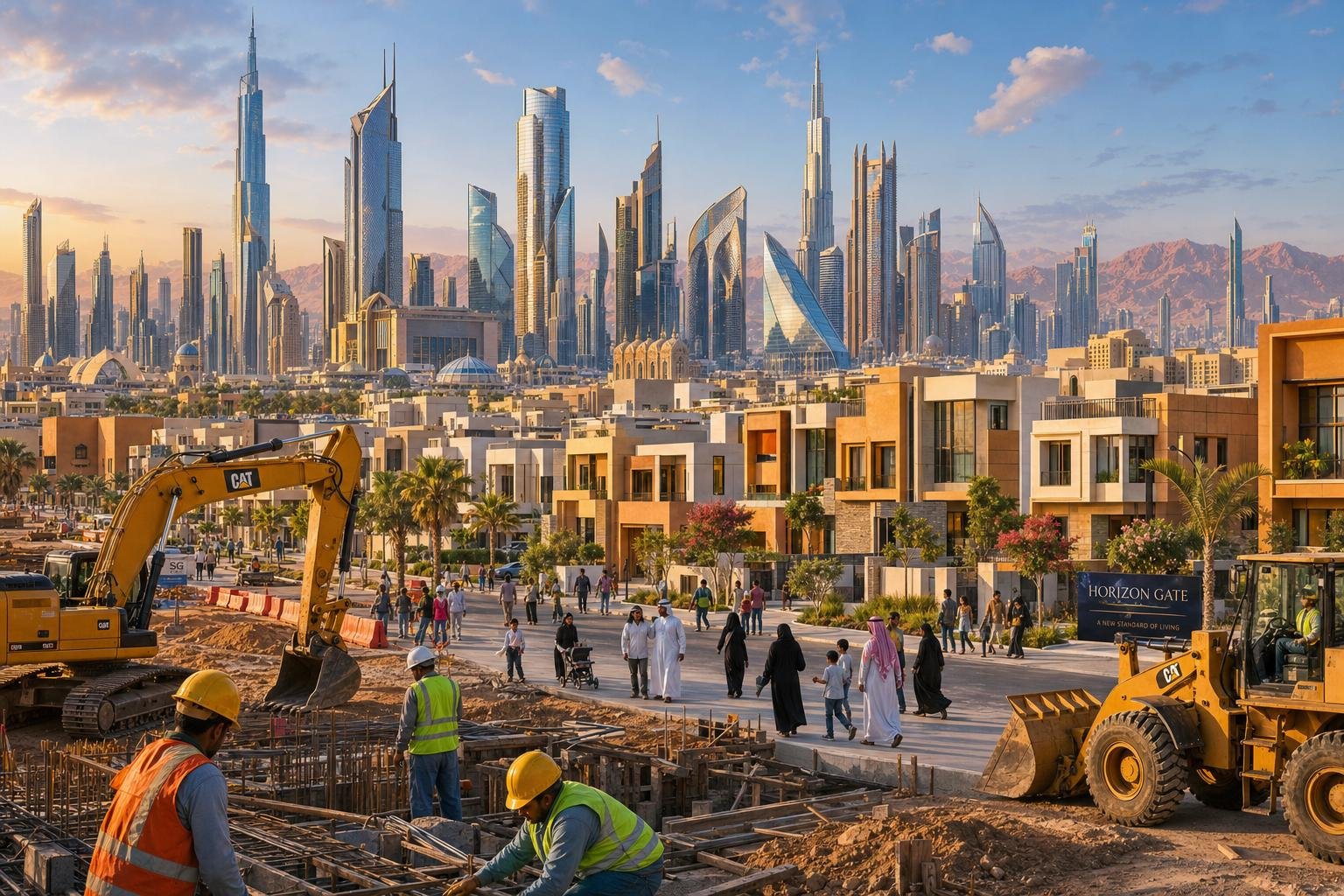
Saudi Arabia’s drive to deliver 600,000 homes by 2030 is now shaping up as more than a housing programme: it is becoming a test of how far procurement can be used to reshape an entire industrial base. The National Housing Company, established in 2016 as a state-backed developer, sits at the centre of that effort, with responsibility not only for putting homes on the ground but also for building the supply chain, supplier network and digital systems needed to sustain delivery at scal...
Continue Reading This Article
Enjoy this article as well as all of our content, including reports, news, tips and more.
By registering or signing into your SRM Today account, you agree to SRM Today's Terms of Use and consent to the processing of your personal information as described in our Privacy Policy.
e.
The challenge is considerable. The housing programme forms part of Saudi Vision 2030, which has already pushed the kingdom’s homeownership rate from 47 per cent to more than 65 per cent, according to the Vision 2030 programme. The NHC has said it is working towards the 600,000-unit target and, speaking at a recent public event reported by Okaz, chief executive Mohammed Al-Batti said the company aims to reach 300,000 housing units by the end of 2025. He added that NHC is active in 16 cities across 25 urban destinations, with projects valued at more than 250 billion riyals and sales above 120 billion riyals.
Meeting that ambition requires far more than traditional construction management. The European Business Review described NHC’s approach as a three-part strategy: scan globally for proven technologies, localise production through industrial investment, and use digital procurement to aggregate demand and improve price transparency. Together, those measures turn procurement into a lever for industrial development rather than a back-office function.
One strand of that strategy has been technology scouting. NHC has worked with suppliers to identify construction methods that can shorten build times, lower costs and improve sustainability. According to the article, the company and its partners visited international trade fairs and factories together, helping suppliers assess innovations first-hand and creating early buy-in before any technology was introduced locally. That collaborative model has already led to the adoption of precast and sandwich construction techniques, as well as water- and energy-saving systems. Three-dimensional printing has also been trialled, although it remains under review for commercial viability.
The results have been especially visible in NHC’s work with a South Korean specialist in high-efficiency precast technology. After joint exploratory visits, Saudi contractors were persuaded of the method’s advantages, and the foreign partner later established a production facility inside the kingdom, an example of how scouting can evolve into industrial localisation.
That localisation effort has since broadened into something more ambitious: an integrated industrial park designed to anchor domestic production of critical building materials. The scale of demand is striking. To complete 600,000 homes, NHC will need enormous volumes of precast concrete, tiles, paint and fittings. By creating a dedicated hub for design, testing, certification, manufacturing, storage and distribution, the company is trying to reduce dependence on imports and shield the programme from global price shocks and supply disruptions.
The park is intended to give tenants practical advantages as well as strategic ones. According to the European Business Review, it offers shared services, modern infrastructure, favourable leasing terms and the prospect of guaranteed demand through bulk purchasing agreements. It is also meant to support smaller firms by giving them access to financing and ready-built facilities, while partnerships with foreign manufacturers are expected to speed up knowledge transfer and raise technical standards.
NHC has also pushed procurement into the digital realm. In May 2025, it launched SupplyPro, a platform designed to connect developers, contractors, customers and vendors in a single marketplace. The company says the system is meant to improve material flows, make prices more consistent and allow buyers to see the same pricing rather than negotiate in opaque silos.
Early indications suggest the platform is gaining traction. The European Business Review said nearly 500 transactions worth 2.9 billion riyals were completed in less than a year, with more than 1,800 items listed and over 100 customers registered. Bulk purchasing campaigns are used to reveal combined demand, while NHC has also added financing support through banks to help smaller contractors overcome liquidity constraints. According to the report, the platform is backed by awareness campaigns and a dedicated sales team, while suppliers benefit from better visibility over aggregated demand and more predictable production planning.
The broader context matters. Gulf Business reported that at Cityscape Global 2025, Al-Batti said NHC had developed beyond a conventional housing developer into a central enabler of Saudi Arabia’s housing drive, with nearly 48 billion riyals in international investment commitments and supply-chain localisation playing a growing role. That fits with the company’s wider function in Vision 2030: not just to deliver units, but to help create the industrial, financial and logistical conditions that make large-scale homebuilding possible.
ROSHN, another major Saudi developer backed by the Public Investment Fund, has also been localising supply chains and offering long-term visibility to suppliers, underscoring how the housing sector is increasingly being used as a vehicle for domestic industrial development. In that sense, NHC’s model is part of a wider shift in the kingdom: from importing construction capacity to cultivating it at home.
If the strategy succeeds, the gains could be significant. The European Business Review said the programme could support more than 10,000 jobs, add around 33 billion riyals to GDP and attract roughly 3 billion riyals in private investment. For Saudi Arabia, the housing target is therefore doing more than expanding home ownership. It is helping to redefine procurement as an instrument of national transformation.
Source: Noah Wire Services