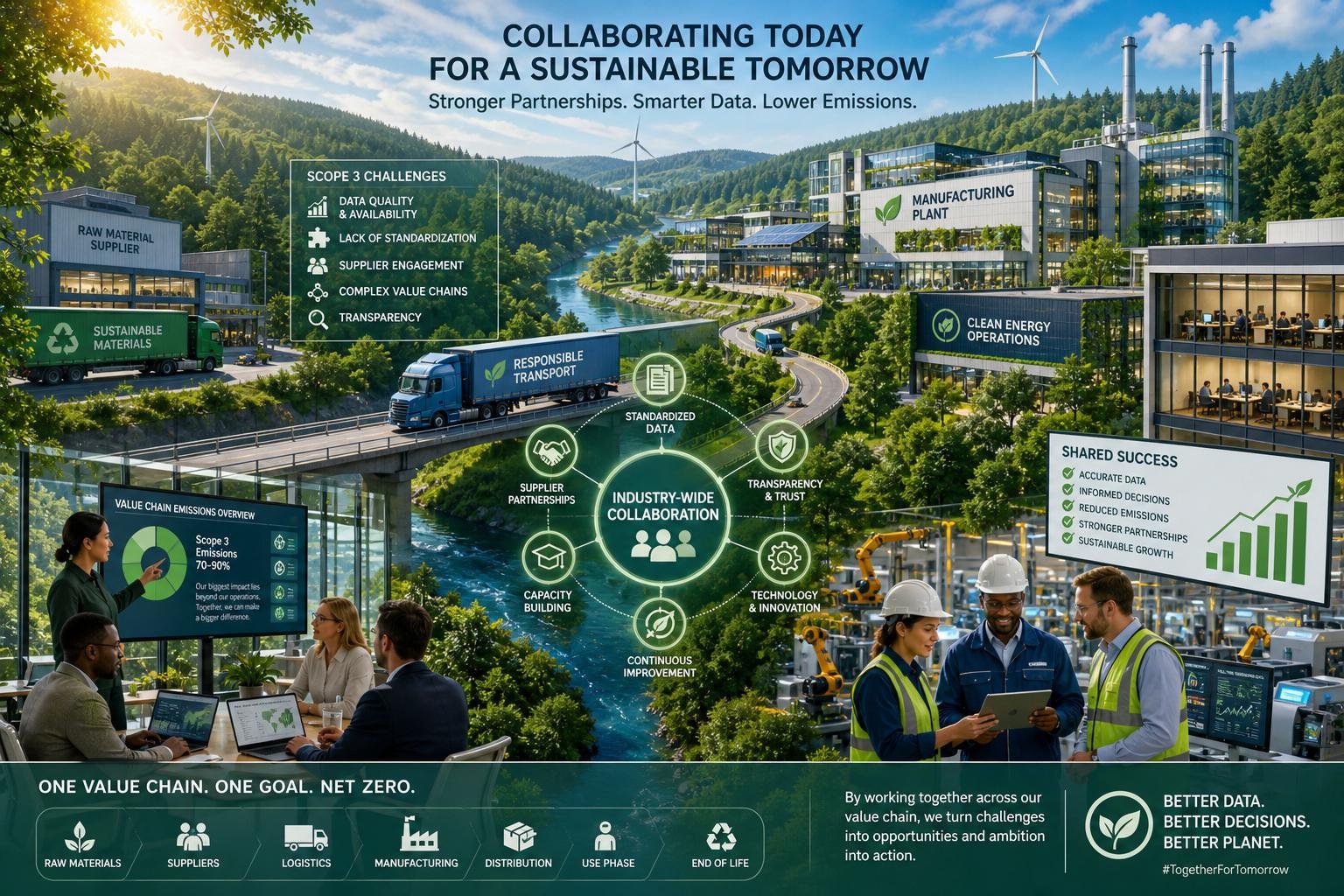
For many large American companies, the bulk of their climate footprint lies outside their own operations. It sits instead in the upstream and downstream activity that surrounds them: the raw materials they buy, the logistics they rely on, the way customers use products and, eventually, what happens when those products are discarded. That wider footprint is known as Scope 3 emissions, and in sectors such as retail, technology and manufacturing it can account for more than 70% of total ...
Continue Reading This Article
Enjoy this article as well as all of our content, including reports, news, tips and more.
By registering or signing into your SRM Today account, you agree to SRM Today's Terms of Use and consent to the processing of your personal information as described in our Privacy Policy.
emissions, and in some cases well over 90%.
The challenge is not simply that Scope 3 is large. It is that it is diffuse, difficult to measure and often poorly understood. The Greenhouse Gas Protocol’s Scope 3 Standard remains the most widely used framework, setting out 15 categories that cover both upstream and downstream emissions. But in practice, companies that treat it as a reporting exercise soon discover that it reaches deep into procurement, product design, logistics and customer behaviour. In automotive and electronics, for example, the emissions created when a product is used can dwarf those generated in the factory, which means climate responsibility extends well beyond direct operations.
That is where many firms struggle. Data quality remains a persistent weakness, with companies frequently relying on spend-based estimates rather than primary data. Supplier engagement is another sticking point, because many suppliers still do not provide emissions information at all. A third problem is methodological consistency: different tools can produce different answers, leaving companies with Scope 3 figures they may report but do not fully trust.
Those flaws help explain why Scope 3 is often described as a paradox. It is measured more often than ever, yet confidence in the numbers remains limited. Closing that gap requires more than software or disclosure templates. It requires organisational change, and that is where the leaders are separating themselves from the rest.
Walmart’s Project Gigaton is one of the clearest examples. Launched in 2017 with a target of helping suppliers avoid, reduce or sequester 1 billion metric tons of greenhouse gases by 2030, the programme was built around supplier action rather than internal calculation alone. In 2018, Walmart said suppliers had already reported emissions reductions of more than 20 million metric tons. By April 2022, the company said the initiative had passed the halfway mark, with more than 4,500 suppliers involved and over 574 million metric tons reduced or avoided. In February 2024, Walmart said supplier-reported projects were on track to exceed the original goal six years early.
The significance of that model goes beyond one retailer. It shows that Scope 3 is not just a data challenge; it is a value-chain mobilisation challenge. Companies that make progress tend to do three things well. They focus first on the categories that matter most. They gradually replace rough estimates with supplier-specific data. And they connect emissions to actual business decisions, including procurement, product development and capital spending.
Even then, the work involves trade-offs. More accurate measurement usually means more cost and more effort from suppliers. Deeper engagement can slow purchasing processes. Greater transparency can also expose risks that management is not yet prepared to confront. Those tensions help explain why so many organisations remain at an early stage, even as investor, customer and regulatory pressure for better disclosure continues to rise.
Technology can help. New platforms can map suppliers, automate data collection and estimate emissions faster than older manual systems. But tools alone do not solve the underlying problem. The real bottleneck is capability: companies need people who understand the Greenhouse Gas Protocol in real-world settings, can work with suppliers, assess data quality and turn emissions information into operational and financial decisions.
That is why Scope 3 expertise is becoming increasingly valuable. Businesses are moving from broad climate pledges to implementation, and that shift is changing the skills they need. The firms best placed to adapt will not be those with the slickest sustainability reports, but those able to make emissions management part of how they source, design, move and sell products.
Source: Noah Wire Services