Chief executives are still fixated on expansion, but they are relying on cost discipline to keep profits intact. Gartner says 65% of leaders in supply-chain-heavy businesses expect artificial intelligence to shape the next phase of business, yet three quarters believe their current operating models are not ready for an AI-led future.
That tension ran through discussions at the Gartner Supply Chain Symposium/Xpo, where the bigger question was not whether companies will adopt AI,...
Continue Reading This Article
Enjoy this article as well as all of our content, including reports, news, tips and more.
By registering or signing into your SRM Today account, you agree to SRM Today's Terms of Use and consent to the processing of your personal information as described in our Privacy Policy.
but what kind of supply chain organisation it will create. Gartner has argued that the firms getting the most from the technology are already using AI and machine learning to optimise processes at more than twice the rate of weaker performers, and that those same businesses are more likely to treat productivity as the main objective rather than narrow cost cutting.
The immediate gain from AI is easy to see. Supply chain teams are using it to speed up planning, improve forecasting and reduce manual work. Gartner’s January 2024 survey found that half of supply chain leaders planned to implement generative AI within 12 months, while 14% were already doing so. On average, chief supply chain officers were setting aside 5.8% of their function’s budgets for GenAI.
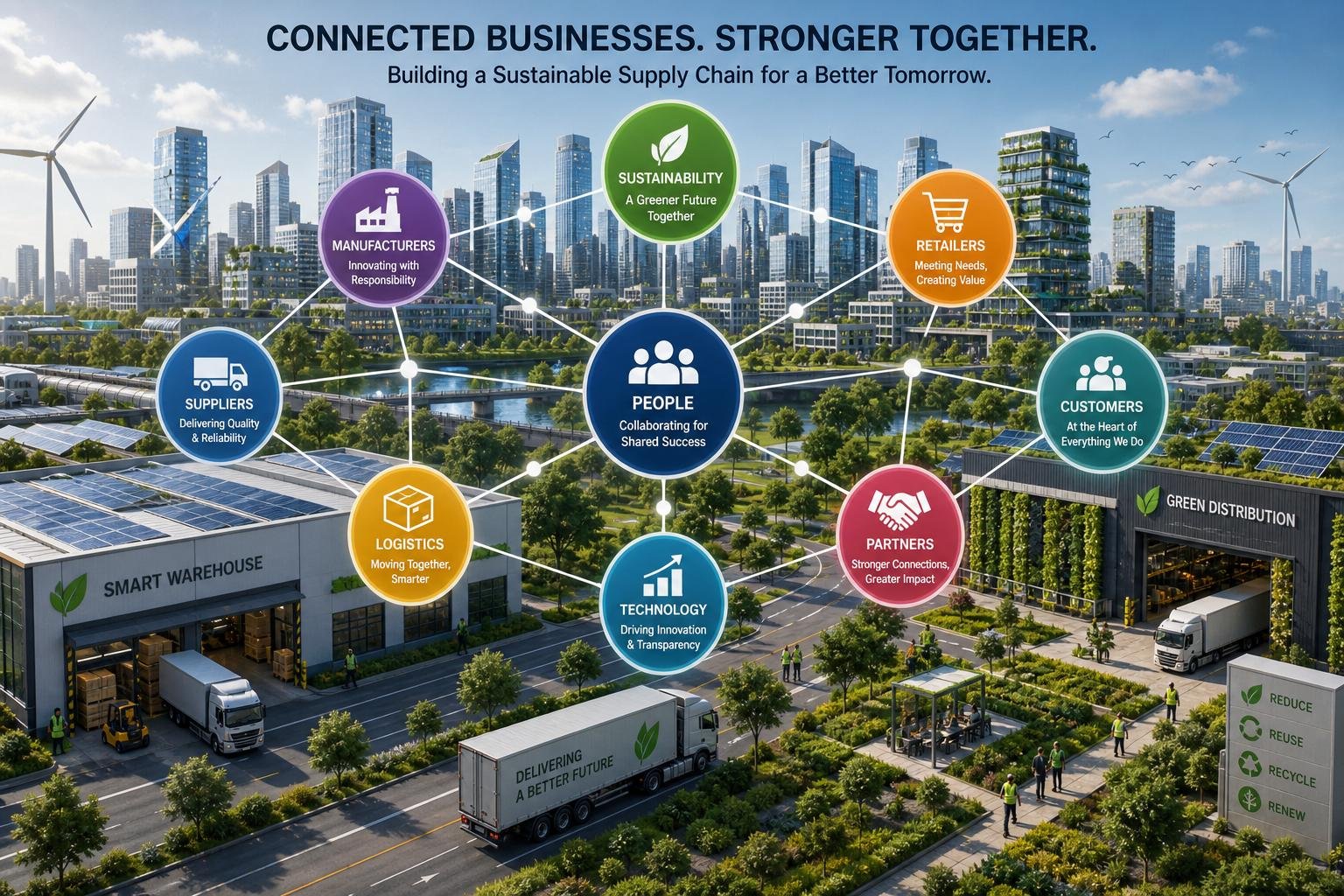
But Gartner’s broader argument is that the most important effect will be organisational rather than operational. AI can help companies move beyond tightly controlled one-to-one supplier and customer links and towards broader ecosystems built around shared goals, shared data and faster coordination among multiple partners.
In that model, value is not created only by buying and selling. It also comes from combining capabilities across suppliers, logistics providers, customers, technology firms, universities, investors, non-profits and, in some cases, even competitors. Gartner says organisations with greater AI maturity are already more confident in this kind of partnership working: nearly half rate themselves above expectations in ecosystem collaboration, compared with just 11% among less mature peers.
The consultancy expects that shift to deepen. By 2029, it predicts AI will have helped unlock ecosystem partnership potential in 40% of supply chains, with new relationship-focused roles emerging to manage the added complexity.
Those roles will matter because AI may improve coordination, but it will not replace trust. Gartner says the winners will be companies that combine digital orchestration with people who can build long-term relationships, align incentives and govern collaboration across many organisations at once. The firm describes this as a move towards “return on relationship”, where success is measured not just by transactions but by growth, resilience and capability building.
For chief supply chain officers, the implication is clear. According to Gartner, they can no longer afford to be seen mainly as cost managers. A report published in May 2024 said they must generate multiple forms of value, including growth, resilience, sustainability and risk reduction, if they are to remain strategically relevant.
That means preparing the underlying digital and process infrastructure so partners can share data and act in real time. It also means assigning clear executive ownership for ecosystem strategy, rather than treating external collaboration as a side task. In Gartner’s view, the supply chains that outpace the market will be those that stop thinking only about what they can build or buy, and start treating partnership capability as a core growth engine.
Source: Noah Wire Services