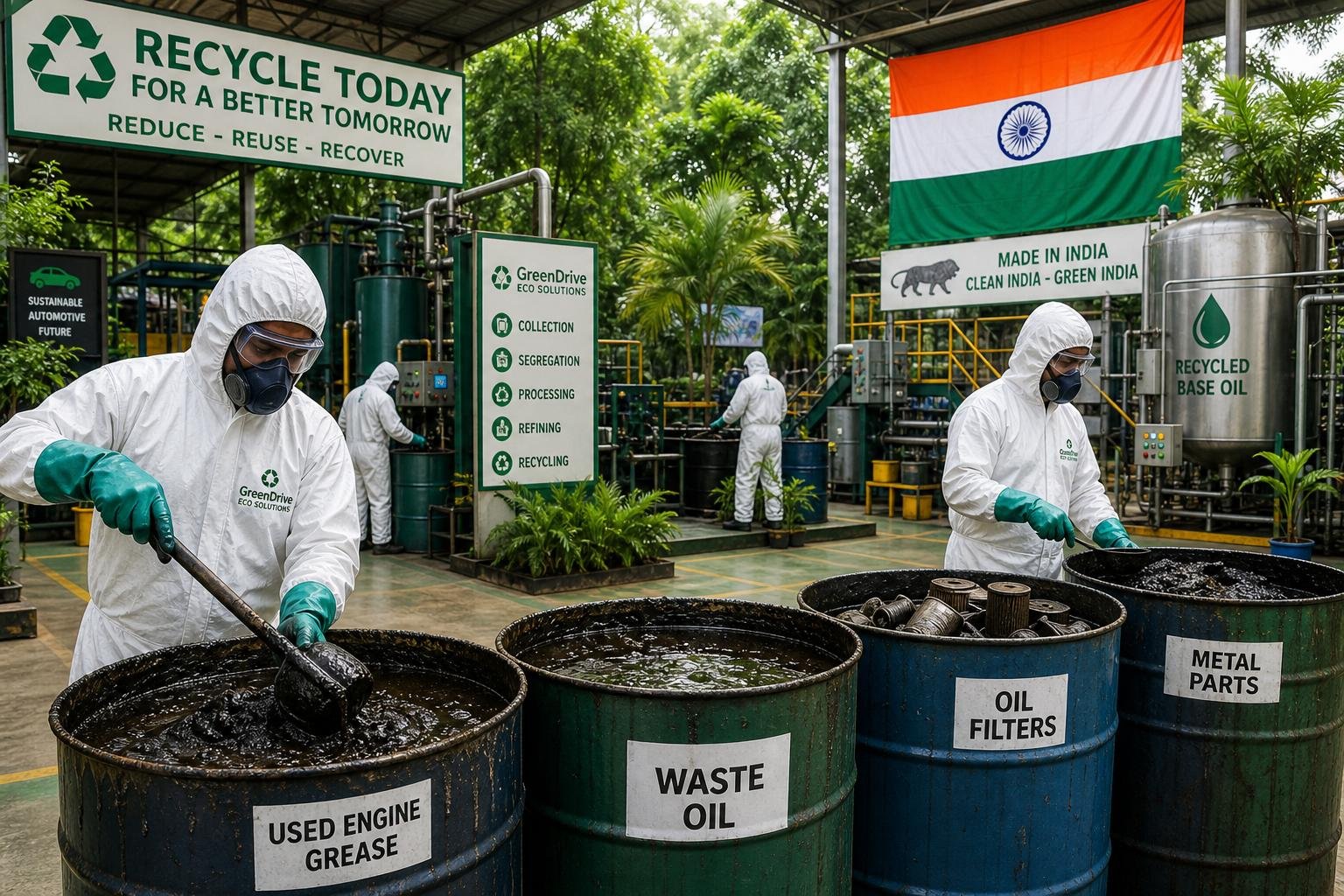
Hindustan Petroleum Corporation Limited and Tata Motors have agreed to pilot a system for collecting and recycling used automotive lubricants, in a bid to formalise a waste stream that has long posed environmental and regulatory challenges in India.
The move is designed to create a traceable chain for used oil, from collection and storage through to transport and reprocessing. The aim is to turn material that is typically treated as hazardous waste into re-refined base oil that...
Continue Reading This Article
Enjoy this article as well as all of our content, including reports, news, tips and more.
By registering or signing into your SRM Today account, you agree to SRM Today's Terms of Use and consent to the processing of your personal information as described in our Privacy Policy.
can return to the lubricant supply chain, supporting the country’s wider push towards a circular economy.
According to the companies, HPCL will take charge of aggregation and transport through authorised channels, directing used lubricants to registered recyclers. Tata Motors will use its authorised service network, which spans more than 4,500 touchpoints, to collect the oil and encourage proper disposal by fleet operators and vehicle owners.
The pilot is expected to begin in selected states and will be overseen by a joint committee from both companies to monitor execution and assess whether the model can be scaled up. Industry observers have increasingly pointed to used lubricants as an overlooked environmental risk, with improper disposal capable of contaminating soil and water or entering the informal waste stream.
HPCL said the collaboration would help cut the carbon footprint associated with lubricant disposal, while Tata Motors framed the initiative as part of a broader responsibility to manage the afterlife of vehicle consumables as well as the vehicles themselves.
The partnership also fits into India’s evolving Extended Producer Responsibility framework, which is pushing manufacturers and related industries to take greater accountability for the full lifecycle impact of their products. For HPCL and Tata Motors, success would offer a possible template for other oil and vehicle companies seeking to build more formal, scalable systems for waste-oil recovery.
Source: Noah Wire Services