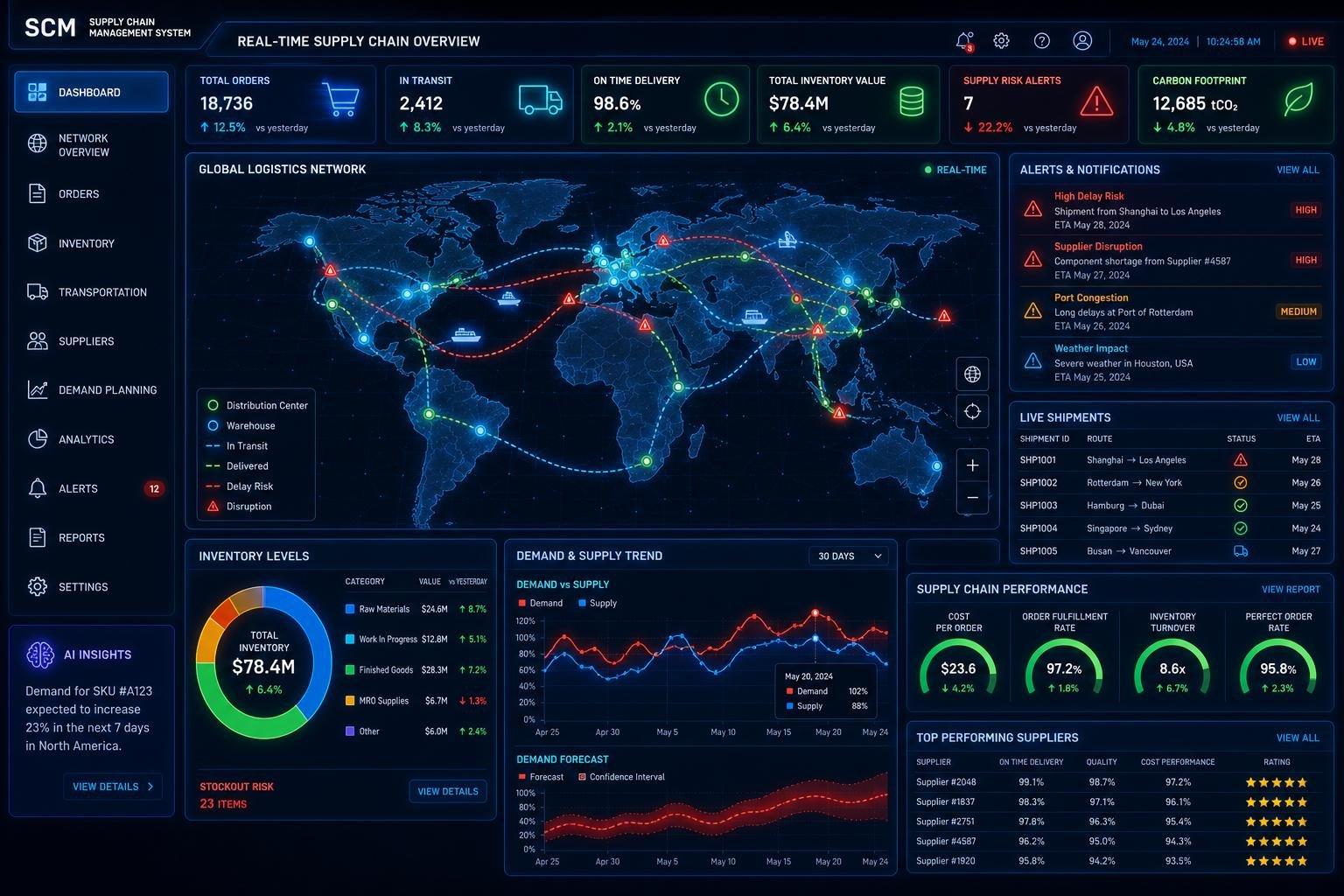
Databricks is pitching Genie as a way to turn supply chain visibility from a reporting exercise into a live decision-making capability, arguing that many firms already hold the relevant data but fail to connect it quickly enough to avert disruption.
The company says the core problem is not a shortage of information. In its telling, lead-time movements, inventory trends, weather patterns and commodity signals often already exist across internal systems and external feeds, yet th...
Continue Reading This Article
Enjoy this article as well as all of our content, including reports, news, tips and more.
By registering or signing into your SRM Today account, you agree to SRM Today's Terms of Use and consent to the processing of your personal information as described in our Privacy Policy.
ey remain fragmented across dashboards, enterprise planning tools and analyst workspaces. That fragmentation means many businesses still find out about a problem only after it has already begun to affect production, fulfilment or supplier performance.
That gap has become familiar to supply chain leaders since the pandemic. Industry definitions of supply chain visibility generally focus on the ability to track materials, components and finished goods as they move through the network, with the aim of improving transparency, resilience and response times. But as IBM and other enterprise software providers have noted, visibility is often constrained by disconnected systems, siloed data and incomplete hand-offs between suppliers, logistics partners and internal teams.
Databricks is positioning Genie as an answer to that problem. Rather than requiring users to wait for a data team to write queries or build a report, the tool is designed to let business leaders ask plain-language questions about their own operational data. The company gives the example of a chief supply chain officer querying which tier-two suppliers have experienced lead-time increases over a given period, and how much inventory cover remains for the parts they provide.
According to Databricks, the point is not simply faster access to information, but a different kind of operational awareness. Questions that once took analysts hours to assemble can be answered in seconds, and those answers can be extended into “what if” scenarios using current inventory, contractual and production data. The company says that could help leaders estimate financial exposure if delays worsen, or identify where buffers should be built before a disruption spreads through the network.
The pitch also reflects a broader shift in supply chain management towards continuous monitoring rather than periodic review. Traditional business intelligence tools remain useful for after-the-fact analysis, but Databricks argues they are less effective when organisations need to spot emerging patterns early enough to act. In that sense, Genie is being presented as a layer of intelligence sitting on top of existing ERP and planning systems, designed to make data usable for a wider group of decision-makers.
Databricks highlights several features it says set the product apart: reasoning grounded in ERP data, the ability to run scenario analysis, awareness of supplier tiers and the option to share answers consistently across procurement, operations and finance. The company’s broader message is that supply chain resilience depends not just on collecting data, but on making it legible to the people who need to respond fastest.
For Databricks, the sales argument is clear: the next advantage in supply chains may belong to firms that can see disruption forming earlier, understand its implications more quickly and coordinate a response without waiting for an analyst-led deep dive.
Source: Noah Wire Services