


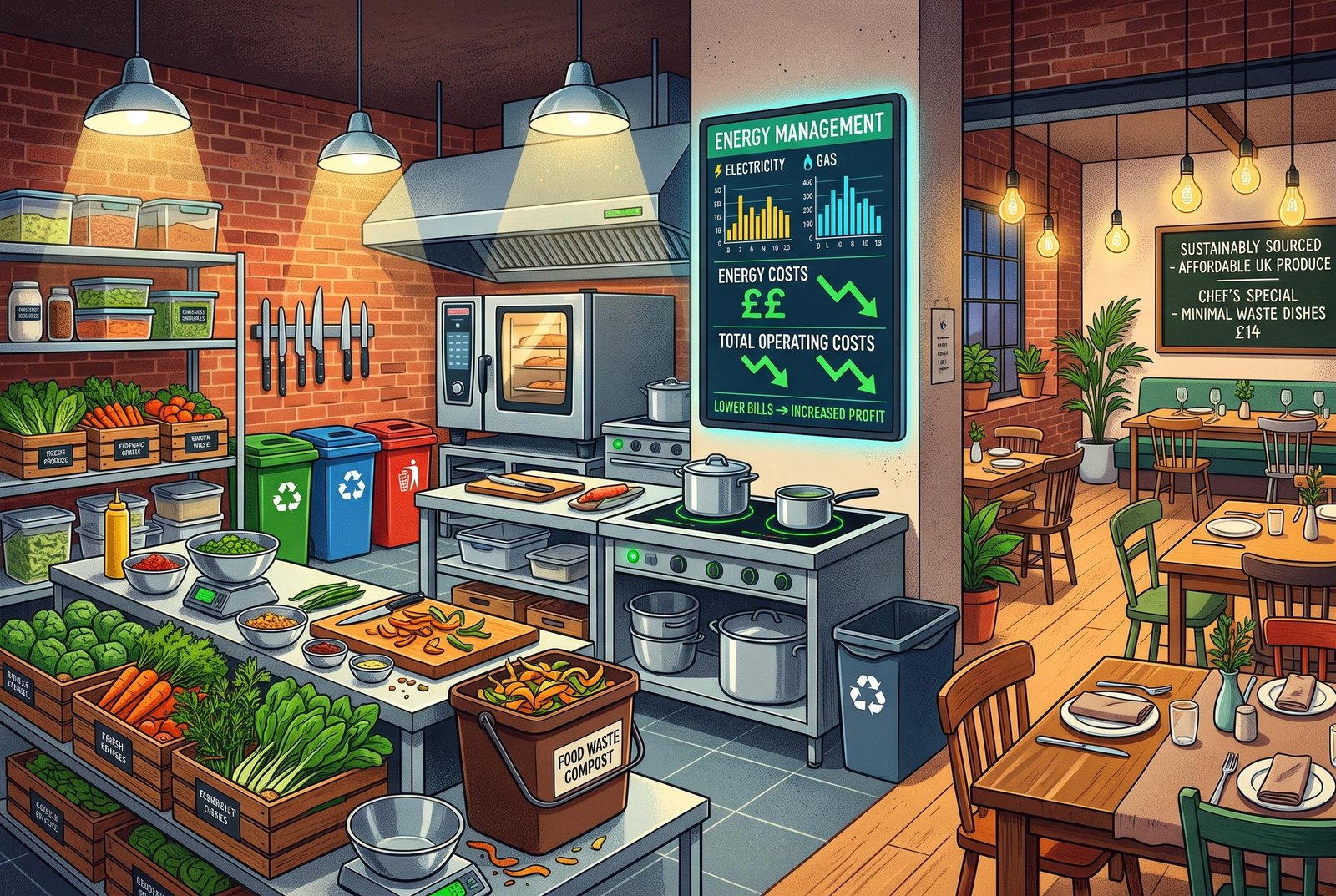
For restaurant operators, sustainability is increasingly a commercial decision as well as an environmental one. But customer interest does not guarantee that diners will accept higher prices, and initiatives that are difficult to measure can become costs without a clear return. The strongest programmes are therefore those that connect environmental goals to everyday priorities such as food costs, energy use and reliable supply.
A Toast survey of 400 UK restaurant owners, report...
Continue Reading This Article
Enjoy this article as well as all of our content, including reports, news, tips and more.

By registering or signing into your SRM Today account, you agree to SRM Today's Terms of Use and consent to the processing of your personal information as described in our Privacy Policy.
Sourcing locally can bring practical benefits beyond a restaurant’s environmental credentials. Shorter supply chains may limit exposure to import-price fluctuations, while relationships with nearby producers can support more dependable procurement. Seasonal menu planning and using more of each ingredient, from root to stem, can also help control waste and make better use of stock. Inventory tools that track supplies and forecast demand may help operators put those ideas into practice.
Diners’ stated interest in sustainability, however, needs to be weighed against the choices they make when ordering. Toast’s survey of consumers found that some diners consider a restaurant’s environmental efforts when deciding where to eat and may be willing to pay more, but attitudes vary. Sustainability is one factor among several, alongside price, flavour, convenience and the quality of the meal; stated preferences do not guarantee changes in purchasing behaviour.
That qualification is reinforced by FoodNavigator’s coverage of 2026 consumer research. In findings from Germany, price and taste were each rated as important by substantially more consumers than environmental friendliness, while more than half of EU respondents viewed sustainable food as too expensive. FoodNavigator also reported that around 40% of those surveyed wanted to eat food with the least environmental impact, and 36% aimed to buy more products labelled sustainable. The gap between those intentions and what people can afford underlines why restaurants should not assume that environmental credentials alone will persuade guests to spend more.
Credibility matters, too. FoodNavigator noted that consumers can be sceptical of corporate sustainability claims, particularly where they suspect greenwashing. Clear, specific evidence is more persuasive than broad promises: operators can explain what has changed, why it matters and how progress is being measured. Packaging may offer a visible example, since customers handle takeaway containers directly, but it should sit within a wider programme rather than stand in for one.
Before committing money or staff time, operators need a way to judge whether an initiative is working. That means setting a baseline and deciding in advance which results count: lower ingredient losses, reduced energy use, less waste sent to landfill or a shorter payback period. Without those measures, it is difficult to distinguish an effective investment from a well-intentioned change with little practical impact.
Food waste is one of the clearest places to begin. The National Restaurant Association says food costs commonly account for 28% to 35% of restaurant sales and estimates that each dollar invested in reducing food waste can generate about eight dollars in savings. The return is not limited to the value of ingredients that would otherwise be discarded. Waste can also add to handling and disposal costs, while prevention may improve inventory control and day-to-day efficiency.
The association recommends tracking discarded food, establishing targets and making prevention part of routine management. Practical steps include improving stock rotation and forecasting, standardising portions, training staff to spot waste and donating safe surplus where possible. Measuring what is thrown away helps identify where losses occur and whether changes are making a difference. The association also stresses that this work is more likely to last when it involves staff across the business, rather than being left to a single department or individual.
Energy is another significant operational opportunity. The US Environmental Protection Agency’s ENERGY STAR guidance says restaurants typically use five to seven times more energy per square foot than other commercial buildings. Refrigeration, lighting and cooling are among the major demands, alongside cooking equipment and ventilation. The agency advises operators to consider the full cost of equipment over its working life, including utility bills and maintenance, rather than comparing purchase prices alone.
Routine measures can make a difference: maintaining appliances, using start-up and shut-down procedures, and adjusting heating, cooling and lighting to match operating needs. Monitoring can also help reveal unusual consumption or equipment faults. Envigilance, which sells energy-monitoring services, cites potential savings from monitoring, but such estimates should not be treated as a guaranteed outcome. Results will depend on a restaurant’s equipment, building, existing energy use and whether staff act on the information.
Packaging is less likely to deliver the largest direct savings, but it can make a restaurant’s choices tangible to customers. A switch to a more sustainable option may carry a higher unit cost, so operators should include disposal costs, supplier terms and customer expectations in the calculation. Water efficiency and more resilient supply arrangements may also take longer to repay, yet can help reduce exposure to rising resource costs and disruption.
These decisions are more effective when procurement, operations, finance and marketing work together. Procurement can assess suppliers and materials; kitchen and operations teams can identify where food, water and energy are being lost; and finance can test costs and payback assumptions. Marketing can then communicate verified changes without overstating their impact. Treating sustainability as a shared management responsibility makes it easier to maintain targets and review progress.
A useful assessment considers the full expense of an initiative, including installation, training and ongoing costs, alongside its expected payback and measurable effects. Operators can track indicators such as food cost as a share of sales, energy use or cost per cover, discarded food and packaging expenditure. They can also ask whether a change reduces an existing expense, whether customers are likely to notice it and whether the business can explain it credibly.
Sustainability is most durable when it is assessed with the same commercial discipline as any other operational choice. Starting with measurable opportunities such as food-waste prevention and energy management can help restaurants make progress without assuming that every environmental measure will pay for itself. The aim is to find changes that are both credible and workable: reducing resource use while supporting the value, taste and reliability guests expect.
Source: Noah Wire Services
