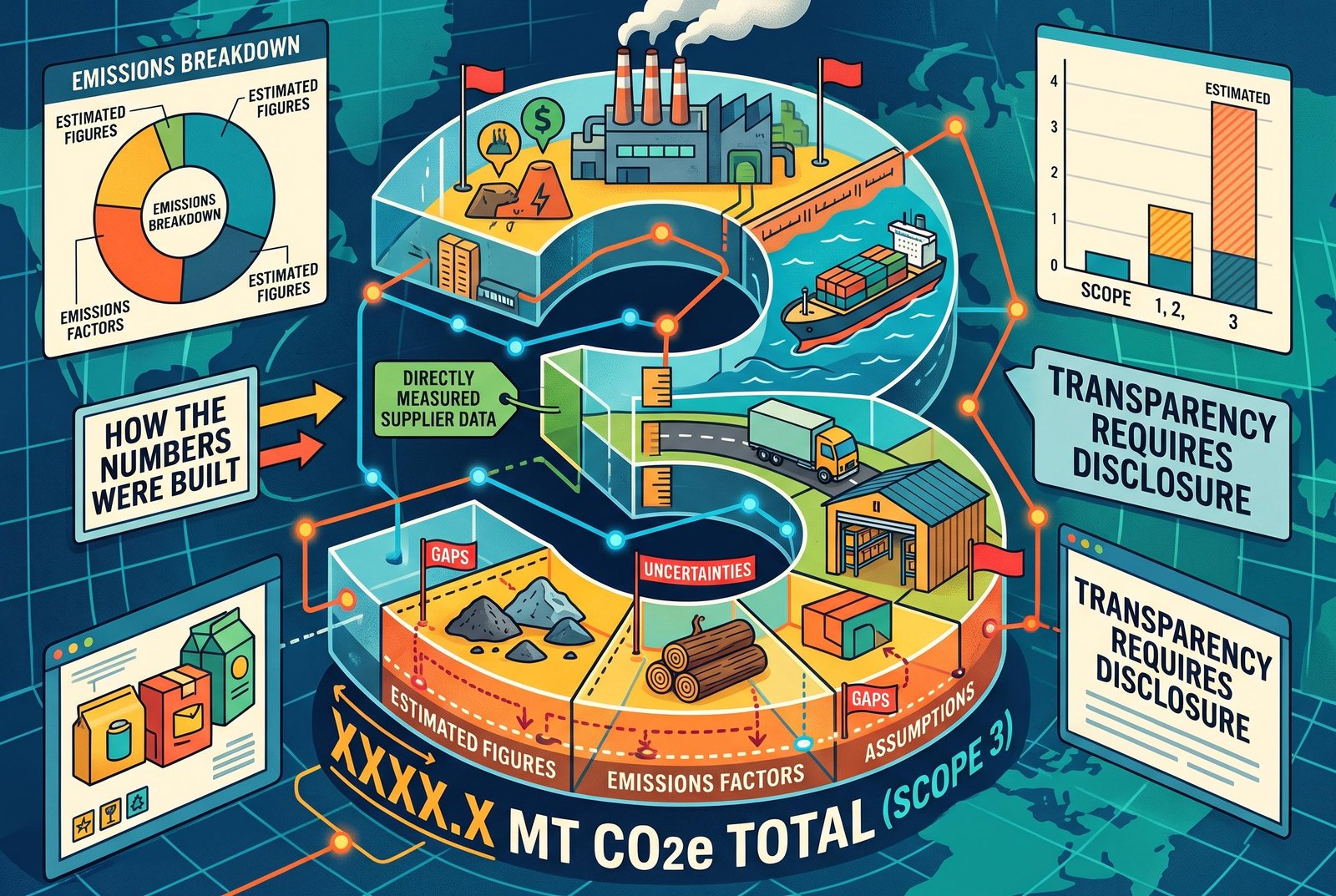
Companies reporting greenhouse-gas emissions from their supply chains should explain how the figures were assembled, rather than present a single total without showing its limitations, according to a guest article published by ESG Today.
Scope 3 emissions cover a company’s value chain, including the goods and services it buys and the transport used to move them. For many businesses, these sources make up a substantial share of their carbon footprint, but the underlying inform...
Continue Reading This Article
Enjoy this article as well as all of our content, including reports, news, tips and more.
By registering or signing into your SRM Today account, you agree to SRM Today's Terms of Use and consent to the processing of your personal information as described in our Privacy Policy.
ation often comes from a mix of supplier records, calculations based on activity and industry-wide estimates.
The 2026 Carbon Action Report by EcoVadis and Kearney, based on assessments of more than 56,000 companies, found that about 40% disclosed Scope 3 emissions and just 4% used primary supplier data to calculate them. It warned that reliance on low-quality information could lead companies to understate their supply-chain emissions by as much as three times.
That shortfall has implications beyond the accuracy of corporate disclosures. EcoVadis and Kearney said weak data can make it harder for companies to identify supply-chain exposure, including risks from disruption, commodity-price shocks and damage to infrastructure.
Complete information across a value chain is often difficult to obtain. PwC’s 2026 State of Decarbonization report examined disclosures and other material from 158 Fortune 500 companies covering 2023 to 2025. It found that a quarter had no visibility beyond tier-one suppliers, while only 18% consistently tracked supplier activity and emissions further upstream. The findings apply to PwC’s sample, rather than providing a measure of all companies.
The ESG Today article, written by Chris Winchurch, general manager of Novisto Carbon, argues that a company’s ability to explain its calculations is a better test of progress than whether its inventory appears complete. That means identifying where information is missing, describing how estimates were made and showing what has changed since the previous reporting cycle.
Guidance from the GHG Protocol recognises that companies may need to combine data types and calculation methods. Supplier-specific information can reflect the operations of a particular value chain, but it may be difficult to obtain or verify. Secondary sources, such as industry averages or financial data, can be more accessible, though they may not closely represent a company’s actual purchases or show improvements made by individual suppliers.
The quality of supplier data also needs checking. A manufacturer’s figures, for example, might cover only some facilities or omit purchased electricity. Recording the source of each figure and reviewing it for completeness and consistency can help companies judge how much confidence to place in their totals.
Calculation choices can affect the result, too. A company estimating emissions from aluminium purchases could use spending, the quantity of metal bought or a supplier-specific factor that accounts for recycled content and electricity sources. A spend-based calculation may show higher emissions when prices rise, even if the volume purchased has not changed. Documenting methods, emission factors and assumptions helps stakeholders distinguish real changes in emissions from changes in prices or accounting approaches.
The IFRS Foundation’s educational material on IFRS S2 similarly highlights the importance of selecting inputs that faithfully represent value-chain emissions and explaining the assumptions used. It recognises that estimates may be necessary where direct or supplier-specific information is unavailable, while calling for disclosure about how measurement inputs were prioritised.
Companies can also direct data-gathering efforts towards the sources most likely to affect their reported footprint or business decisions. For an electronics company, better information about semiconductors or batteries might matter more than detailed data on office supplies. GHG Protocol guidance supports using more specific methods for major emissions sources and estimates for less significant ones, balancing accuracy with cost and practicality.
Clear responsibility for supplier requests, evidence reviews and decisions to replace estimates can help sustain that work. Recording both improvements and unresolved gaps gives the next reporting cycle a useful starting point.
The aim, Winchurch argues, is not a figure that looks exact, but one that can be explained and assessed. As emissions data becomes more relevant to disclosures, financing and customer requirements, transparency about its sources and limitations is central to making it credible.
Source: Noah Wire Services