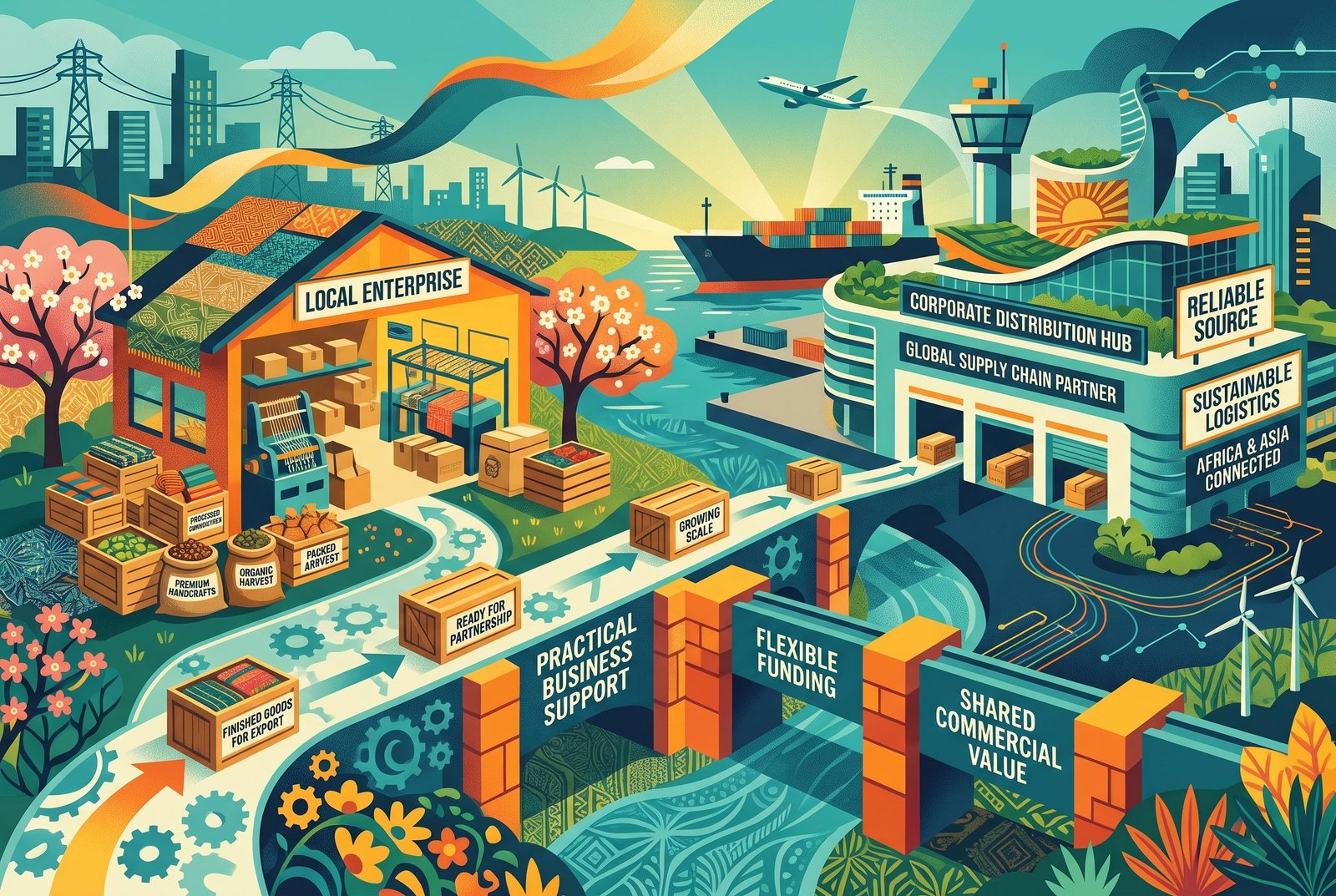
Corporate partnerships with small and medium-sized enterprises can offer a route to expand social and environmental solutions, but getting from a promising idea to a lasting commercial relationship takes more than grant funding. It requires businesses to adapt their processes, provide practical support and identify a clear commercial reason to work together.
That is one of the central lessons drawn from TRANSFORM, the initiative established in 2015 by Unilever, the UK Governmen...
Continue Reading This Article
Enjoy this article as well as all of our content, including reports, news, tips and more.
By registering or signing into your SRM Today account, you agree to SRM Today's Terms of Use and consent to the processing of your personal information as described in our Privacy Policy.
t’s Foreign, Commonwealth & Development Office and EY. The programme combined grants with business expertise and access to corporate networks, supporting more than 160 enterprise and research projects across 19 countries in Africa and Asia. TRANSFORM says those projects reached more than 21 million people. The initiative ended in 2026, with its open-access resources intended to help others apply the model.
Its experience suggests that impact enterprises can create value for both sides of a partnership. Smaller businesses may gain revenue, market access and opportunities to grow; larger companies can draw on local innovation and strengthen supply chains. As enterprises expand, they may also contribute to employment and local economic activity.
But the path into a corporate value chain can be difficult. A small enterprise may have a commercially useful product and still lack the relationships or resources needed to navigate procurement, meet quality requirements or expand operations. One lesson from TRANSFORM’s work is the importance of assigning an internal corporate contact to guide the relationship. Such a person can connect an enterprise with the relevant teams, explain internal processes and maintain momentum beyond an initial introduction.
Partnerships are also more likely to advance when they address an immediate business need. Boost, a business-to-business commerce platform focused on Africa’s convenience economy, illustrates how an enterprise’s offer can connect with distribution challenges. TRANSFORM supported its Kua project to examine how digital commerce could serve retailers and distributors across three African countries. The programme’s profile says Unilever contributed expertise in routes to market, trade marketing and promotions. The lead account says Boost secured contracts in Nigeria, Kenya and Egypt, although the programme profile does not independently confirm those specific agreements.
Packaging and waste provide another area where corporate priorities and enterprise models can overlap. Indonesia’s Alner supplies reusable packaging to consumer-goods companies and organises the collection, cleaning and refilling of containers. TRANSFORM’s profile says customers can refill three Unilever products through local channels, including convenience shops and waste banks. In South Africa, Sonke developed automated refill stations with digital tools for tracking sales and stock. Its programme profile describes plans to expand the range of goods available, including products from Unilever brands. Both examples show how local operating models can complement established products and retail networks, while addressing packaging waste and affordability.
A clear commercial case is not enough on its own. Senior attention can help partnerships gain credibility and speed, but the key decision-maker may be a functional manager rather than the most senior executive. Early conversations with the person responsible for procurement, operations or investment can clarify what a partnership must demonstrate to proceed.
For many smaller businesses, corporate onboarding is a hurdle in its own right. Vendor registration, compliance checks and contract negotiations can be unfamiliar and time-consuming. Practical guidance, clear documentation and access to the right internal teams can make the process more navigable. The lead account describes Boost as finding Unilever’s onboarding support valuable, while its programme profile separately confirms the company’s contribution of market and distribution expertise.
Funding may also need to continue beyond an initial proof of concept. Enterprises often require further investment in technology, quality systems or operational capacity before they can meet a large company’s requirements. The lead account says flexible grants, including changes to project scope and timing, helped some ventures reach that stage.
TrashCon, an Indian waste-management enterprise, illustrates the importance of developing both technology and viable revenue. Its system sorts mixed municipal waste, allowing organic material to be composted or used for biogas and some hard-to-recycle plastics to be turned into boards. TRANSFORM says its support helped the company expand its processing system, develop products and improve remote management and quality monitoring. The programme profile reports that TrashCon had plants in more than 20 cities. The lead account attributes a technology upgrade to a flexible second grant, but that specific funding detail is not confirmed in the project profile.
Other projects show how enterprises can adapt their services as conditions change. Bangladesh-based Bhumijo provides public toilets and related services, with facilities designed to be accessible to women, children and people with disabilities. TRANSFORM says it supported the addition of five facilities in Dhaka and helped the enterprise test new construction methods and revenue streams. During the pandemic, further funding enabled the installation of touchless features. The programme profile describes these developments, while the lead account says senior corporate interest helped accelerate decisions involving Bhumijo and Refill Bangladesh.
The broader lesson is that commercial integration depends on effort from all sides. Corporates need to make their procedures accessible and invest in the internal relationships that help smaller suppliers succeed. Enterprises, in turn, must develop the operational resilience and commercial readiness required to serve larger partners. Funders can help bridge the gap by allowing enough time and flexibility for businesses to adapt.
TRANSFORM’s cases do not establish that every partnership will scale, or that corporate collaboration alone can meet the challenges of climate change, nature loss and inequality. They do show why grants may have greater lasting value when they help enterprises build towards durable commercial relationships, rather than ending once an initial idea has been tested.
Source: Noah Wire Services