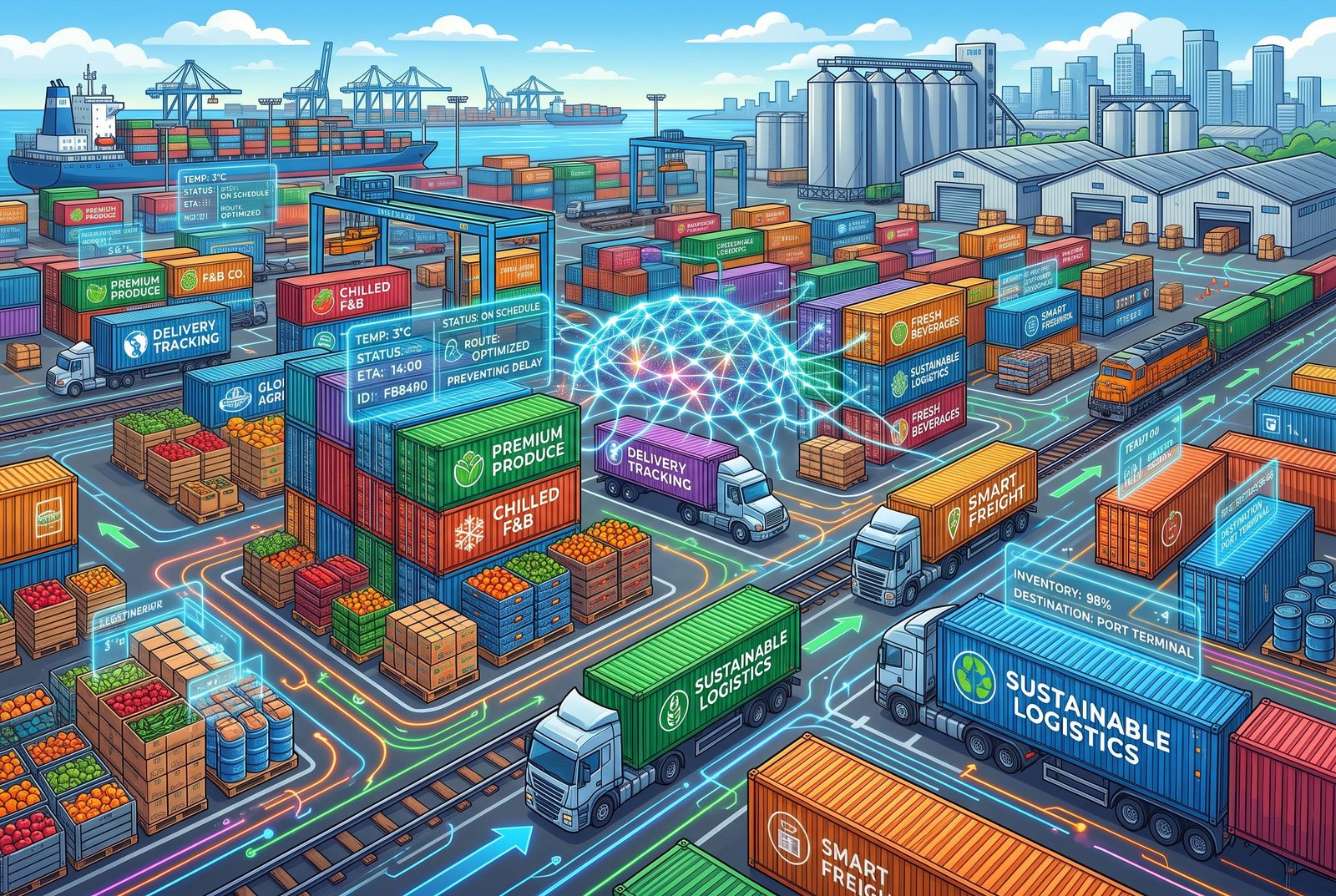
Food and beverage supply chains may now enjoy unprecedented visibility, but many still struggle to turn that insight into coordinated action. The result is a persistent execution gap: teams can see where freight is, yet they are often too late to intervene when delays begin to cascade.
That disconnect is especially obvious in the yard, where transportation schedules, warehouse priorities and labour constraints collide. A trailer might arrive early, late or in the wrong sequence...
Continue Reading This Article
Enjoy this article as well as all of our content, including reports, news, tips and more.
By registering or signing into your SRM Today account, you agree to SRM Today's Terms of Use and consent to the processing of your personal information as described in our Privacy Policy.
; dock space may disappear; and a single change in production can force a rapid reshuffle of equipment and personnel. In theory, modern tracking tools should make that environment easier to manage. In practice, many operators still rely on radios, spreadsheets, whiteboards and institutional memory to keep freight moving.
The problem is not a lack of information. Most logistics teams already have plenty of it, from GPS feeds and electronic logging data to connected vehicle platforms. The challenge is that visibility alone does not tell an operator what to do next. Knowing a refrigerated trailer is waiting at the dock does not decide whether it should be moved, rerouted, prioritised or held. By the time congestion appears on a dashboard, the window to prevent it may already have closed.
That is why the yard is increasingly seen as the point where digital visibility must become operational discipline. According to the American Transportation Research Institute’s 2024 detention research, detention affects nearly 40% of truckload stops and costs the industry more than $15 billion a year, including $11.5 billion in lost productivity and $3.6 billion in direct expenses. Refrigerated freight is hit even harder, with detention at 56% of stops. Those figures underline how quickly a delay can become a financial and service problem, particularly in temperature-sensitive supply chains where every minute matters.
The cost is not just economic. ATRI’s research has also pointed to safety implications, with drivers tending to travel faster after a delay. For refrigerated drivers, that response is even more pronounced. Once a load has already been stuck, the operational damage may no longer be reversible. Product quality may be at risk, detention charges may be mounting and the driver experience may already have deteriorated.
The case for a more intelligent yard model is therefore growing stronger. A digital twin of the yard, continuously updated with information from existing systems and data sources, can give operations teams a live picture of trailer movements, dock status, gate activity and yard tractor availability. But its value lies in more than mapping the site more clearly. Used properly, it creates a shared operating model that transportation, warehouse and yard teams can work from together.
That shared model matters because many of the problems in the yard stem from fragmented decision-making. One team may be looking at a spreadsheet, another at a radio call, and a third at a system record that is already out of date. A digital twin can pull those signals into one current view, reducing the need for manual reconciliation and helping teams work from the same facts at the same time. Technologies such as computer vision can automatically capture trailer identities at the gate, while mobile tools or kiosks can record whether a trailer is loaded, empty or damaged without waiting for someone to update the system later.
The more important step comes after the data has been captured. Artificial intelligence can use that live operating picture to flag patterns, anticipate bottlenecks and recommend the next best move. Instead of simply showing that a dock is backed up, the system can warn that congestion is likely before the next vehicle arrives. It can suggest resequencing a yard move, changing a door assignment or adjusting labour before the delay materialises. In other words, it can help teams act before the problem hardens.
That distinction is crucial. The objective is not to replace people, but to give them better timing and better information. Dispatchers, dock managers, yard supervisors and drivers still execute the work. What changes is that they spend less time hunting for updates and more time preventing disruption. A well-designed yard operating system can also reduce dependence on individual employees spotting every issue on their own, creating a more consistent operation and a less fragile one.
The need for a disciplined process becomes even more apparent as autonomous yard equipment enters the picture. Human-operated tractors and autonomous vehicles cannot be allowed to function as separate systems with different priorities. They need to run on the same live plan, with clear rules for sequencing, escalation and exception handling. Without that common framework, automation may increase speed in one part of the operation while adding confusion elsewhere.
For refrigerated freight, the stakes are especially high. A delay identified 20 minutes before arrival gives operators choices: they may be able to shift a trailer to another dock, hold a departure, alter the labour plan or rearrange the queue. A delay identified after the trailer has been waiting is far less useful. At that point, the data can explain what went wrong, but it cannot protect the load or recover the time.
That is why optimisation has to come before automation. Organisations first need to understand how work actually moves through the yard, remove unnecessary variation and establish repeatable processes. Only then can technology amplify good execution. If the underlying workflow is inconsistent, the software may still function perfectly while the operation itself remains slow, reactive and vulnerable to disruption.
Food and beverage supply chains are already spending heavily to keep product moving, and logistics costs can account for a substantial share of a shipment’s value. In that environment, there is little tolerance for avoidable detention, wasted fuel or spoiled freight. The ambition should not simply be to gather more information. It should be to use the data already available to protect the load, improve the driver experience and provide steadier service to customers.
The competitive advantage, then, will not belong to the operator with the largest amount of data. It will belong to the one that can translate data into action quickly, consistently and across the whole yard. A map can show where a trailer sits. A better operating model can tell the team what should happen next.
Source: Noah Wire Services