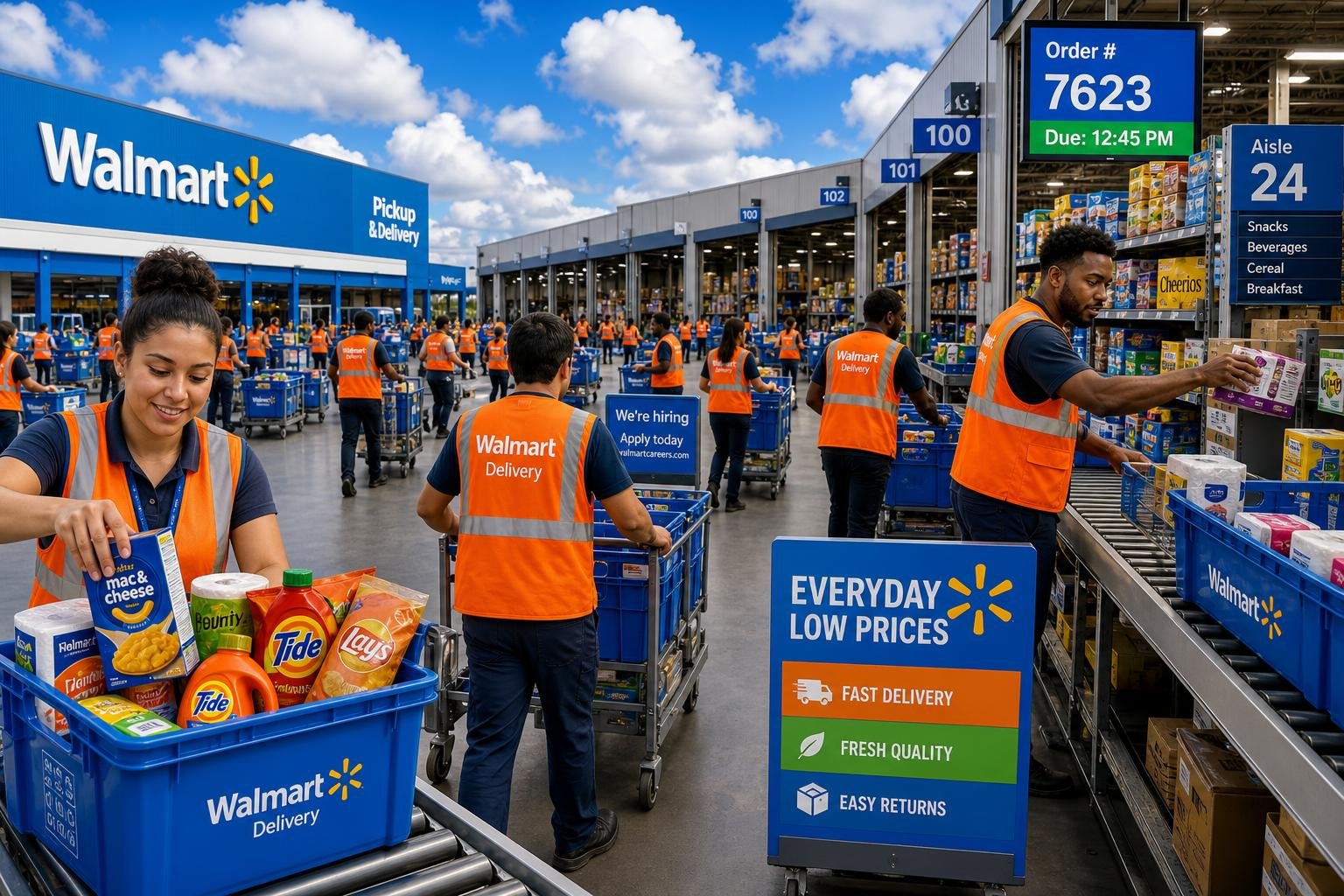
Walmart is turning rapid delivery into a structural advantage rather than a premium add-on, using its stores, clubs and fulfilment network to make sub-hour orders more efficient, not less. The retailer says its existing physical footprint now acts as a speed layer for the business, helping it meet demand for urgent purchases while also supporting higher-margin services.
According to figures Walmart has disclosed, delivery from its US stores has grown sharply, with store-fulfill...
Continue Reading This Article
Enjoy this article as well as all of our content, including reports, news, tips and more.
By registering or signing into your SRM Today account, you agree to SRM Today's Terms of Use and consent to the processing of your personal information as described in our Privacy Policy.
ed sales rising nearly 50% last quarter, as reported by Supply Chain Dive. The company said roughly one-third of recent store deliveries arrived within three hours, and about one-fifth of those came in 30 minutes or less. Axios reported on 21 May that Walmart now reaches around 60% of US households with rapid delivery, and that customers are increasingly using it for necessities such as nappies, medicine and meal ingredients.
The shift reflects a broader change in how the retailer thinks about speed. Rather than building a separate quick-commerce network, Walmart is leaning on its more than 10,900 stores and clubs as distributed fulfilment nodes. The company has also been testing delivery-only depots in vacant retail sites, a move that would give it extra last-mile capacity without requiring a wholly new store base. Those depots are designed to stock fast-moving items and sit closer to customers, extending the retailer’s ability to promise delivery in as little as 30 minutes.
Walmart’s economics are being reshaped by that model. Faster delivery is being linked to marketplace growth, fulfilment fees, advertising and membership revenue, which help offset the higher cost of speed. The retailer has said its marketplace and fulfilment services are expanding quickly, while membership income and ad sales are becoming increasingly important contributors to profit. That mix matters because it lets Walmart capture value even when it is not the seller of record.
Competition is also intensifying. Amazon has launched its own ultrafast service, Amazon Now, in selected US cities, while other large retailers continue to push same-day and rapid grocery delivery. Walmart’s response has been to make speed part of its core operating system, not a niche service. The company argues that the model increases visit frequency and customer loyalty, while giving shoppers more reasons to choose Walmart for everyday, immediate needs.
Even so, the economics are not frictionless. Faster delivery usually means higher labour, transport and fulfilment costs, and those pressures are now part of the retail race. But Walmart’s strategy suggests it believes scale, automation and network design can turn those costs into operating leverage. In effect, the retailer is betting that the fastest way to grow is to make speed itself more profitable.
Source: Noah Wire Services