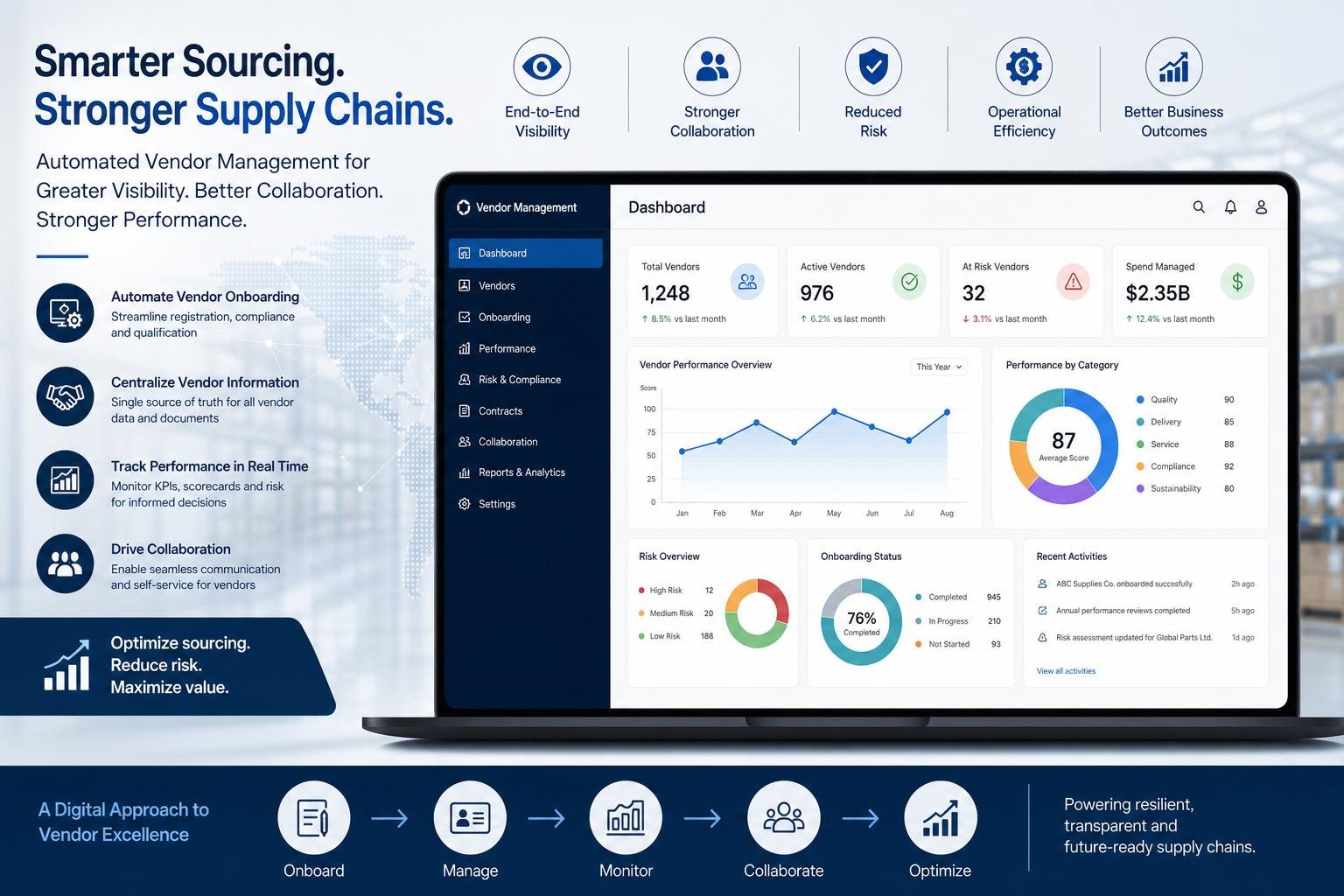
Vendor management has moved from an administrative back-office task to a core business discipline, as companies grapple with larger supplier networks, tighter compliance demands and more pressure to move quickly. According to the company’s announcement on 6 May, organisations that once relied on spreadsheets and email chains are now turning to digital platforms to centralise supplier data, automate approvals and improve visibility across procurement, finance and compliance teams.
Continue Reading This Article
Enjoy this article as well as all of our content, including reports, news, tips and more.
By registering or signing into your SRM Today account, you agree to SRM Today's Terms of Use and consent to the processing of your personal information as described in our Privacy Policy.
>
That shift reflects a broader change in how businesses think about suppliers. Vendor management now extends well beyond storing contact details or issuing purchase orders. Modern systems are being used to handle onboarding, document checks, risk reviews, contract tracking, performance monitoring and ongoing communication. Wise, in its overview of the category, describes these tools as a way to bring order to everything from onboarding to payments, with real-time oversight replacing guesswork.
Several vendors are pitching platforms with increasingly specific capabilities. VendorJot says its software includes a self-service portal for document uploads, automated onboarding checklists and centralised credential management, designed to reduce dependence on manual reminders. VendorBinder, meanwhile, positions its product around IT, security and procurement users, with features such as user access reviews, automated onboarding and offboarding, third-party risk management and custom alerts. Airbase says its offering combines self-serve onboarding with performance insights, flexible data views, spend orchestration and automated tax compliance.
The appeal is not just convenience. As procurement teams deal with more departments and more suppliers, fragmented information can quickly become a bottleneck. Delayed approvals, missing paperwork and unclear responsibility can slow purchasing and create audit headaches. A unified vendor management platform can reduce that friction by giving stakeholders a shared view of contracts, invoices, compliance records and communications.
Industry guides from PaymentWorks and AgileSoftLabs point to a similar set of priorities: secure bank account validation, audit trails, granular access controls, ERP and accounting integrations, vendor scoring and lifecycle management. In practice, that means companies are looking for more than a digital filing cabinet. They want systems that can support sourcing decisions, flag risk early and help procurement teams work with suppliers more consistently.
Collaboration is also becoming a selling point. Vendor collaboration software gives suppliers a structured way to upload documents, respond to requests and follow approvals, which can cut down on email traffic and reduce misunderstandings. For buyers, that means faster responses and better accountability; for vendors, it can mean clearer expectations and fewer delays.
The compliance angle is equally important. Businesses in regulated sectors are under pressure to keep licences, insurance certificates, tax records and other credentials current. Automated reminders and role-based permissions can help reduce exposure, while centralised records make audits easier to manage. For companies with growing supplier bases, this kind of control is increasingly seen as part of operational resilience rather than a nice-to-have feature.
What stands out across the market is the move towards broader platform integration. Vendor management tools are no longer being judged solely on onboarding speed or document storage. Buyers now expect them to connect with procurement, ERP, finance and inventory systems, while also producing reporting that can support supplier evaluation, spend analysis and risk monitoring.
For businesses weighing whether to invest, the practical question is not whether they need better supplier management, but how much complexity they are willing to keep handling manually. As the company behind the announcement argues, organisations that adopt scalable vendor management systems may be better placed to improve efficiency, strengthen supplier relationships and keep pace with the demands of modern procurement.
Source: Noah Wire Services