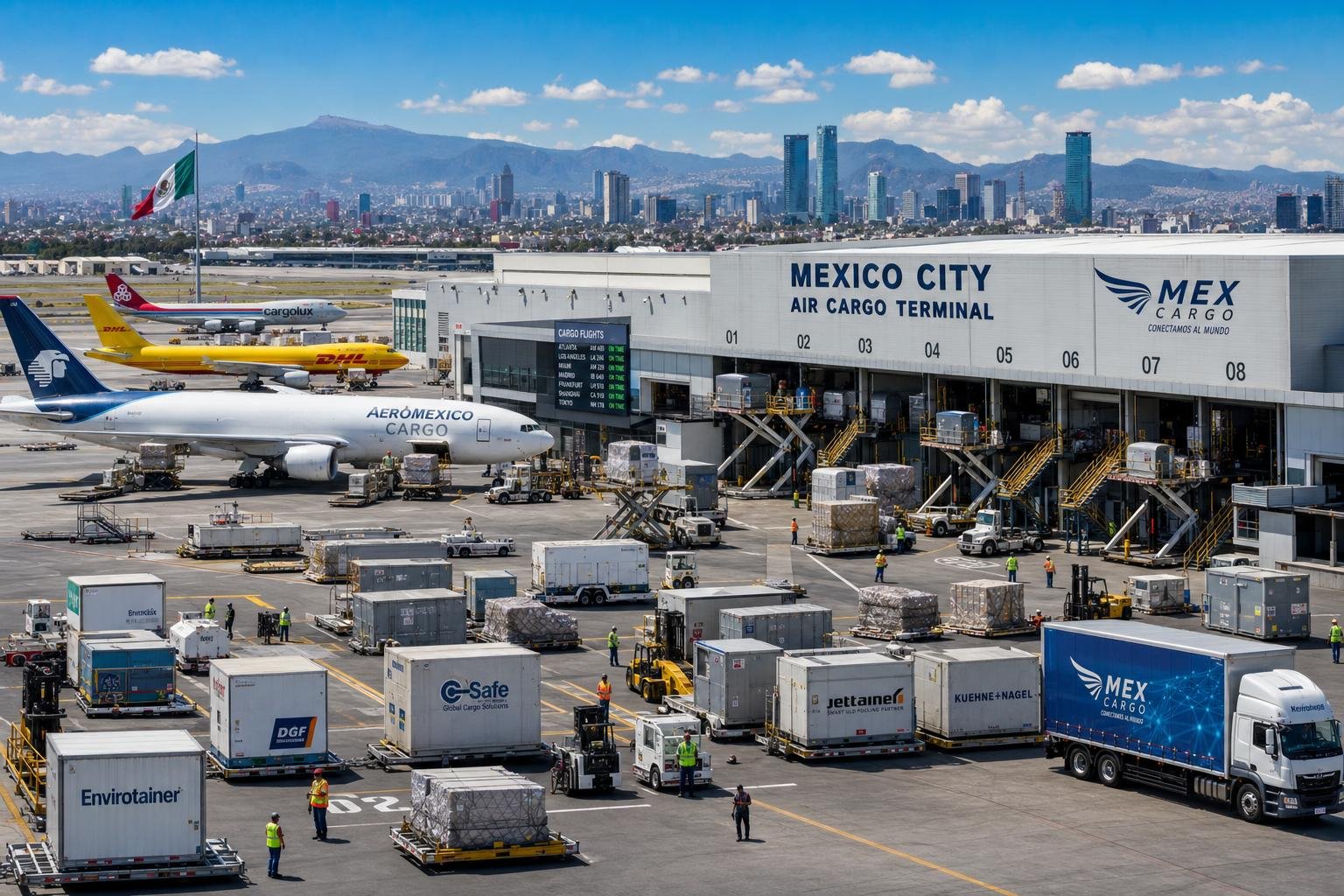
UPS is stepping up its air freight offer in Mexico with a new time-definite service aimed at manufacturers that need to move bulky, high-value parts across North America more quickly and with less uncertainty.
The Atlanta-based parcel and logistics group said it has committed nearly $50 million to its Mexican air freight network and wider industry-specific operations, with a particular focus on automotive and industrial customers. Beginning in August, the company will offer one...
Continue Reading This Article
Enjoy this article as well as all of our content, including reports, news, tips and more.
By registering or signing into your SRM Today account, you agree to SRM Today's Terms of Use and consent to the processing of your personal information as described in our Privacy Policy.
-, two- and three-day heavy air freight options to and from Mexico for the first time under its North American Air Freight service.
Matt Guffey, UPS chief commercial and strategy officer, said in a company statement that manufacturers want what he described as an “easy button” for logistics. He said they were looking for reliability, visibility and a partner that understands supply chains “end to end, today and tomorrow”.
UPS says the new set-up is intended to reduce border delays, improve tracking from origin to destination and help keep production lines moving more consistently. The company also said the investment covers both network improvements and the expansion of specialist teams, alongside integrated transportation, brokerage and warehousing services.
The move comes as air freight between the United States and Mexico has accelerated sharply. Industry data cited in the lead report shows the value of air cargo moved between the two countries rose to $33.2 billion in 2025 from $21.5 billion in 2024, lifting air’s share of total bilateral freight from 2.6 per cent to 3.8 per cent.
That shift reflects broader pressure on supply chains, including higher tariffs introduced globally last year and the end of the duty-free de minimis treatment, which pushed many firms to rethink sourcing patterns in Asia. For manufacturers, Mexico’s position under the US-Mexico-Canada Agreement, which generally allows qualifying apparel imports into the US duty-free, has made nearshoring a more attractive option.
A recent Kase Peak Season Retailer Sentiment survey found that 94 per cent of 328 retail, e-commerce and fulfilment leaders considered nearshoring and domestic sourcing important for reducing risk during the holiday peak. UPS is clearly betting that demand for faster, more predictable cross-border logistics will continue to grow as companies seek shorter lead times and greater flexibility in replenishment.
Source: Noah Wire Services