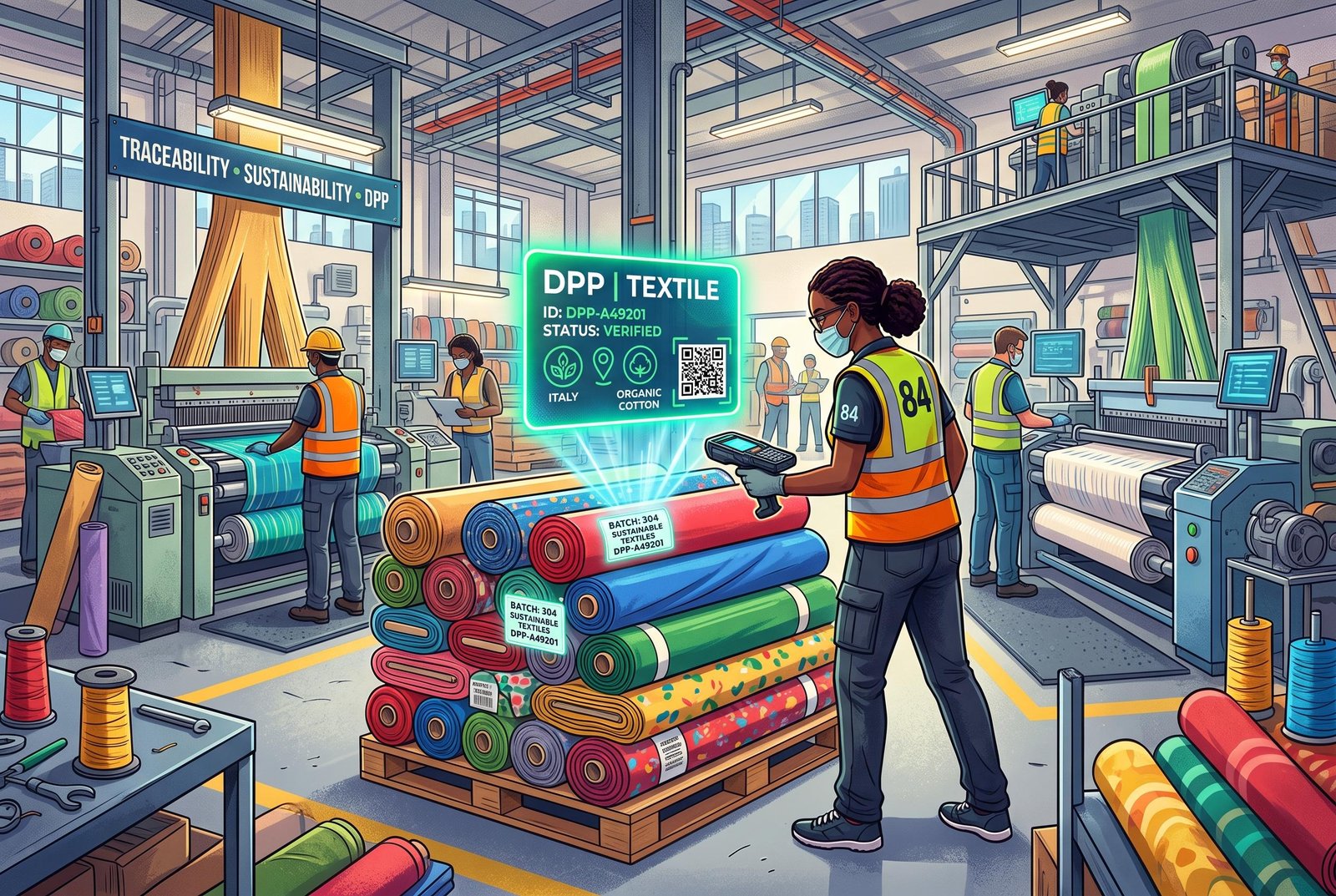
The textile and apparel sector is moving towards a new era in which product information may matter almost as much as the garment itself. At the heart of that shift is the Digital Product Passport, or DPP, a secure digital record designed to carry verified details across a product’s life cycle, from fibre sourcing and manufacturing to repair, resale and recycling.
In practice, the passport can be accessed through tools such as QR codes or RFID tags and may contain product iden...
Continue Reading This Article
Enjoy this article as well as all of our content, including reports, news, tips and more.
By registering or signing into your SRM Today account, you agree to SRM Today's Terms of Use and consent to the processing of your personal information as described in our Privacy Policy.
tity, fibre composition, origin, traceability data, environmental footprint, chemical compliance information, certifications, care guidance, recycled content and end-of-life instructions. Taken together, that data gives brands, suppliers, regulators and consumers a more complete picture of what a product is, where it came from and how it should be handled.
The idea is gaining momentum largely because of pressure from regulators and buyers. According to SQli, the European Union is moving towards making DPPs mandatory for products sold in its market by 2030, part of a wider push to improve transparency and sustainability across supply chains. Textile World has also linked the trend to the EU’s broader Green Deal framework, alongside rules such as the Eco-design for Sustainable Products Regulation and the Green Claims Directive. That regulatory direction is likely to shape export markets well beyond Europe.
For textile manufacturers, the attraction is not only compliance. A well-implemented DPP can reduce the risk of unsupported sustainability claims, improve traceability and make it easier to spot problems such as unauthorised subcontracting or counterfeit goods. It can also support circular business models by making repair, reuse and recycling more practical, while giving companies cleaner data for environmental, social and governance reporting.
Yet the transition will not be simple. Industry commentary from Textile TSG and MyProductPassport.co.uk points to a sector still hampered by fragmented data, manual record-keeping and limited digitalisation. A single garment may pass through multiple companies, countries and systems before reaching a customer, which makes consistent data collection difficult. SQli notes that firms will need new IT systems, stronger data models and better integration between partners if DPPs are to work at scale.
There are also operational and security questions. Data must be accurate, verifiable and governed properly if the passport is to retain credibility. Companies will need to address cybersecurity, standardisation and workforce capability, while building practical collaboration between brands, suppliers and technology providers. As one analysis on TexoraPass argues, delaying adoption could leave exporters exposed as product-level transparency becomes the norm rather than the exception.
For South Asia, the stakes are particularly high. The region remains a major base for apparel manufacturing and exporting, and early investment in traceability, ESG data systems and digital infrastructure could strengthen its position with international buyers. Europe is currently leading the regulatory push, but North America is also advancing responsible sourcing and digital traceability, suggesting that expectations are widening across the global market.
The broader significance of the DPP is that it changes what competitiveness means in apparel. Product quality still matters, but so does the quality of the information attached to it. In that sense, the passport is becoming more than a compliance tool: it is a marker of trust, accountability and readiness for a more transparent supply chain.
Source: Noah Wire Services