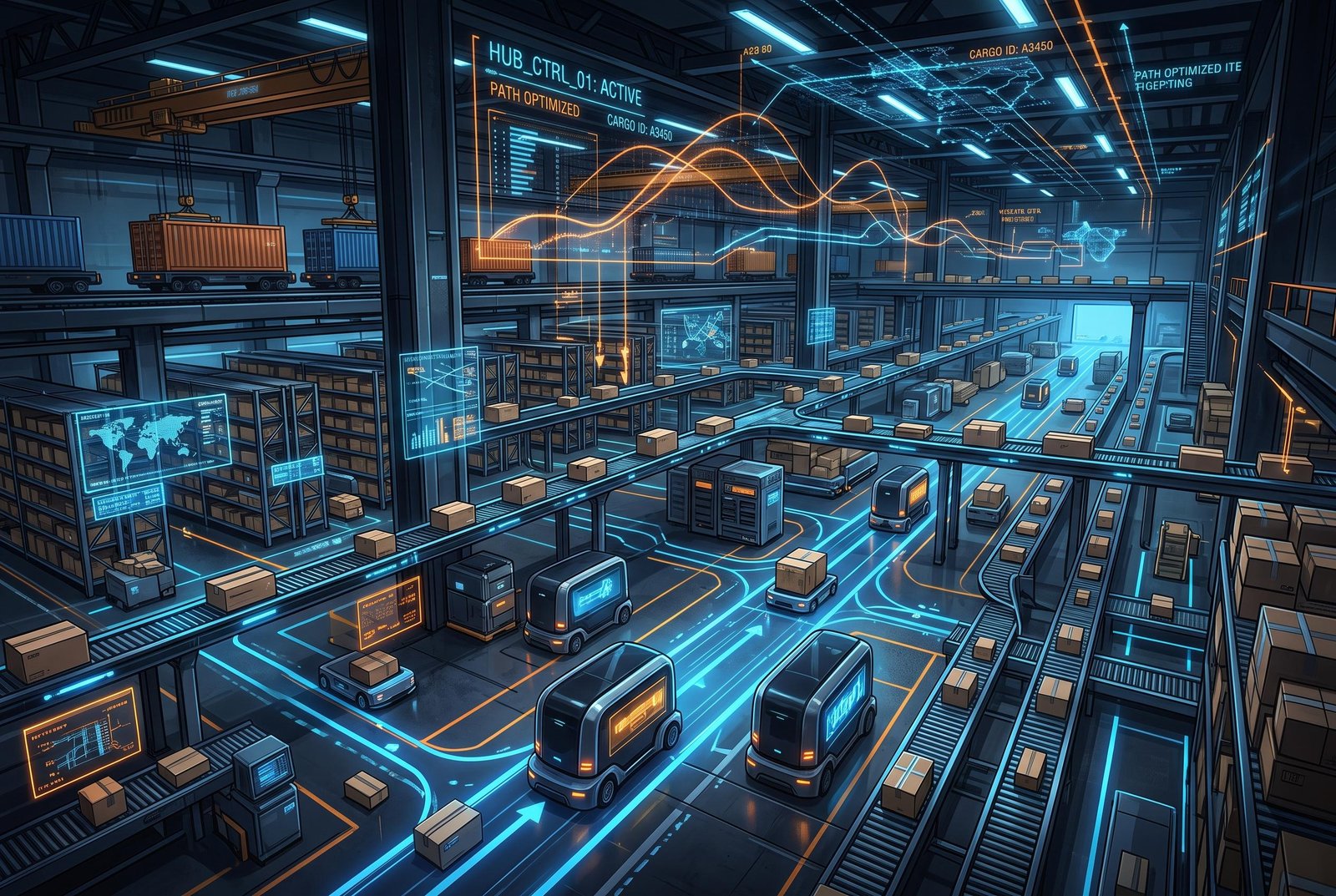
Supply chain leaders are being pushed to make faster, more accurate decisions as trade policy uncertainty, geopolitical conflict and increasingly tangled supplier networks raise the cost of delay. Gartner expects that by 2031, 60% of supply chain disruptions will be resolved without human intervention as artificial intelligence takes on more autonomous work. But the consultancy has also warned that preparedness is still patchy: in a 2025 survey, only 29% of supply chain organisations ...
Continue Reading This Article
Enjoy this article as well as all of our content, including reports, news, tips and more.
By registering or signing into your SRM Today account, you agree to SRM Today's Terms of Use and consent to the processing of your personal information as described in our Privacy Policy.
had built at least three of the five core capabilities it считает essential for future readiness.
That gap between insight and execution is where the idea of sentient logistics comes in. The concept is designed to move supply chains beyond prediction alone, so that systems do not merely flag a problem but understand its business context, assess the likely impact and help trigger a response. In practice, that means linking alerts to procurement, production, inventory, logistics and customer service decisions, rather than leaving each function to work in isolation.
A delayed component, for example, is not just a visibility issue. It may affect finished-goods output, customer commitments, revenue and the availability of alternative supply. A more advanced system would be able to bring those factors together, weigh options and either recommend or execute the most appropriate response. The goal is a closed loop in which detection leads to contextual understanding, decision-making and action, with the outcome feeding back into the next cycle.
The challenge is that supply chains often possess plenty of data without necessarily having a shared operational language. Information may arrive from suppliers, transport providers, warehouses, production systems, orders, inventory records and external events, but unless those signals are mapped to the same business context they can be hard to use effectively. A component reference in one system has to correspond to the right material, order and process in another. Without that alignment, information may be visible but not truly actionable.
Sentient logistics depends on that shared context. Each disruption can create its own temporary decision environment, bringing together the relevant supplier, affected orders, available inventory, substitute options, transport choices and approval rules. At that point, the system needs to know which information matters most and how it should be assembled around the decision at hand.
The model also depends on linking the physical and digital sides of operations. Goods may move in the real world while enterprise records lag behind, creating mismatches between what has happened and what the system says has happened. Sensors, internet-connected devices, robotics and other technologies can capture activity on the ground, while enterprise resource planning, warehouse management, order management and transport systems provide the transactional record. Intelligent agents can then coordinate information and action across both domains, with software agents handling system-to-system interactions and physical agents such as robots carrying out tasks in warehouses or similar environments.
Digital twins and simulation tools can strengthen that process by allowing companies to test possible responses in a virtual setting before changing live operations. Used together, these technologies can reduce the gap between disruption, understanding and response.
Autonomy, however, is not something that should be applied uniformly. Gartner has advised supply chain leaders to expand it cautiously, starting with low-risk decisions. The most sensible dividing line is often whether a decision is reversible. A routine warehouse adjustment that can be undone cheaply is very different from a major production shift, a large revenue commitment or a customer-facing action that is difficult to unwind.
That is why the most practical approach is tiered. Some decisions should remain gated, requiring human approval before anything happens. Others can run automatically but be escalated if the same issue appears repeatedly or begins to form a worrying pattern. In low-risk areas, automation may be allowed to proceed unless accumulated effects justify tighter oversight. Governance needs to be in place before autonomy is widened, including clear permissions, approval thresholds, escalation paths and recovery procedures.
Gartner’s broader research suggests that many companies are still some way from this point. In the consultancy’s 2025 survey, leaders were more likely than other organisations to think in terms of long-term capability rather than short-term fixes, and many had yet to invest heavily in technologies such as real-time visibility and digital supply chain twins, even if they planned to do so over the next three to five years. Gartner’s 2025 Global Supply Chain Top 25 also showed that leading organisations are increasingly distinguished by their use of AI, their move towards more autonomous operations and their effort to connect sustainability to core business goals such as cost control and risk reduction.
For companies that want to begin, the answer is not to rebuild everything from scratch. A sentient logistics capability can sit across existing systems and work best when applied to a narrowly defined problem with clear business value. The strongest starting point is a recurring disruption that is painful enough to matter but limited enough to implement within a realistic timeframe.
Success should be measured in business terms from the outset: fewer stockouts, faster response times, lower revenue exposure, reduced disruption frequency or better service levels. A first deployment should also have a clear time horizon, with the potential to demonstrate value within three to six months. If it works, it can then be extended to other processes, sites or regions.
The promise of sentient logistics is not simply more data or more automation. It is a supply chain that can recognise disruption, interpret its importance, act with appropriate control and learn from the result. In a more volatile trading environment, that kind of responsiveness may prove less like an aspiration and more like a requirement.
Source: Noah Wire Services