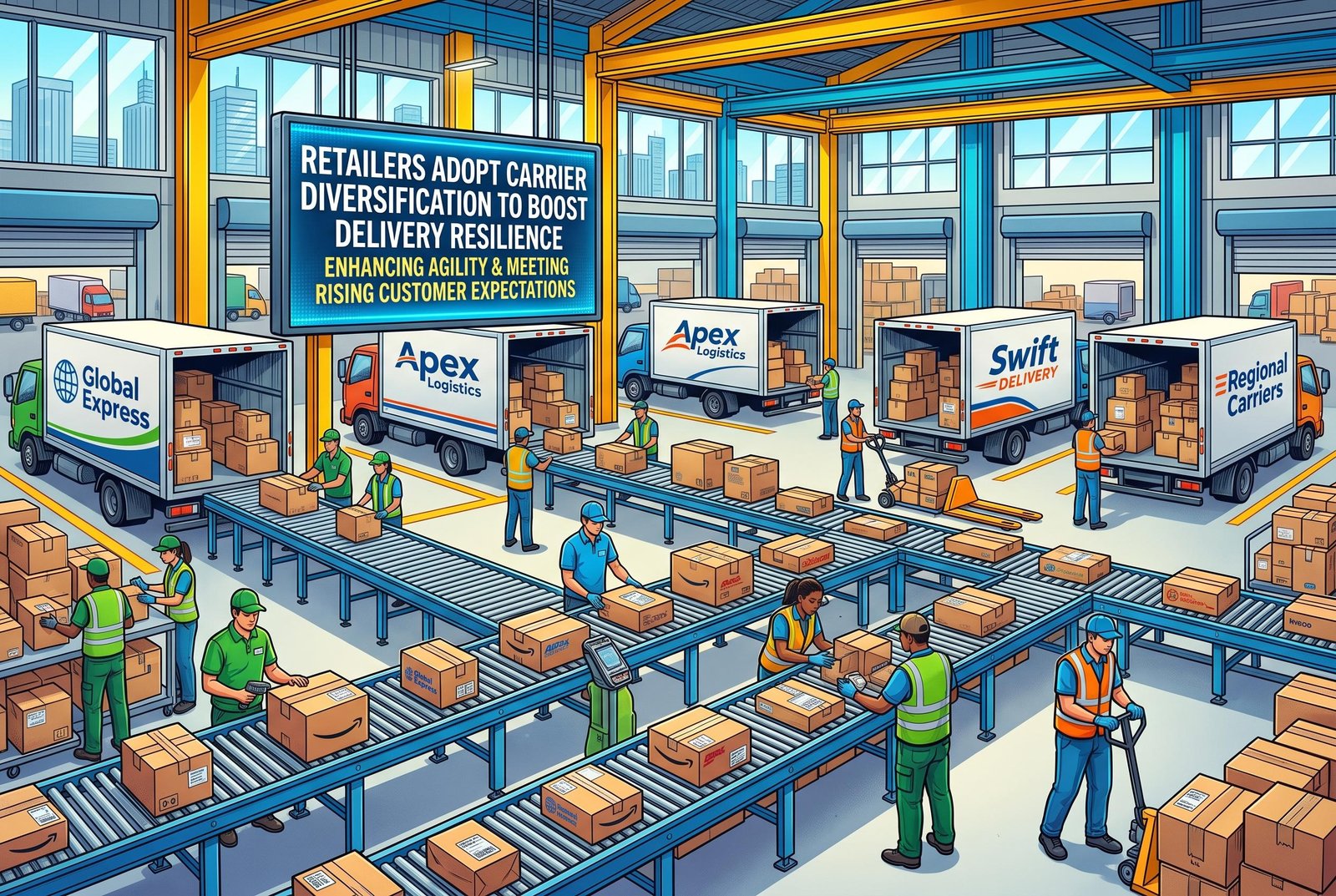
Enterprise retailers are increasingly treating delivery as a competitive lever rather than a back-office function, as higher carrier charges, rising consumer expectations and cross-border growth put pressure on shipping networks. One of the most effective ways to ease that strain is to avoid leaning too heavily on a single carrier and instead spread volumes across a broader mix of providers.
That approach, often described as carrier diversification, allows retailers to route pa...
Continue Reading This Article
Enjoy this article as well as all of our content, including reports, news, tips and more.
By registering or signing into your SRM Today account, you agree to SRM Today's Terms of Use and consent to the processing of your personal information as described in our Privacy Policy.
rcels according to destination, service promise, cost and operational need. In practice, that can mean assigning some shipments to national carriers, others to regional networks and, where appropriate, using different services within the same lane. The result is not just lower exposure to price rises or service disruption, but also greater negotiating power when contracts come up for renewal.
The case for a more varied carrier base is strengthened by what is happening in last-mile delivery. According to Narvar, more parcels are now being handled outside the largest US carriers, with regional operators taking a larger share of outbound volume. Narvar says that shift has also been associated with shorter average transit times, particularly during peak periods, when broader capacity can help retailers avoid bottlenecks.
But delivery performance is rarely improved by changing carriers alone. Enterprise retailers are also working on fulfilment processes, customer communication and tracking visibility to remove delays and reduce failed deliveries. Scurri argues that last-mile inefficiency usually has several causes, which means retailers need a joined-up approach rather than a single tactical fix.
Technology is central to that shift. Multi-carrier shipping software and delivery orchestration platforms are giving retailers more precise control over how orders move through their networks, helping them choose the most appropriate service in real time and adapt when demand changes. Some freight and delivery platforms also claim substantial savings on recurring lanes, while promising better use of cross-dock, pool distribution and other network models for high-volume shippers.
For retailers handling international growth or high order volumes, the strategic value is clear. A diversified carrier mix can improve resilience, support faster delivery and make shipping more adaptable as customer expectations keep rising. In a market where service failures are quickly noticed and quickly punished, flexibility may now matter as much as speed.
Source: Noah Wire Services