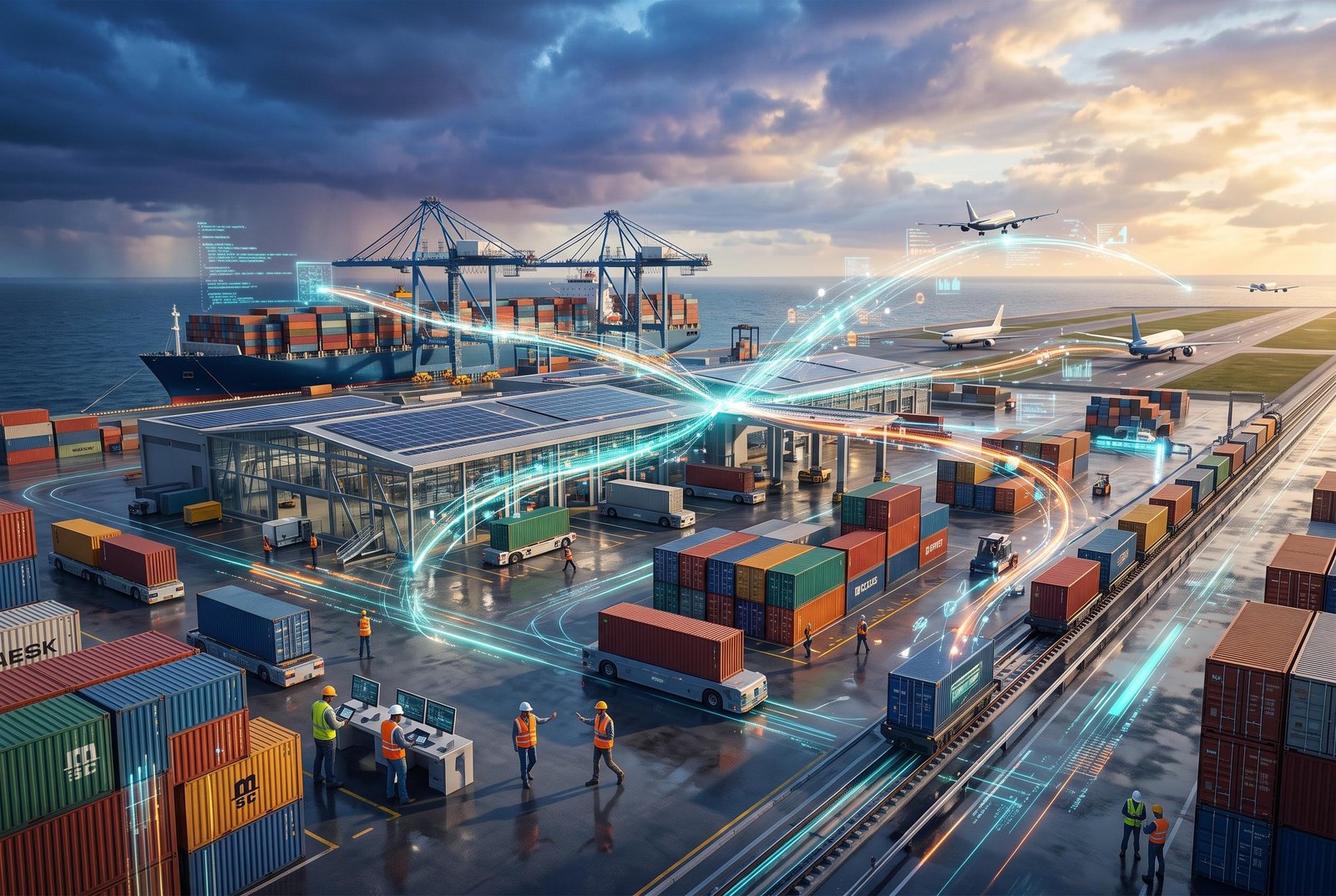
Global supply chains have become both a competitive advantage and a source of fragility for multinational businesses. In the MIT-linked piece published by Supply Chain Today, the central argument is straightforward: companies that want to improve performance must not only cut costs and speed up delivery, but also make their networks more visible, more adaptable and better prepared for shocks.
That challenge has only become more pressing. Brookings has argued that global supply ...
Continue Reading This Article
Enjoy this article as well as all of our content, including reports, news, tips and more.
By registering or signing into your SRM Today account, you agree to SRM Today's Terms of Use and consent to the processing of your personal information as described in our Privacy Policy.
chains cannot be strengthened through a single fix, pointing instead to a mix of measures including expanding domestic production, easing transport bottlenecks, tackling labour shortages and reducing geopolitical exposure. The OECD has similarly warned that geopolitical tensions, natural disasters, regulatory uncertainty and wider economic volatility continue to test the resilience of cross-border trade, making co-operation between governments and firms increasingly important.
The Supply Chain Today article emphasises transparency as a starting point. In practice, that means using technology to follow goods and materials as they move through the network, while also improving communication between suppliers, manufacturers and logistics partners. The same logic applies to efficiency: firms that automate repetitive tasks, simplify processes and keep inventory closer to actual demand are better placed to reduce waste and hold down costs.
Resilience, however, requires more than efficiency. Diversifying suppliers and geographies can reduce dependence on any one node in the system, while backup capacity and contingency planning help businesses absorb disruption. McKinsey has argued that companies are increasingly investing in end-to-end visibility and risk management, using analytics, artificial intelligence, the internet of things, robotics and digital platforms to assess trade-offs and respond faster when conditions change.
That digital shift is also shaping how firms prepare for cyber risks. The World Economic Forum has said global supply chains need cyber resilience built into organisational processes, supported by advanced tools for risk measurement and a more adaptive mindset. Its view is that resilience should not be treated as an emergency response, but as a permanent design principle.
The article’s practical examples reflect that broader direction. Artificial intelligence and machine learning can be used to scan weather data, traffic patterns and other signals for early warnings of disruption. Blockchain can improve traceability, while digital twins allow companies to simulate different scenarios before they hit the real world. Supply Chain Dive has also highlighted the value of mapping networks in detail, establishing alternate sourcing and routes, and centralising data from partners so that businesses can see problems sooner.
Taken together, the message is that global supply chains are no longer best managed as linear, low-cost pipelines. They are complex systems that must be designed for speed, flexibility and recovery. As the OECD and Brookings both suggest, the winners are likely to be those that strengthen resilience without retreating from open trade, using technology and collaboration to make the network sturdier rather than smaller.
Source: Noah Wire Services