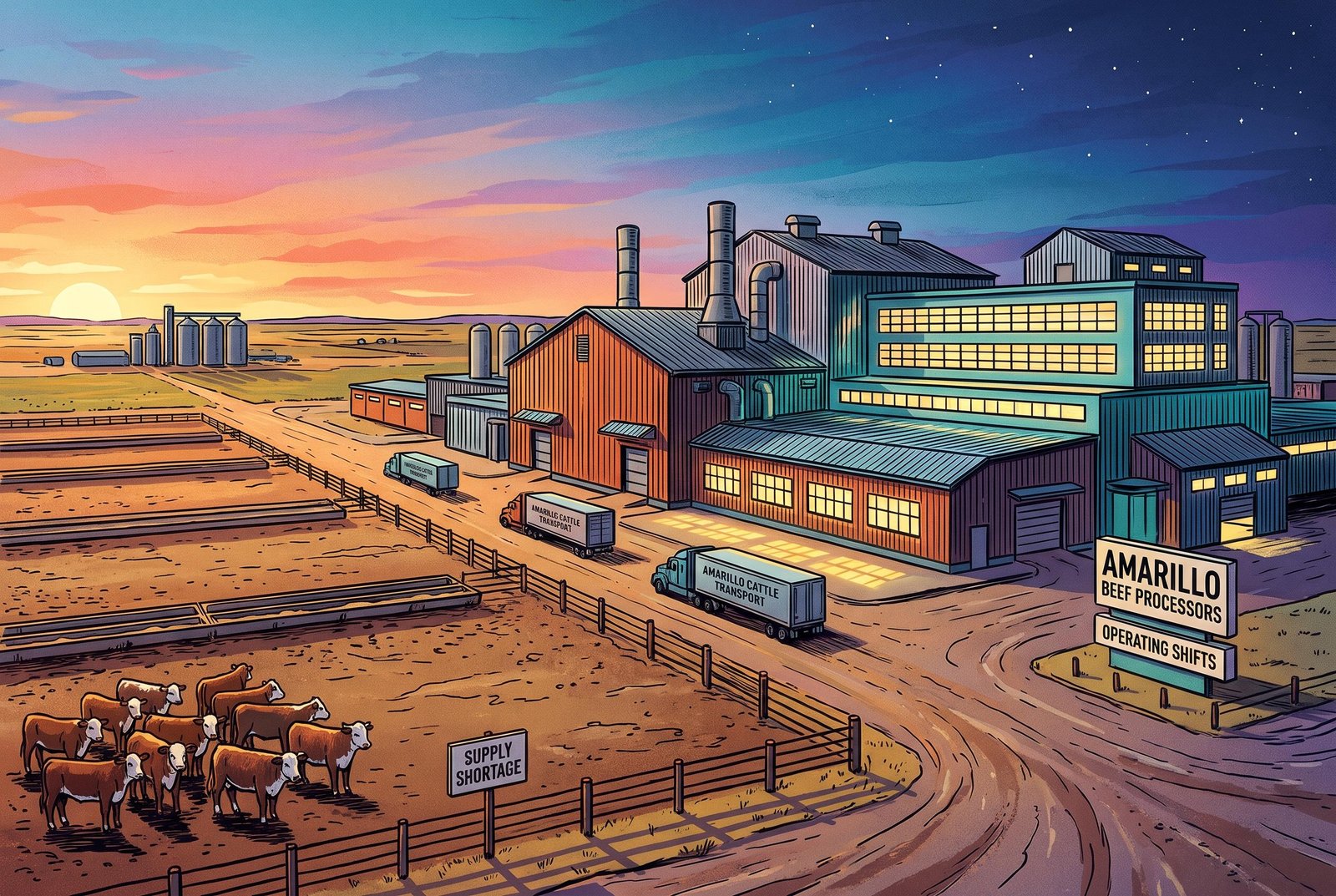
Tyson Foods plans to deepen its ties with US cattle producers through a partnership with Allied Beef, while bringing a second production shift back at its Amarillo, Texas, plant as the company grapples with tight cattle supplies.
The proposed arrangement would give Tyson a more direct relationship with the ranchers represented by Allied Beef, a consortium of producers. The company says the goal is to build a more sustainable supply chain and support long-term growth for rancher...
Continue Reading This Article
Enjoy this article as well as all of our content, including reports, news, tips and more.
By registering or signing into your SRM Today account, you agree to SRM Today's Terms of Use and consent to the processing of your personal information as described in our Privacy Policy.
s. Some second-shift operations in Amarillo have already resumed, Tyson said, with the shift expected to be fully operational by summer 2027. The company has not disclosed how many jobs the restoration will create.
The plans mark a reversal of direction for the Amarillo site. In January, a notice filed under the Worker Adjustment and Retraining Notification Act said 1,761 employees would be laid off from second-shift operations as Tyson moved towards a single, full-capacity shift. In August, the company announced that it intended to restart the shift as part of a wider restructuring of its beef business.
That restructuring would concentrate Tyson’s beef operations at three plants: Dakota City, Nebraska; Holcomb, Kansas; and Amarillo. The company also said it planned to close its Joslin, Illinois, beef facility and Eagle Mountain, Utah, case-ready plant, transferring their capacity elsewhere, and was seeking a buyer for its Pasco, Washington, beef facility. Tyson said the changes were intended to create a more efficient network while maintaining a similar level of cattle processing.
The shift in Amarillo comes as US cattle numbers remain low. The US Department of Agriculture’s National Agricultural Statistics Service estimated that the country had 86.2 million cattle and calves on farms on 1 January 2026. Beef-cow numbers stood at 27.6 million, down 1 per cent from a year earlier, while the 2025 calf crop fell 2 per cent to 32.9 million.
Rebuilding herds is a slow process. The Federal Reserve Bank of Kansas City has cited drought, elevated costs and disease risks among the factors discouraging expansion, noting that even when ranchers retain heifers for breeding, any resulting rise in cattle numbers takes time. Those conditions have helped keep beef prices high while limiting the supply available to processors.
Tyson’s third-quarter fiscal 2026 results show the strain on its beef division. Sales were $5.391 billion, compared with $5.603 billion a year earlier, as volume dropped 15.9 per cent and average prices rose 12.1 per cent. The company reported an operating loss of $142 million; on an adjusted basis, the loss was $138 million.
Chief executive Donnie King told analysts that restricted cattle availability had contributed to higher costs and prices, while customers bought less beef. He said improvements from the company’s optimisation efforts had been outweighed by margin pressure.
Tyson chief operating officer Wes Morris said the company’s beef business depended on stronger links throughout the supply chain. The partnership with Allied Beef and renewed investment in Amarillo, he said, were intended to support ranchers and provide a dependable supply for customers and consumers.
The announcement sets out plans rather than completed outcomes. Tyson has said the timetable and partnership remain subject to risks and uncertainties, and the eventual effect on cattle availability, plant utilisation and employment has yet to be established.
Source: Noah Wire Services