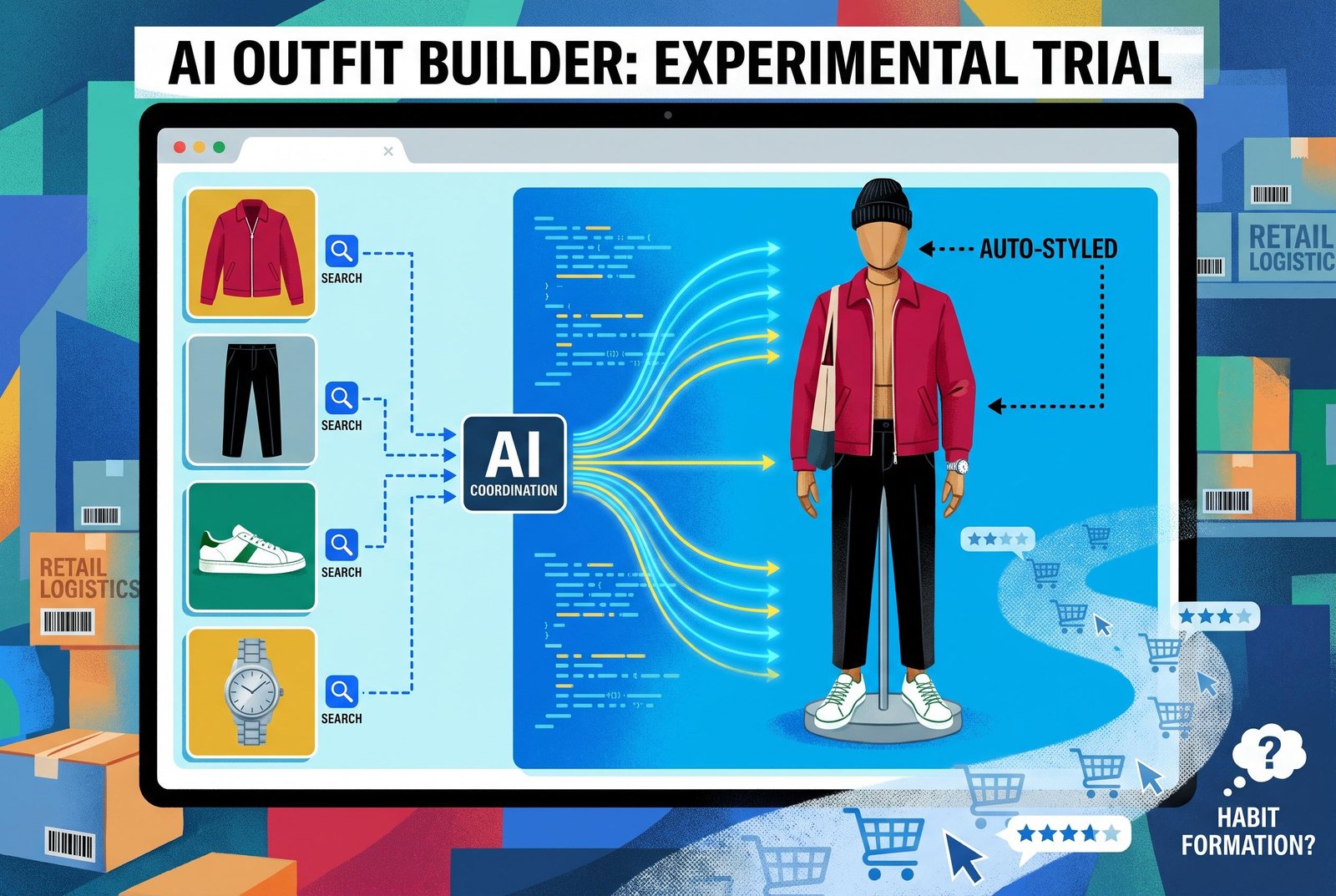
ASOS chief executive José Antonio Ramos Calamonte believes the strongest early audience for AI-assisted shopping will not be the most devoted fashion followers, who already know what they want, but shoppers who enjoy clothes and need help putting a look together.
That distinction sits at the heart of the retailer’s pitch for agentic commerce: software that can interpret a shopper’s needs and take steps towards fulfilling them. Calamonte argues that AI could help customers ...
Continue Reading This Article
Enjoy this article as well as all of our content, including reports, news, tips and more.
By registering or signing into your SRM Today account, you agree to SRM Today's Terms of Use and consent to the processing of your personal information as described in our Privacy Policy.
move beyond searching through individual products towards discovering outfits tailored to their tastes and circumstances.
The case is compelling in a market where online choice can be as much a burden as an advantage. Calamonte says AI can make product discovery more personal and inspirational, helping shoppers answer not only whether they like a garment, but how they might wear it. He argues that this kind of guidance could make online shopping more useful than browsing in a physical store, where the same degree of personalisation is difficult to provide.
ASOS has been exploring conversational shopping with Microsoft, whose account of an earlier prototype describes a natural-language tool built using Azure OpenAI Service. The system was designed to draw on the retailer’s catalogue, fashion knowledge and trend information to curate relevant products. Microsoft says the prototype moved to customer testing, with attention paid to brand voice and safeguards around content and responsible AI.
The retailer is now presenting AI as a means of changing not only the customer experience but also the work behind the products. Its Fashion Frontier programme, developed with Microsoft, is intended to connect agents across product creation and supply-chain processes. Microsoft’s announcement of a renewed three-year collaboration says the partnership will also support staff experimentation with generative AI and reduce routine work, although the productivity results cited by ASOS remain company-reported figures.
Calamonte says a purchase-order management agent, which coordinates order timings and changes involving suppliers, freight forwarders and customs, saves 500 hours a week. A separate catalogue agent processes information from third-party brands in different formats and is said to save 300 hours weekly. He also puts annual savings from automating invoice matching at about £1 million. These figures were presented by ASOS management; the Microsoft material describes the wider partnership but does not independently verify the claimed savings.
AI is also being applied to design and merchandising. Calamonte says ASOS’s AI Studio generates images for more than 3,000 products each week, giving the retailer a larger pool of visual material with which to present the same item to different shoppers. The company says its creative teams remain involved, while its account of AI-assisted design frames the technology as a way to explore ideas and speed up some processes rather than replace human judgement.
Two customer-facing initiatives are intended to make recommendations more personal. The Wardrobe, which is being piloted, draws on what customers have already bought, including purchases made elsewhere, to inform what they might wear next. AI Stylist offers shoppers a conversational route to outfit ideas. Calamonte says it had been made available to about half of ASOS’s UK iOS users and recorded more than 100,000 conversations within a few weeks, with over 50,000 leading to what the company describes as relevant engagement or purchasing.
ASOS says AI Stylist draws on looks created by its own creative teams, and that its wider approach is to use technology to expand discovery without imposing a single idea of style. The company also cites human oversight, inclusivity and clarity about AI use among its stated principles. These are descriptions of its own policies and ambitions, rather than independent assessments of how well the tools perform.
The enthusiasm for agentic shopping, however, is not yet matched by clear evidence of broad consumer adoption. ASOS’s figures suggest early engagement with one service, but do not establish whether shoppers will make AI a regular part of how they buy clothes. The business challenge is to show that personalisation leads to lasting customer value, not simply more interaction with a new feature.
The promise of automation also comes as ASOS has dealt with a security incident. The company says an unauthorised party used social engineering to access an employee account and send a push notification to some customers on 6 October 2026. In a customer update, ASOS said the investigation found that names, contact details and some non-personal account information had been accessed, but that passwords and payment-card information were not. It also said the website and app remained safe to use.
Calamonte said ASOS paused some marketing and customer-relationship activity as a precaution, with an estimated effect of between 2% and 4% on gross merchandise value during the affected weeks. That trading estimate was not included in the company’s customer-facing security update.
ASOS is making a broad bet that AI can improve both the mechanics of retail and the pleasure of finding something to wear. Its operational examples offer a case for automating repetitive work; the shopping tools seek to make a vast catalogue feel more manageable. Whether that will restore the retailer’s standing as a digital innovator depends less on the ambition of its chief executive than on whether customers find the assistance genuinely useful.
Source: Noah Wire Services