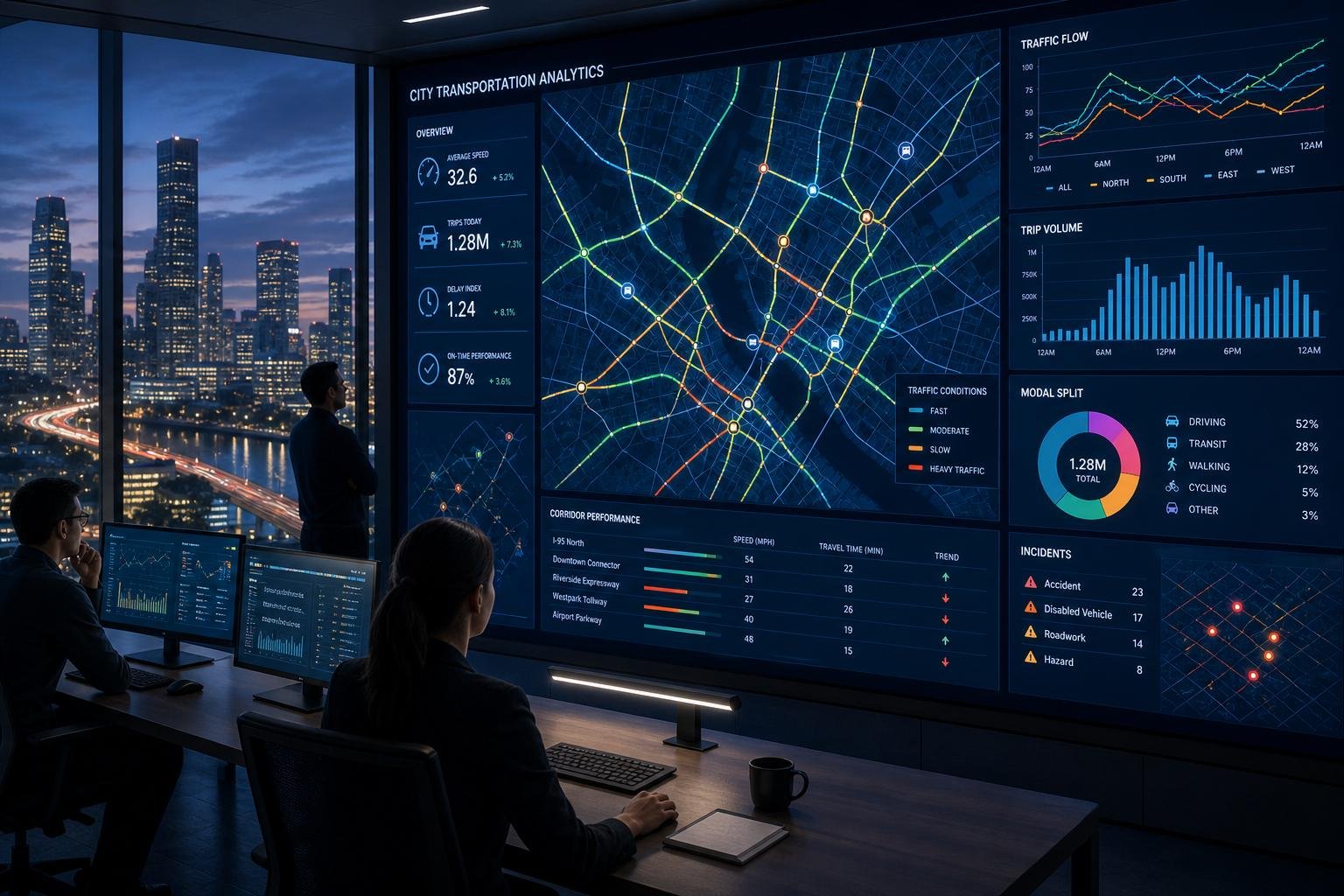
Trax Technologies is making the case that transportation data only becomes valuable when it is made usable across the business, not merely stored in systems or displayed in reports. In its latest explanation of enterprise intelligence, the company argues that global shippers are often awash with invoices, shipment records, carrier submissions, rate files and allocation tables, yet still struggle to turn that material into decisions that matter to finance, operations and leadership.
Continue Reading This Article
Enjoy this article as well as all of our content, including reports, news, tips and more.
By registering or signing into your SRM Today account, you agree to SRM Today's Terms of Use and consent to the processing of your personal information as described in our Privacy Policy.
>
That distinction sits at the centre of Trax’s Prizma platform, which the company presents as more than a freight audit tool. According to Trax, Prizma.AI combines analytics, automation and machine learning to turn fragmented transport data into something closer to a shared operating picture for the enterprise. The company says the system is designed to support logistics teams, but also procurement, finance, sustainability and senior executives who need the same underlying data in different forms.
Trax says its analytics environment includes more than 30 dashboard views, a report builder drawing on more than 300 data fields, and performance tools that allow month-on-month and year-on-year comparisons. The idea is to replace manual stitching together of regional systems, carrier spreadsheets and ERP extracts with a single normalised source of transportation actuals. In practice, that means a procurement lead can assess whether contracted rates are being honoured, while finance can attribute spend to business units or cost centres, and supply chain leaders can track trends in exceptions, performance and cost efficiency.
The company’s pitch reflects a broader shift in supply chain software, where intelligence platforms are increasingly being framed as enterprise tools rather than narrow logistics applications. Trax says Prizma is built to give users drill-down access from high-level programme views to invoice and charge-code detail, allowing teams to move quickly from trend spotting to root-cause analysis. That matters, the company argues, because freight spend is too often reviewed after the fact, rather than as a live operational signal.
The AI layer of the platform is intended to reduce the amount of repetitive human work involved in that process. Trax highlights an AI Audit Optimizer that uses machine learning to spot recurring exception patterns, recommend actions and, where conditions have been handled consistently before, automatically apply resolutions. The company says this is meant to push routine cases out of the manual queue so auditors can focus on unusual or genuinely complex problems.
Another component, the AI Extractor, is aimed at the still-common problem of paper and PDF invoices. Trax says the tool does more than optical character recognition by interpreting what the document means, not just identifying where text appears on the page. The system extracts and normalises the information into Prizma’s data model, assigns confidence scores to each field and routes uncertain cases for review. Corrections made by users are then fed back into the model to improve future accuracy.
Trax is positioning that combination of analytics and automation as a practical application of AI rather than an abstract promise. The company’s broader Prizma.AI announcement described the platform as part of a move away from conventional freight audit systems towards more predictive and automated supply chain management, with additional functions spanning rate control, cost allocation, emissions tracking and payment control.
The commercial logic is straightforward: if transportation actuals are clean and consistent, they can be used far beyond the logistics function. Finance can rely on them for accruals and budgeting. Procurement can use them to strengthen sourcing and contract enforcement. Operations can benchmark carriers more effectively. Senior management can build a clearer picture of cost-to-serve, which in turn can inform pricing, market strategy and capital allocation.
Trax’s message is that enterprise intelligence is not about having more dashboards. It is about creating a reliable, shared data foundation that lets different parts of the organisation ask different questions of the same transport information and get answers they can act on.
Source: Noah Wire Services