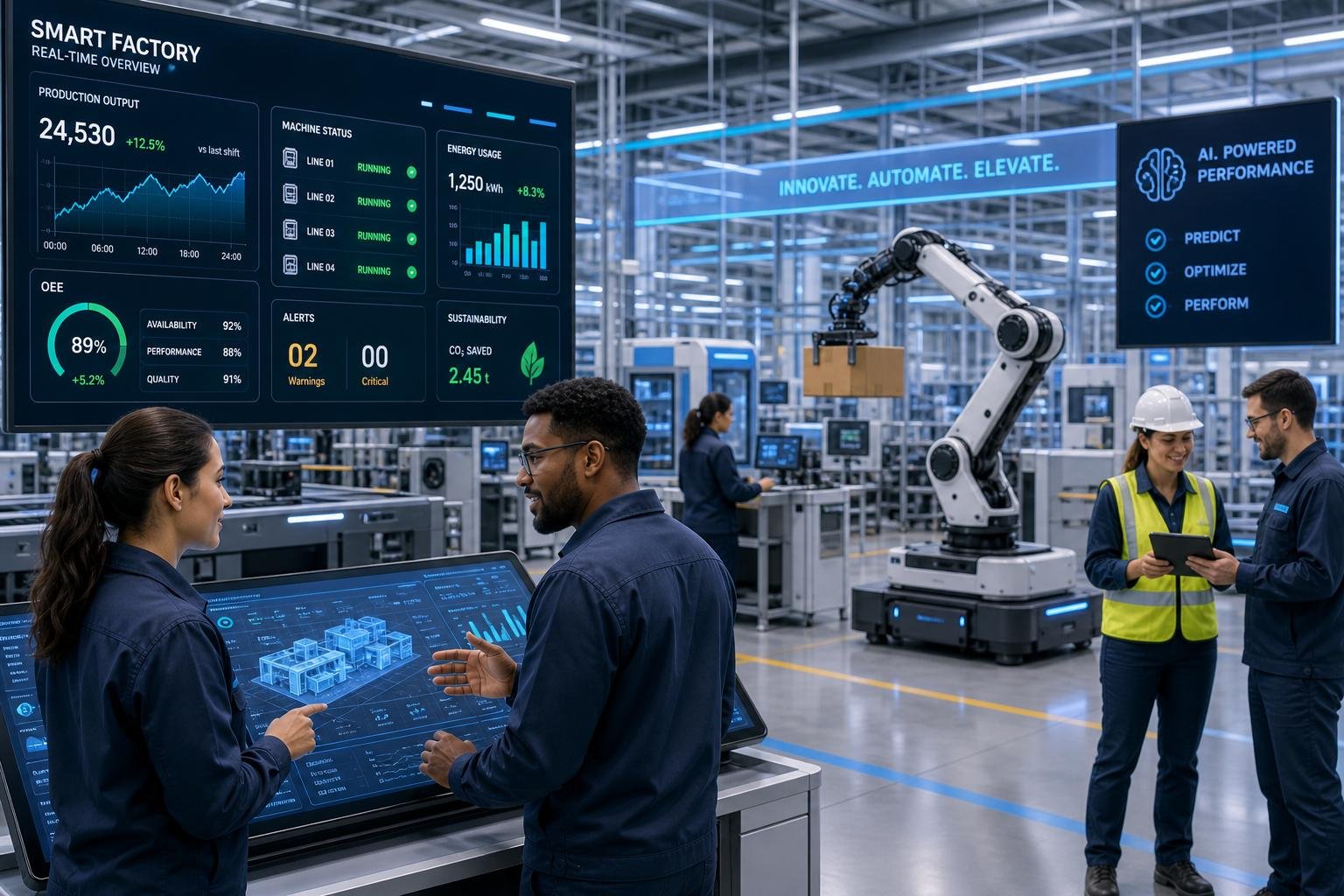
Intel and Vietnam-headquartered IT services company FPT have announced a collaboration aimed at using artificial intelligence, simulation and digital manufacturing tools to help factories run more efficiently and recover more quickly from disruption.
The firms said the project is designed to create a closed-loop system that links factory data, digital twins and optimisation software so manufacturers can test different production scenarios before making changes on the shop floor...
Continue Reading This Article
Enjoy this article as well as all of our content, including reports, news, tips and more.
By registering or signing into your SRM Today account, you agree to SRM Today's Terms of Use and consent to the processing of your personal information as described in our Privacy Policy.
. The approach is intended to reduce bottlenecks, improve scheduling and material flow, and give operators a clearer view of live production conditions.
At the centre of the arrangement are Intel’s automated factory tools, which the company has been promoting as part of a wider push into industrial AI, and FPT’s manufacturing software platforms, which connect data from execution, planning and quality systems. Intel has described its factory software as a way to provide faster insight through simulation and digital twins, while its manufacturing materials also stress the use of low-latency, on-premise AI for real-time industrial control.
FPT said the partnership builds on its work with manufacturers and its systems integration capabilities. The company claimed it has already carried out digital transformation projects for more than 150 manufacturers and has a large global engineering workforce to support deployment.
The announcement comes as industrial groups increasingly seek ways to apply AI beyond analytics and into live operational decision-making. Manufacturers are under pressure to cope with more complex supply chains, variable demand and unplanned downtime, making factory software a growing area of investment.
Intel principal engineer Paul Schneider said manufacturing was too complex for isolated tools and needed a connected system. FPT Americas chief executive Hoan Nguyen said the market was moving towards AI systems that can actively orchestrate production rather than simply monitor it.
The companies did not disclose financial terms or say when the first deployments would begin.
Source: Noah Wire Services