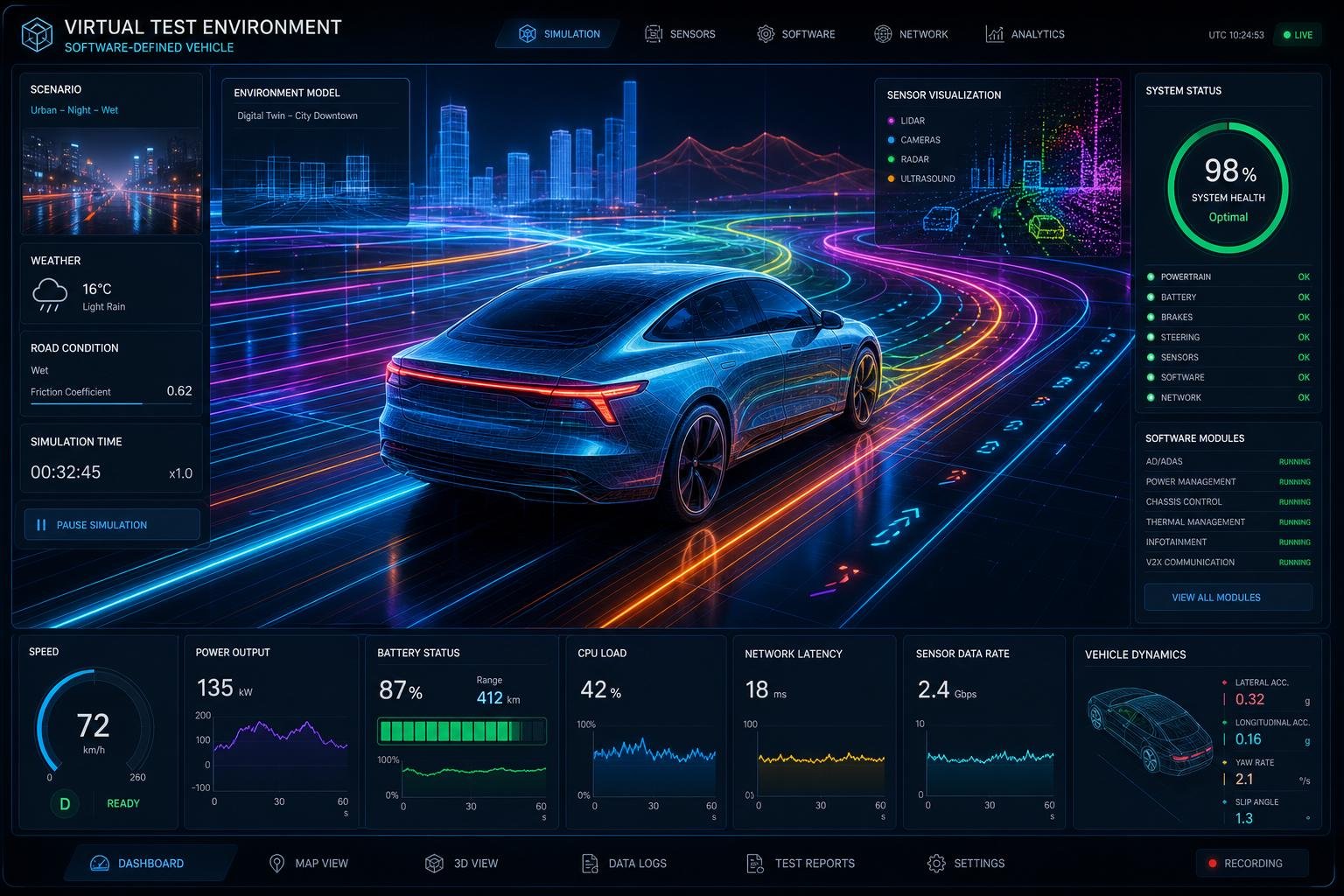
As the software in cars evolves faster than the hardware underneath it, automakers are finding that launch-day engineering is no longer enough. A model can arrive with strong specifications and healthy demand, yet still begin to fall behind if its digital features, security patches and performance improvements cannot keep pace with customer expectations. That is why automotive digital twins are moving from niche engineering tools to a central part of the software-defined vehicle conve...
Continue Reading This Article
Enjoy this article as well as all of our content, including reports, news, tips and more.
By registering or signing into your SRM Today account, you agree to SRM Today's Terms of Use and consent to the processing of your personal information as described in our Privacy Policy.
rsation, according to SRM Tech.
The shift reflects a broader redesign of vehicle architecture. What were once heavily distributed systems built around dozens of electronic control units are increasingly being reorganised around centralised computing, zonal electronics and service-oriented software layers. AUTOSAR’s SDV guidance describes this as a decoupling of hardware and software that makes over-the-air updates, continuous feature delivery and modular application development far more practical. In that environment, the digital twin is not just a simulation model but a living virtual counterpart that can track software behaviour, sensor inputs and operating conditions across the vehicle lifecycle.
That matters because modern vehicles are now deeply software intensive. SRM Tech says many cars already run well over 100 million lines of code, and that number is expected to rise as electrification, autonomy and connectivity expand. With 70 to 100 ECUs often managing functions from braking to infotainment, validating changes through physical prototypes alone is slow, expensive and increasingly inadequate. Digital twins help OEMs and suppliers test ECU virtualisation, model middleware interactions and assess system-level effects before new code reaches a fleet.
The case for digital twins becomes even stronger when OTA updates are considered. Continuous updates are one of the defining features of SDVs, but they also create fresh exposure to incompatibilities and cyber risk. A technical paper in SAE Mobilus highlights the importance of standards such as ISO/SAE 21434 and UNECE regulations R155 and R156 in securing OTA systems, while security analyses have pointed to threats spanning infrastructure, network, software and hardware layers. In practice, that makes pre-deployment validation essential, and digital twin environments offer a controlled setting in which firmware, communications and vehicle behaviour can be tested before rollout.
Predictive maintenance is another area where the technology is gaining traction. By linking sensor data and operating telemetry to a virtual model of a battery, powertrain or braking system, a twin can flag degradation early and support condition-based servicing rather than reactive repair. In electric and connected vehicles, where systems are tightly interdependent, that can improve reliability, extend asset life and feed useful data back into future design cycles.
The benefits are clear, but adoption is not simple. The strongest digital twins depend on accurate, continuously synchronised data, and keeping a virtual model aligned with live software, hardware changes and fleet behaviour is difficult. They also demand serious computing capacity, cloud-edge integration and new ways of working across engineering, cybersecurity, validation and IT teams. As studies on SDV transformation and verification show, organisational change is as important as technical capability if digital twins are to deliver real value.
What emerges is a more realistic picture of software-defined mobility: digital twins are not a shortcut, but they may be the infrastructure that makes continuous software delivery safe enough to scale. Used well, they can shorten release cycles, improve validation, reduce recall risk and support the long-term evolution of vehicles that are now expected to keep improving long after they leave the factory.
Source: Noah Wire Services