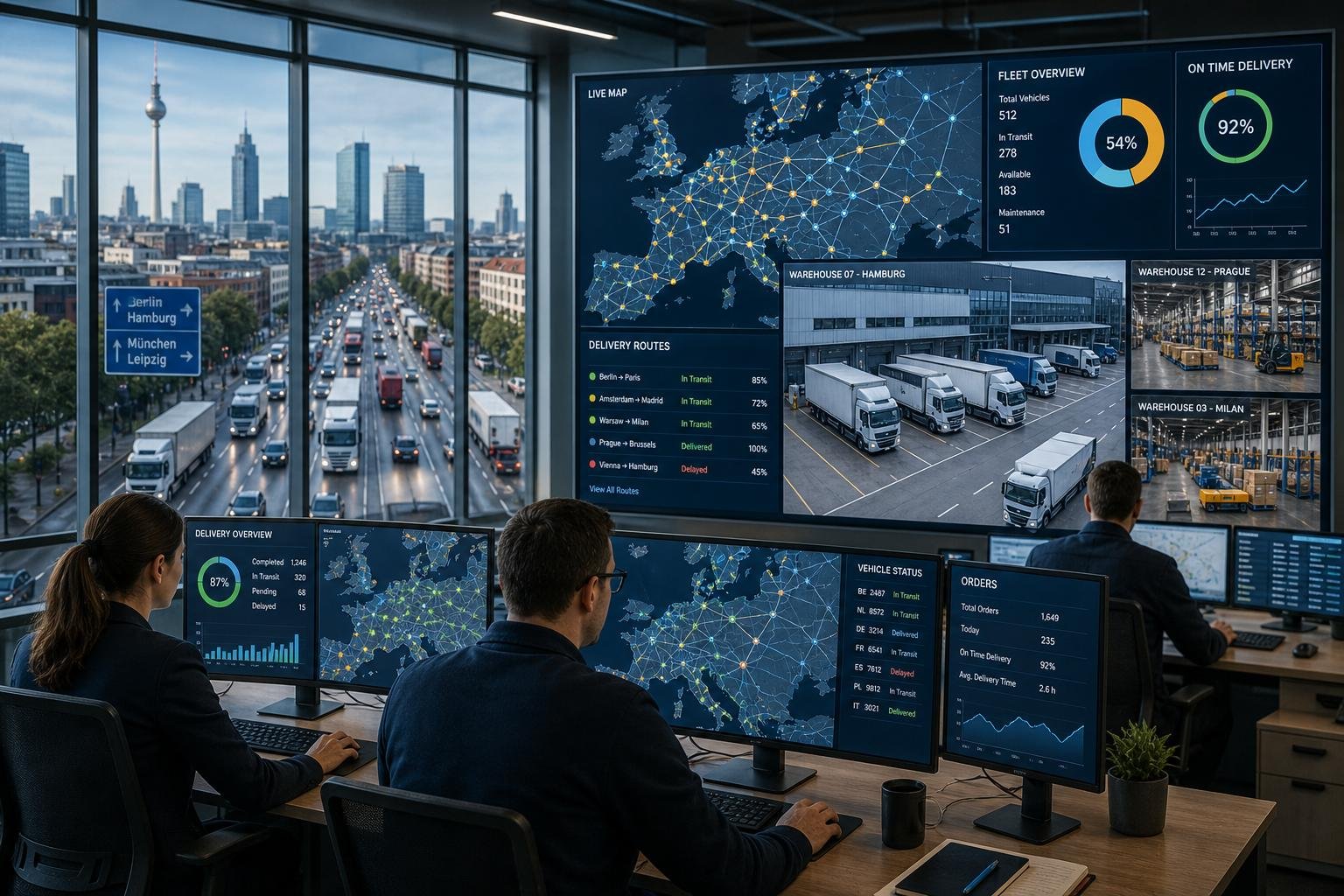
Transportation management is moving further up the corporate agenda as companies increasingly view it as a lever for service, resilience and growth rather than simply a cost to be controlled. In Descartes Systems Group’s European Transportation Management Benchmark Study, 49% of respondents said transport now acts as a differentiator for their business, up from 38% in 2024. The share describing it as a strategic weapon also rose, from 22% to 31%.
The findings suggest that tra...
Continue Reading This Article
Enjoy this article as well as all of our content, including reports, news, tips and more.
By registering or signing into your SRM Today account, you agree to SRM Today's Terms of Use and consent to the processing of your personal information as described in our Privacy Policy.
nsport is becoming a more visible board-level issue as firms contend with geopolitical instability, supply chain disruption and higher customer expectations. Rather than focusing only on freight spend, many organisations are now judging transport management by the way it supports revenue, reliability and customer retention.
That trend is even stronger among better-performing businesses. Descartes said 91% of companies with stronger financial results regard transport either as a competitive weapon or as a way to stand out in customer service, pointing to a close link between operational sophistication and commercial performance.
Confidence in growth remains robust despite a volatile backdrop. According to the survey, 96% of respondents expect their businesses to expand over the next two years, with most forecasting annual growth of between 5% and 15%. Shippers appear more upbeat than logistics service providers, with 78% expecting growth above 5%, compared with 67% of LSPs.
That optimism is feeding investment. More than three-quarters of respondents, 76%, said they expect to increase spending on transport management IT over the next two years, while the figure rises to 84% among financially stronger companies. The reasons for adopting or expanding transport management systems are also shifting: business growth and customer service now rank alongside cost reduction as key motivations.
The broader global picture from Descartes’ ninth annual benchmark study reinforces that shift. Across more than 600 companies, 81% said they now see transportation management as a competitive differentiator, the highest level recorded in the study’s nine-year history. Yet the report also highlights a digital gap, with only 17% of respondents saying their processes are fully automated.
The same research points to growing use of generative AI in transport operations, particularly for data entry, route and load optimisation, and freight forecasting. Even so, the low level of end-to-end automation suggests many firms are still early in the transition from manual management to more digitally mature transport networks.
Elmer Spruijt, Descartes’ vice-president of transportation management for EMEA, said transport is becoming “less of a purely operational process and increasingly a strategic component of customer value and competitive strength”. He added that companies modernising their transport management are building flexibility and growth.
The European survey covered 300 senior decision-makers in Germany, the UK, France and Belgium and the Netherlands, offering a regional snapshot of how transport is being redefined. Taken together with the wider global results, it suggests transport is no longer being judged solely by how cheaply it moves goods, but increasingly by how well it helps businesses compete.
Source: Noah Wire Services