Retailers have more supply-chain data than ever, but much of it is tied to isolated events: a parcel is scanned when it leaves a depot or arrives at a warehouse, while its journey between those points remains difficult to verify. As sourcing networks expand and businesses fulfil orders across stores, distribution centres and customers’ homes, that gap can leave companies relying on incomplete records when shipments are delayed, divided, diverted or stolen.
The risks extend be...
Continue Reading This Article
Enjoy this article as well as all of our content, including reports, news, tips and more.
By registering or signing into your SRM Today account, you agree to SRM Today's Terms of Use and consent to the processing of your personal information as described in our Privacy Policy.
yond straightforward cargo theft. The FBI says criminals may pose as brokers or carriers, take over business accounts, post fraudulent loads or use deception to redirect freight. Some theft involves only part of a shipment, making losses harder to spot until stock counts fail to match. Its Philadelphia field office reported that estimated cargo-theft losses in the United States and Canada reached nearly $725 million in 2025, with confirmed incidents up 18 per cent on the previous year.
The US Department of Transportation also describes cargo crime as a significant economic and supply-chain concern, encompassing theft from vehicles, storage sites and distribution hubs, as well as organised criminal activity. The department says the proceeds can be connected to other illicit activity. The figures and official warnings underline the scale of the problem, but they do not establish that any single tracking technology can prevent it.
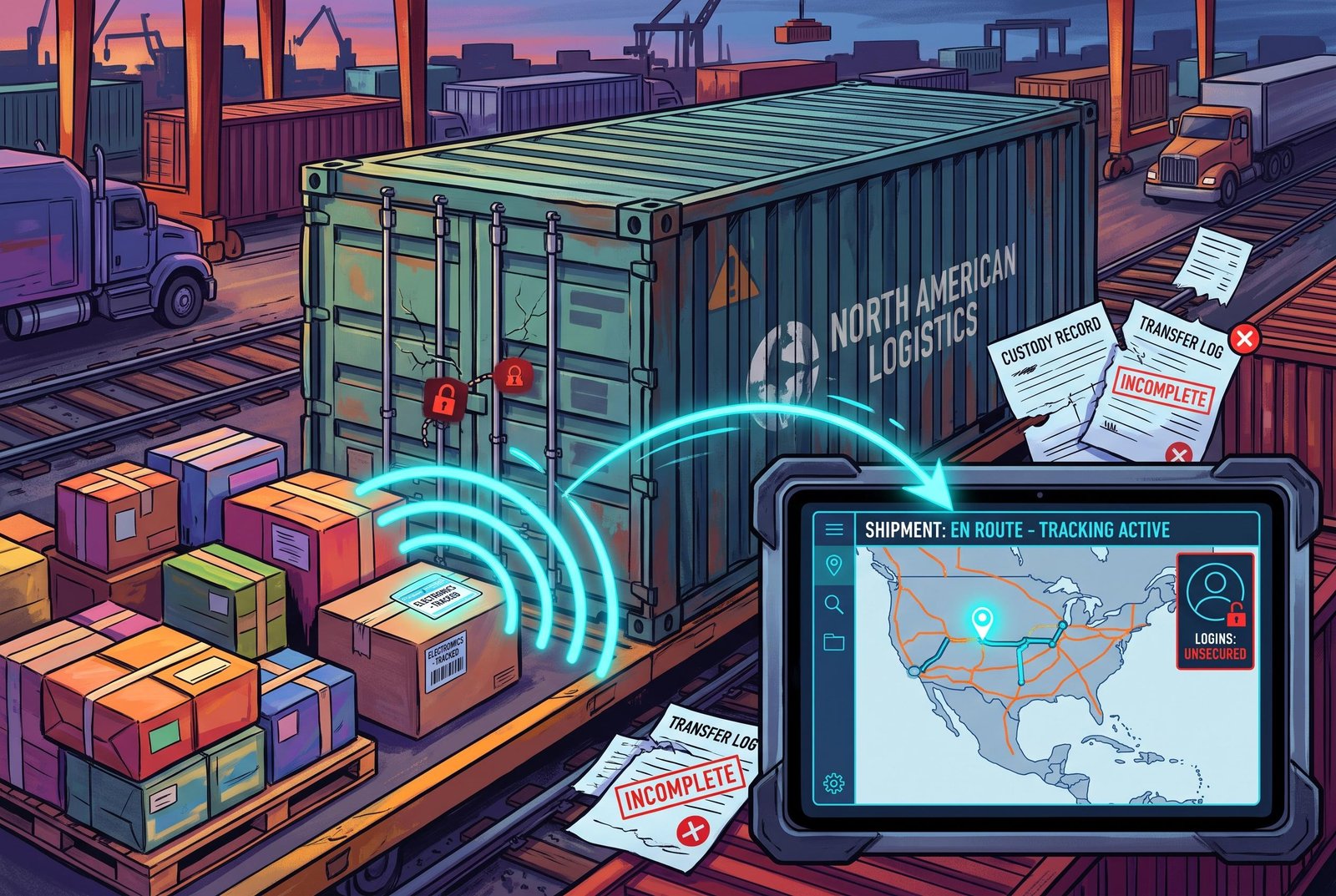
One proposed response is to move beyond occasional scans towards item-level monitoring. Smart labels, which can be printed and attached to packages or freight, are designed to transmit location or status information through Bluetooth, cellular networks or connected devices. Depending on the product and available coverage, shipment platforms may show a timestamped location history, flag delays or alert teams when goods stray from an expected route.
Reelables, whose co-founder and chief executive David Stanton wrote the original article, says its labels use Bluetooth or cellular connections to provide shipment and asset visibility. The company describes functions including arrival notifications, condition alerts and route-deviation warnings. These are vendor claims, not independent evidence that coverage is universal or that the technology reliably prevents loss.
Other suppliers are marketing similar approaches. Samsara, for example, describes a flexible, printable label that uses Bluetooth location information gathered through a network of devices and can flag exceptions for attention. Its product information also says the label can store logged data when internet access is unavailable. As with Reelables’ claims, these descriptions explain intended capabilities rather than independently verified performance across every transport route or environment.
If reliable and timely, more frequent location data could help retailers and logistics partners identify discrepancies sooner. A record of where a shipment travelled and when may support investigations into late, partial or rerouted deliveries, while alerts could give teams an opportunity to respond before a problem becomes a prolonged stock shortage. It could also reduce dependence on manual updates and help businesses compare service performance across carriers.
But tracking is only one part of supply-chain security. The FBI advises businesses to verify shipment requests and carrier details independently, vet commercial partners, use multi-factor authentication and keep detailed records of drivers and consignments. Those safeguards matter because strategic theft can exploit identity fraud, compromised accounts and false collection arrangements; a location signal alone cannot confirm that the person collecting a load is authorised.
Visibility technologies may also complement inventory controls inside shops and warehouses. Zebra says retailers use tools such as RFID and analytics to improve stock accuracy, speed audits and identify suspicious activity. Those systems address inventory visibility in retail settings, however, and should not be confused with a smart label’s ability to track freight across a transport journey.
For retailers, the potential value of better tracking therefore lies not simply in knowing where goods are, but in combining timely information with verification, clear custody records and a practical response process. More complete data could make it easier to locate where a discrepancy arose and who was responsible. Whether it translates into fewer losses will depend on the quality of the information, the reach of the tracking network and the controls built around it.
Source: Noah Wire Services