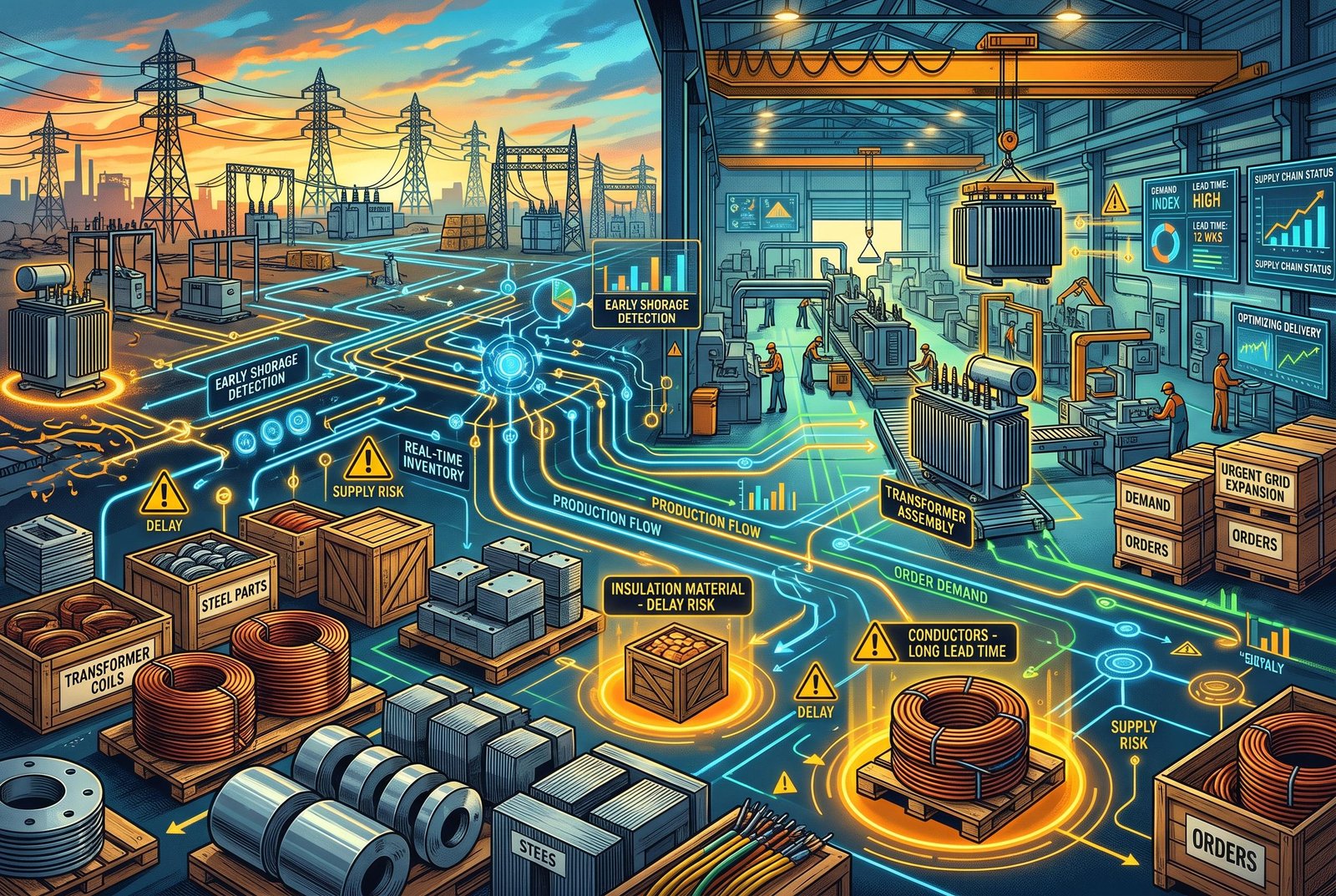
Hitachi Energy is extending its work with software company Celonis to apply artificial intelligence to operational data across its global business, aiming to identify supply risks earlier and improve the delivery of electricity infrastructure.
The collaboration forms part of Hitachi Energy’s AI Nexus programme. The companies say they are combining the manufacturer’s industrial expertise with Celonis Process Intelligence to help staff see bottlenecks and dependencies across ...
Continue Reading This Article
Enjoy this article as well as all of our content, including reports, news, tips and more.
By registering or signing into your SRM Today account, you agree to SRM Today's Terms of Use and consent to the processing of your personal information as described in our Privacy Policy.
business processes, and respond more quickly when disruption threatens production.
Hitachi Digital is also involved, alongside technology partners Databricks and Microsoft. The group has developed an architecture intended to connect digital systems, operational information and AI tools across the company. At its centre is the Celonis Context Model, which brings together information from Hitachi Energy’s business systems to give AI agents and automated processes a clearer picture of how work is carried out.
One proposed application is an AI agent that identifies production-critical materials at risk of delay and recommends steps to protect factory operations. The companies say the wider approach could reduce manual work and support productivity, efficiency and profitability. They have not provided quantified results from the expanded collaboration.
The initiative reflects pressure on manufacturers to turn AI from isolated experiments into tools that can assist everyday decisions. Demand for grid equipment is rising as electricity use grows, driven in part by electrification, industrial expansion and data centres supporting artificial intelligence. For suppliers, that means increasing output while navigating complex sourcing networks and lengthy delivery schedules.
The International Energy Agency has detailed the scale of those constraints. Its analysis says procurement can take two to three years for cables and up to four years for large power transformers, with average lead times for both having almost doubled since 2021. Some direct-current cables take more than five years to obtain. The agency also reports that cable prices have nearly doubled since 2019, while power-transformer prices have risen by about 75 per cent.
The IEA has warned that supply-chain pressures are hindering transmission-grid expansion, even as demand for electricity infrastructure grows. More than 1,600 gigawatts of solar and wind projects in advanced development were awaiting grid connections, according to its February 2025 update. The agency has called for better planning of future demand, proactive investment and stronger supply-chain coordination. It also estimates that the global workforce involved in building, maintaining and operating grids will need to increase by 1.5 million by 2030 under current policy settings.
That environment gives operational planning particular importance for Hitachi Energy, which has more than 56,000 employees across 60 countries and business volumes of about US$20 billion, according to its company profile. The Swiss-headquartered business supplies power technologies and energy systems to sectors including utilities, industry, transport and data centres.
Hitachi Energy executives framed the partnership as an effort to make AI useful in practical operating conditions. Urs Dogwiler, the company’s Chief Transformation Officer and Chief Lumada Business Officer, said: “AI creates the greatest value when it is connected to the reality of how a business operates, and that is a vision we share with Celonis,” he said. “Through AI Nexus, we are combining our deep domain expertise with trusted data and AI to transform the way we work. Celonis helps our teams anticipate supply risks, act sooner and improve delivery performance, making AI a practical driver of operational excellence.”
Celonis co-founder and co-chief executive Bastian Nominacher said the work applies AI to infrastructure challenges, with operational context intended to help teams identify risks and coordinate responses across complex processes.
Celonis’ platform analyses how work moves through business systems, helping organisations map processes and identify opportunities for improvement. In the Hitachi Energy collaboration, the companies’ stated aim is to use that visibility to connect procurement, planning and production decisions more closely. Whether the approach can materially shorten delivery times will depend not only on software, but also on the availability of components, manufacturing capacity and skilled workers.
Source: Noah Wire Services