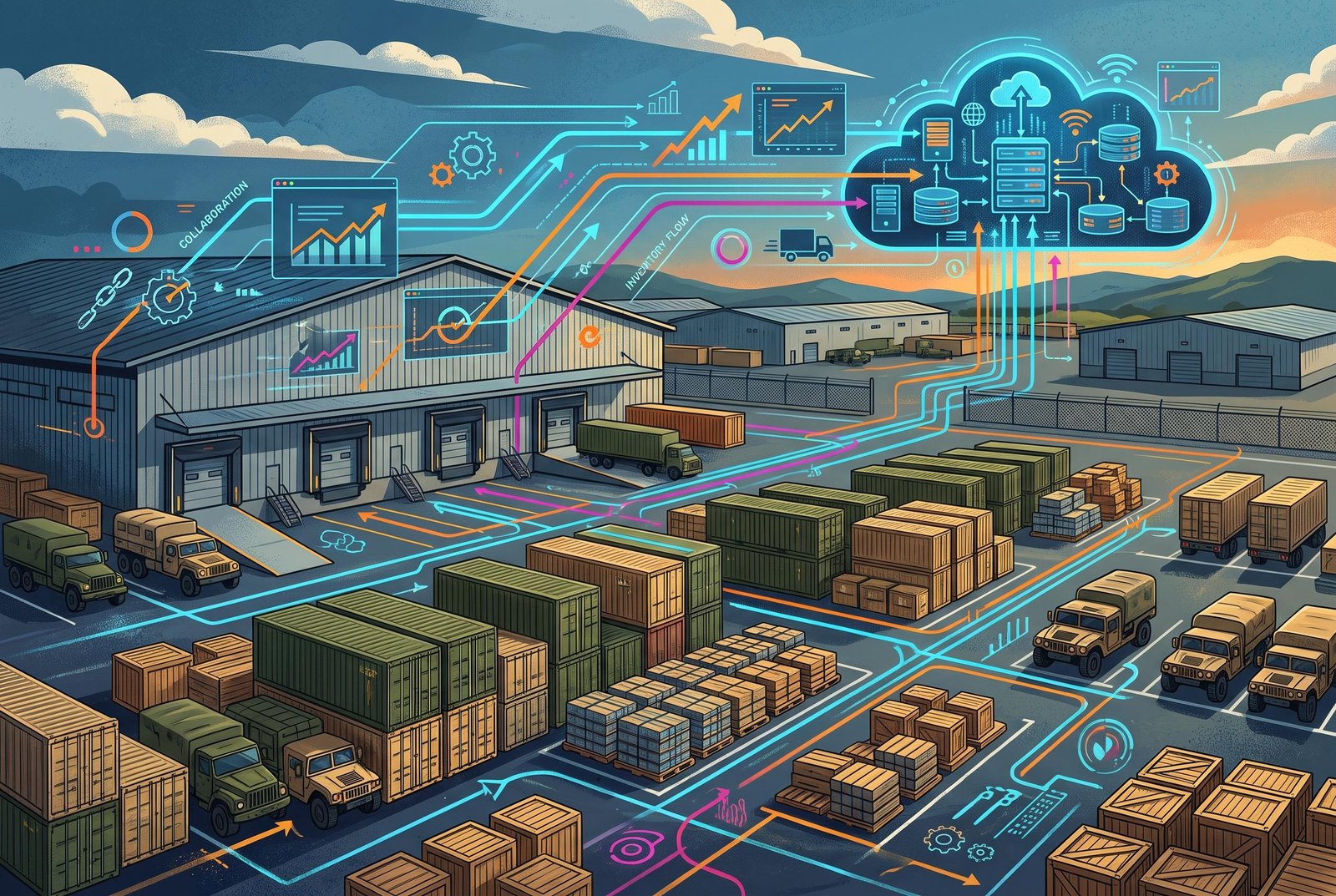
FedEx is extending its push into specialist business logistics through a US Army initiative to overhaul the systems and processes supporting military depots.
FedEx Dataworks began work in August on the Army’s domestic, non-tactical logistics network and supply-chain operations, including 23 government-run industrial sites that manufacture, repair, overhaul and store military equipment and munitions. The assignment goes beyond moving freight: the team is expected to assess how...
Continue Reading This Article
Enjoy this article as well as all of our content, including reports, news, tips and more.
By registering or signing into your SRM Today account, you agree to SRM Today's Terms of Use and consent to the processing of your personal information as described in our Privacy Policy.
supplies are forecast, stocked and transported, and how the underlying infrastructure can be improved.
The programme forms part of the Army’s Strategic Capital Initiative, which seeks to use private-sector expertise and technology to accelerate modernisation. According to CEP Research, the aim is to replace an outdated supply system with a more predictive network that can anticipate requirements and move equipment more quickly.
FedEx Dataworks is working with Google Cloud and Army personnel on the effort. In reporting by IN DEFENCE, the project is described as covering demand forecasting, inventory management, routing, legacy data and physical logistics infrastructure. Google Cloud is to provide a secure commercial cloud environment, while the Army has said FedEx’s capabilities will operate in a Department of Defense Impact Level 5-authorised environment. An implementation plan for US sites is expected by November 2026.
The work will involve substantial practical challenges. Depot information accumulated across decades and multiple systems must be integrated and kept reliable, while sensitive logistics data needs protection. Military supply chains also have different priorities from commercial parcel networks: readiness, security and the ability to maintain operations during disruption can matter as much as speed or cost.
That makes the Army project a distinct test of FedEx’s ability to apply commercial logistics expertise to a complex public-sector operation. The company’s Dataworks division uses analytics, artificial intelligence and digital tools to turn shipment and operating information into insights intended to help customers identify risks, improve routing and respond earlier to potential disruption.
FedEx has been positioning those capabilities as part of a wider move towards higher-value business services. FreightWaves has reported that the company is building specialist offerings for sectors including aerospace, automotive, healthcare and data centres, where delays can carry significant operational consequences. In aerospace, for example, urgent parts shipments can affect whether an aircraft remains out of service; automotive customers may need round-the-clock support and rapid, visible deliveries.
The Army contract extends that focus into defence logistics, though the scale of its eventual impact remains to be seen. FedEx management has said it wants to convert the company’s extensive operational data and AI capabilities into new customer services and revenue. A 2026 investor presentation states that FedEx generates two petabytes of data daily and describes Dataworks as a way to turn information from its network into predictive insights and coordinated supply-chain action. Those are company ambitions, rather than independent evidence that the proposed benefits will be realised.
Dataworks is also exploring a different application of operational information with Stripe Capital. The companies plan to combine FedEx network signals with Stripe’s financial infrastructure to inform financing assessments for small and medium-sized businesses. Their first joint solution is planned for early 2027, according to a FedEx announcement; it has not yet launched. The proposed approach reflects the idea that shipment activity and inventory movement may reveal aspects of a business that conventional financing measures do not capture.
Together, the initiatives illustrate how FedEx is seeking to make its network valuable not only as a means of moving goods, but also as a source of information and specialised services. The Army programme will test whether those tools can be adapted to a supply system in which reliability, security and military readiness are central.
Source: Noah Wire Services