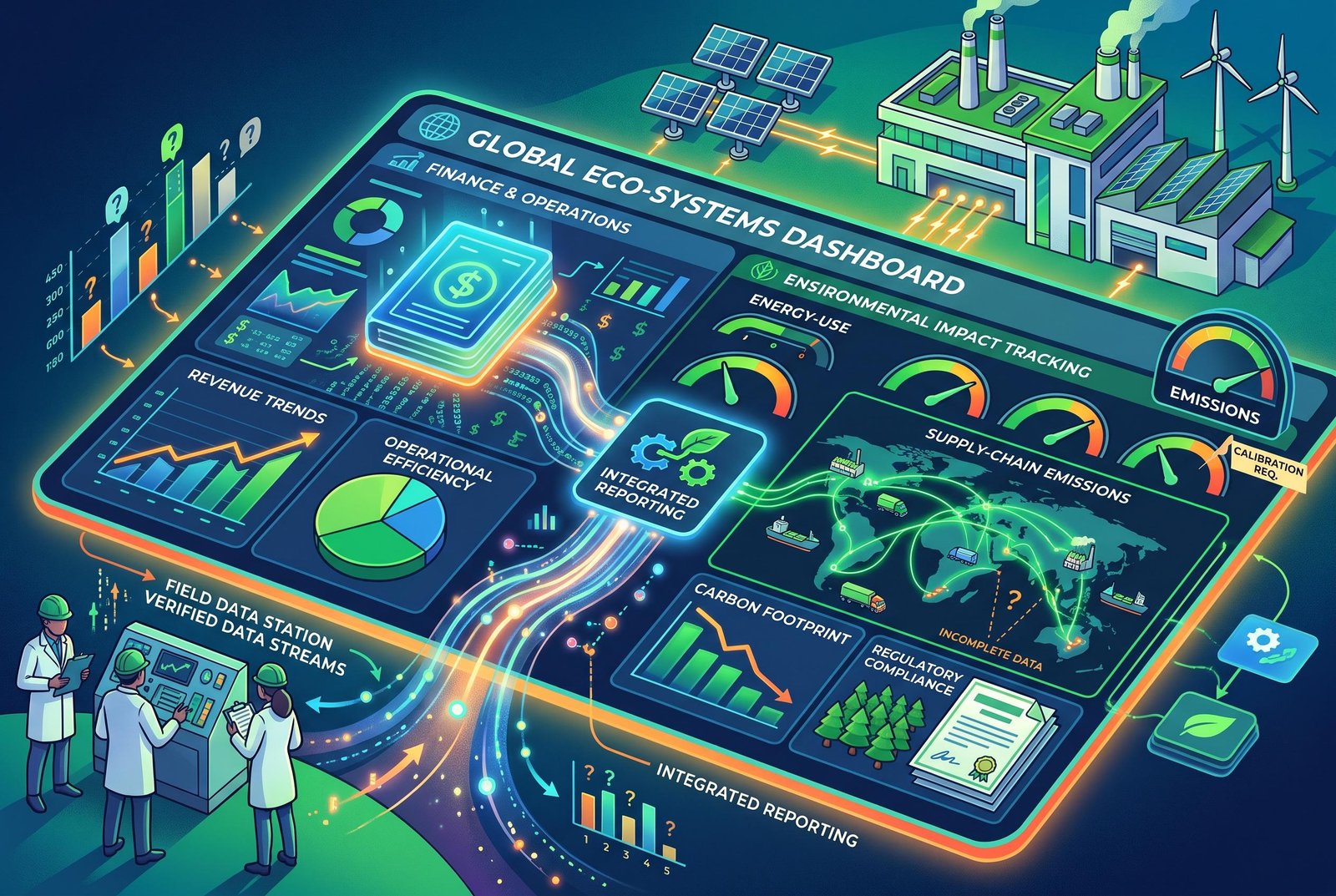
Microsoft is positioning its sustainability-management software closer to the finance and operational systems that shape an organisation’s environmental footprint, bringing Sustainability Manager into the Dynamics 365 ERP portfolio as Microsoft Dynamics 365 Sustainability.
The application is designed to collect environmental activity data, calculate emissions and support reporting. Microsoft says linking those records more closely with business processes could help organisati...
Continue Reading This Article
Enjoy this article as well as all of our content, including reports, news, tips and more.
By registering or signing into your SRM Today account, you agree to SRM Today's Terms of Use and consent to the processing of your personal information as described in our Privacy Policy.
ons understand how decisions on purchasing, production and logistics affect environmental performance.
The product uses activity data, calculation models and emission factors to produce Scope 1, Scope 2 and Scope 3 emissions figures. Microsoft Learn describes a calculation model as the logic used to derive emissions or water metrics from underlying transactions, underlining that results depend on how inputs and calculation steps are configured.
Scope 3 calculations can be particularly challenging because they rely on information from suppliers and other value-chain partners. Microsoft says the application can collect partner emissions and product carbon-footprint data for use in those calculations.
The system also supports the preparation of internal analysis and external disclosures. Its reporting tools are intended to help teams assess requirements, compile quantitative and qualitative information, collaborate and retain supporting evidence. Microsoft lists frameworks including the Corporate Sustainability Reporting Directive, Global Reporting Initiative standards and IFRS Sustainability Disclosure Standards. Its documentation also covers water and waste management, alongside carbon and energy-related functions.
A central element of the portfolio expansion is closer interoperability with Dynamics 365 Finance and a planned “green ledger” view intended to bring financial and sustainability information together. April Olson, Microsoft’s chief product officer for Dynamics 365 Finance, Human Resources and Sustainability, argues that many activities affecting environmental outcomes are already embedded in financial and operational workflows.
In examples described by Olson, procurement teams could consider environmental information alongside supplier cost, availability, quality, lead time and risk. Manufacturers investigating an emissions increase could examine whether it followed changes in materials, production, energy use or supplier activity. The proposal is not that every sustainability decision becomes an ERP transaction, but that environmental records can be viewed in the context of the business activity behind them.
Microsoft presents Dynamics 365 Sustainability as part of a wider portfolio that includes Finance, Supply Chain Management, Project Operations, Human Resources, Commerce and Business Central. The sustainability application is built on Dataverse and Power Platform, and Microsoft’s product documentation provides guidance on data management, architecture, security and deployment. The company’s reference architecture frames sustainability management as work spanning an organisation’s operations and value chain, rather than a reporting task confined to a single team.
The connection to AI agents is also developing. Microsoft says Copilot Studio makers can use a Dataverse Model Context Protocol server to let compatible agents work with Dataverse information. Olson has described a possible use in which an AI-assisted tool identifies a purchase-invoice file and maps its fields for a Scope 3 calculation. Microsoft’s product pages label Copilot capabilities and autonomous agents as preview, and the documentation does not establish that every sustainability workflow is available through the server.
Administrators can manage whether MCP clients interact with Dataverse in an environment, according to Microsoft’s guidance. The server is enabled for Copilot Studio by default, while other clients may require additional configuration; disabling it stops tools and agents that depend on it. Those controls provide an administrative framework, although they do not by themselves demonstrate how every sustainability-specific agent would handle emissions records.
For businesses facing disclosure demands, the value of the approach will depend partly on whether figures can be traced back to their inputs and calculations. Microsoft’s shared data model and evidence-retention features are intended to support that trail. Yet the calculation guidance makes clear that models and inputs require configuration, so the usefulness of the results will also depend on the quality of source data and the checks applied by organisations using the system.
Source: Noah Wire Services