


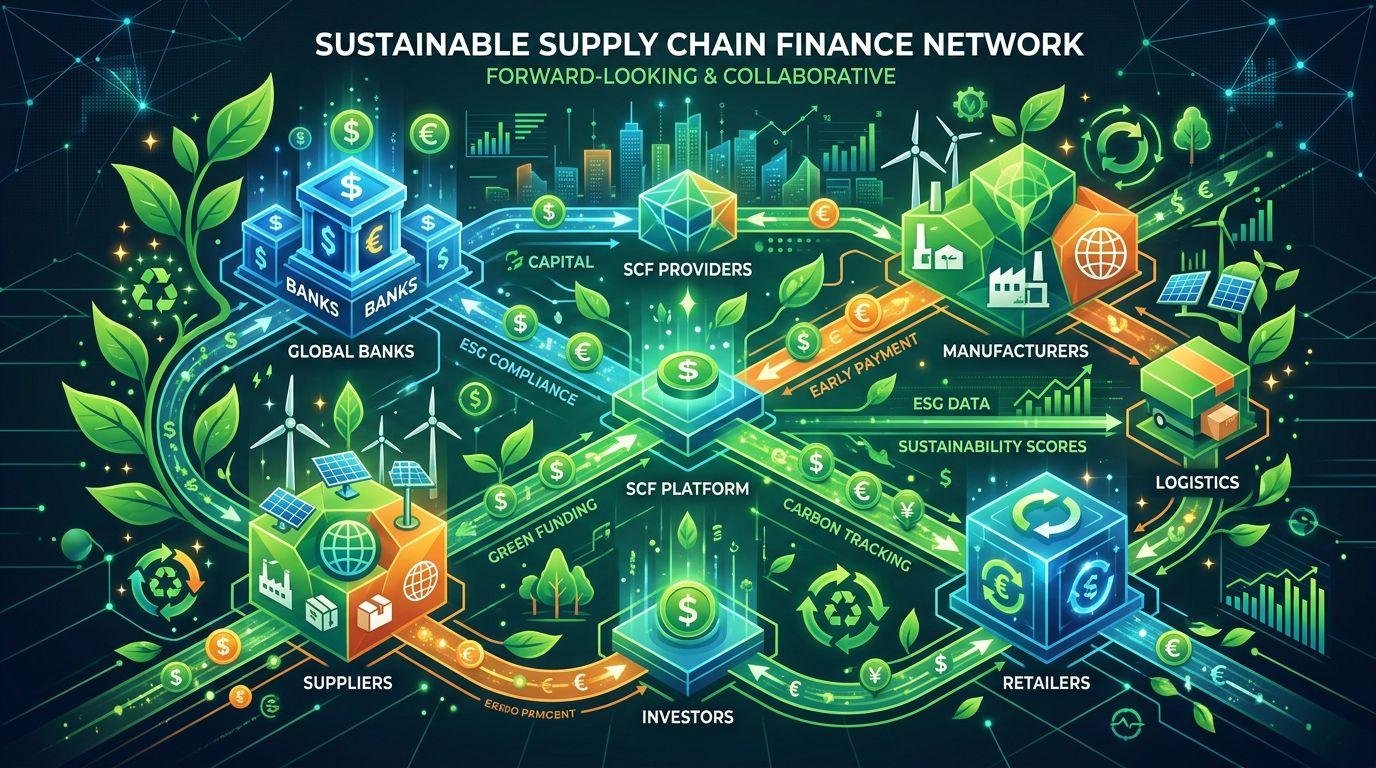
REWE Group has expanded its supply chain finance programme beyond working capital, using digital funding, multiple banks and ESG-linked pricing to support suppliers and influence sustainability performance.
REWE Group’s supply chain finance programme has evolved from a working-capital project into a broader attempt to reshape how a large retail group supports suppliers, manages liquidity and links finance to sustainability.

According to SAP Taulia’s account of the pa...
Continue Reading This Article
Enjoy this article as well as all of our content, including reports, news, tips and more.
By registering or signing into your SRM Today account, you agree to SRM Today's Terms of Use and consent to the processing of your personal information as described in our Privacy Policy.
The company said it evaluated eight fintech providers before choosing SAP Taulia, with the final decision shaped by both technical fit and the prospect of a partnership that could adapt over time. One attraction was the ability to run supply chain finance and dynamic discounting in a single programme, backed by a bank-independent platform and a multifunder structure drawing on REWE’s own banking relationships. SAP Taulia also appealed because it could reduce the burden of supplier onboarding; REWE noted that the absence of separate know-your-customer processes was particularly helpful, especially as some suppliers were already familiar with the system through their work with other large buyers using the same provider.
The programme went live in September 2022 and, according to SAP Taulia, quickly gained traction with suppliers. The solution allows vendors to request early payment against approved invoices at rates described as attractive, while avoiding pressure on their own credit lines. SAP Taulia said it also supported REWE with supplier analysis, marketing and onboarding, helping accelerate adoption across the network.
The collaboration took a further step in 2024 when the companies introduced sustainability incentives into the financing structure. A December 2024 announcement from Taulia said the revised programme rewards suppliers with better early-payment terms when their ESG performance improves, using ratings from EcoVadis and alignment with the Science Based Targets initiative as part of the assessment framework. In practice, that means financial benefits can be linked to measurable progress on environmental and governance standards, turning the funding programme into a lever for supplier behaviour as well as cash management.
That approach has attracted external recognition. In 2024, the SCF Community Awards named REWE and Taulia for best ESG-approved payable finance, highlighting the use of tiered pricing and the integration of sustainability goals into day-to-day financing operations. More recently, in February 2026, Treasury Management International gave REWE Group the Corporate Award for SCF/ESG Transformation, citing the company’s work in aligning supplier finance with broader corporate strategy.
The awards underline a wider shift in corporate treasury: supply chain finance is increasingly being judged not only on efficiency, but also on whether it can reinforce resilience and sustainability across procurement networks. REWE’s programme appears to sit squarely in that trend. SAP Taulia says the initiative has already been extended with plans to reach more of REWE Group’s suppliers and potentially roll out further across other parts of the business.
For REWE, the project reflects a broader effort to use finance as a strategic tool rather than a back-office function. What began as a response to complex working-capital needs has become an example of how retailers are experimenting with supplier funding models that combine operational flexibility, digital scale and ESG-linked incentives.
Source: Noah Wire Services
Subscribe to Industry Updates
Get the latest news and updates directly to your inbox.

