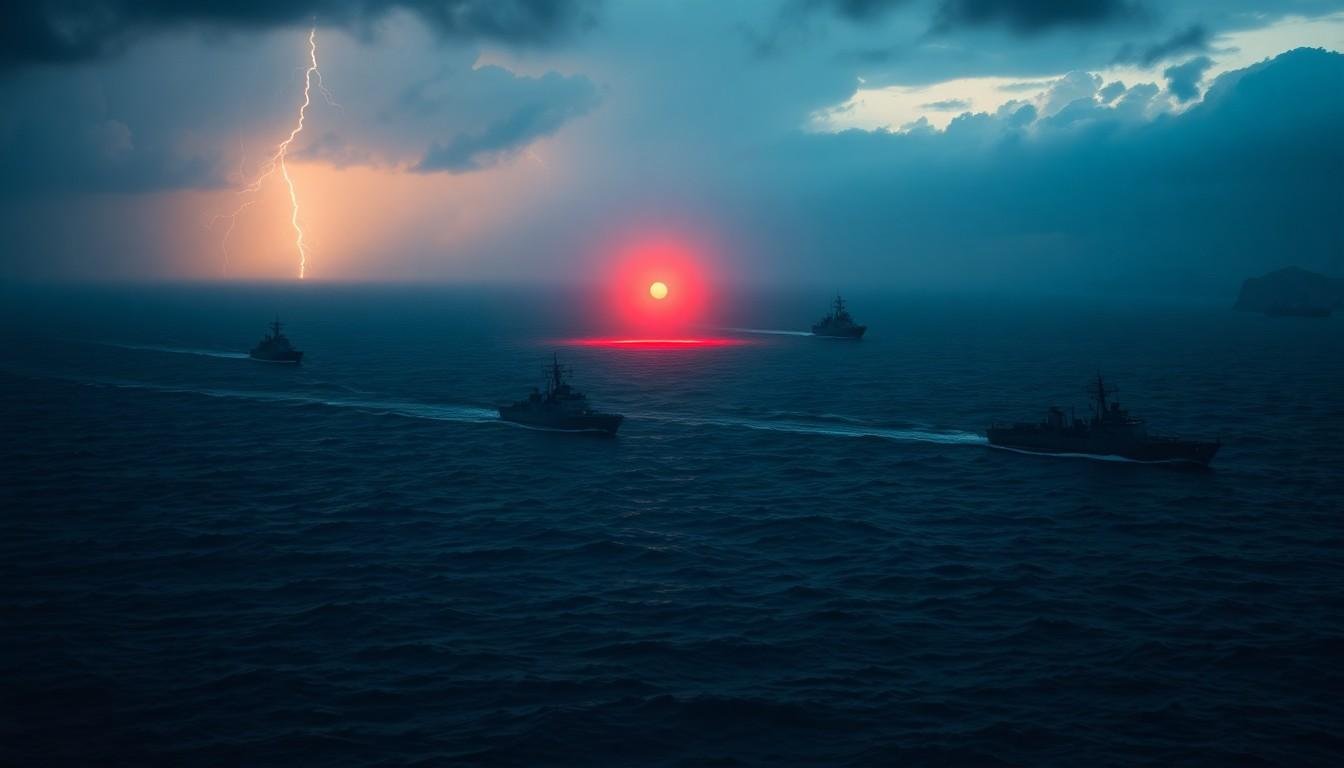
Iran moved on Monday, 7 September, to raise the stakes in the Gulf, saying it would soon announce an “exclusion zone” outside the Strait of Hormuz for ships it believes are trying to pass without its permission. Washington dismissed the plan, insisting the channel remains open and under US control, while US Central Command said the number of commercial vessels it has redirected under the blockade had risen to 94, up from 92 a day earlier. (
Enjoy this article as well as all of our content, including reports, news, tips and more. By registering or signing into your SRM Today account, you agree to SRM Today's Terms of Use and consent to the processing of your personal information as described in our Privacy Policy.Continue Reading This Article

That threat came less than 24 hours after US energy secretary Chris Wright used a round of Sunday television appearances to argue that American naval protection of tankers is likely to continue. On CNN, he said the Navy was “winning that battle”, and when asked whether escorted transits were now a “new normal”, he replied: “Well, it is today.” Wright also said the mission had become essential not only to keep commercial cargo moving, but to stop Iranian crude from leaving, a point echoed by The National in its account of the administration’s two-track blockade strategy. A US Maritime Administration advisory updated over the weekend also warned that the risk of Iranian attacks on merchant shipping in the Strait of Hormuz, the Gulf of Oman and the wider Gulf remains high. (gcaptain.com)
The military backdrop is becoming harder to separate from the oil story. On Saturday, US forces struck three Iranian crude carriers after the Islamic Revolutionary Guard Corps fired ballistic missiles at two US Navy warships, according to Central Command. The command said an aircraft carrier and a guided-missile destroyer evaded the attack without casualties, and identified the vessels hit as the M/T Downy off Kharg Island, the M/T Stark 1 near Jask and the M/T Kylo in the Gulf of Oman, which it said was destroyed after its crew had been told to abandon ship. Stars and Stripes, reporting the same operation, said the exchange ended a month of relative calm and reignited fears that the conflict could drag on. (centcom.mil)
Wright’s defence of the escort mission has not settled a more basic argument: how much oil is actually getting through. He has put the running average at about 9 million barrels a day through the southern channel, with up to another 5 million barrels moving through pipelines, and has defended an administration claim that “just under” 18 million barrels crossed on one day last week. But Al Jazeera, citing PortWatch, said overall transits had averaged only seven vessels a day since March, against roughly 100 ships and 20 million barrels a day before the war. The outlet also cited Kpler figures showing six vessels on Wednesday, 11 on Tuesday and five on Monday, while Lloyd’s List Intelligence counted about 12 a day from 26 August to 1 September, with some delay possible because ships have been making “dark transits” by switching off tracking beacons. Axios reported that analysts expect a firmer verdict only after cargoes reach buyers and appear in customs, port and stockpile data. Bob McNally of Rapidan Energy Group told the site: “We will know the truth or closer to it in a few weeks.” (aljazeera.com)
Even Monday’s trading and shipping picture remained unsettled. CBS, citing Reuters and Kpler data, reported that traffic through Hormuz had fallen to its lowest level since May, with an average of 10 ships a day on Sunday, down from more than 15 on Friday and well below pre-war levels of about 130 a day. That matters far beyond the Gulf because, before the war that began on 28 February, the strait handled about a fifth of the world’s traded oil and gas. (cbsnews.com)
In the United States, the economic hit is now landing squarely on motorists and freight companies. Associated Press reported that regular petrol averaged $4.14 a gallon heading into the Labor Day holiday, nearly a dollar above the same point last year and above the previous Labour Day weekend high of $3.82 set in 2012. Diesel reached a record national average of $5.85 a gallon on Friday. Tom Seng, an energy-finance professor at Texas Christian University, told AP: “Everything points to the Iran war and the Strait of Hormuz.” The same report noted that US refineries are already running at 98% capacity, while Ukrainian drone strikes on Russian refineries and weaker Chinese refining output are also tightening diesel supplies. (apnews.com)
Wright has tried to argue that relief could still come after Labor Day, but he has stopped short of guaranteeing it. On CBS’s “Face the Nation”, after Margaret Brennan asked whether Americans would see “three-dollar gas by September 20th”, he said the administration’s recent rule change would let refiners make more petrol and diesel with existing equipment and that, with summer demand ebbing, “prices headed downward is- is not an unreasonable expectation.” Yet AP noted that he also conceded on ABC that prices were higher than a year ago, saying: “Yes, they’re higher today, but we’re doing everything we can to push them down.” Brennan also pressed him on how the market could get from roughly $90 oil back towards the pre-war “$50 buck range”, underlining how far the administration still is from declaring victory. (cbsnews.com)
Diplomatically, the US is still searching for partners while regional powers hedge. Wright has said other countries should eventually help protect the route, and South Korea has signalled it is considering some form of participation, though no decision has been announced. On Monday, however, Iran warned Seoul that any military deployment alongside the US would have “serious consequences”. In Abu Dhabi, Anwar Gargash, an adviser to the UAE president, said “no single state” should control Hormuz, while CBS reported that Tehran and Muscat say talks are in their “final stage” on a temporary safe route that could eventually be registered with the International Maritime Organization. (gcaptain.com)
That leaves the confrontation poised between coercion and uncertainty. The National reported that Iran’s rial has lost more than 60% of its value since March, inflation is above 80% and the IMF expects the economy to shrink by 6.1% this year, helping explain Washington’s belief that economic pressure may yet force concessions. But the same dispute over the basic traffic numbers, together with Tehran’s new threat to police a wider zone around the strait, suggests the waterway is not returning to normal any time soon. (thenationalnews.com)
Source: Noah Wire Services
Subscribe to Industry Updates
Get the latest news and updates directly to your inbox.