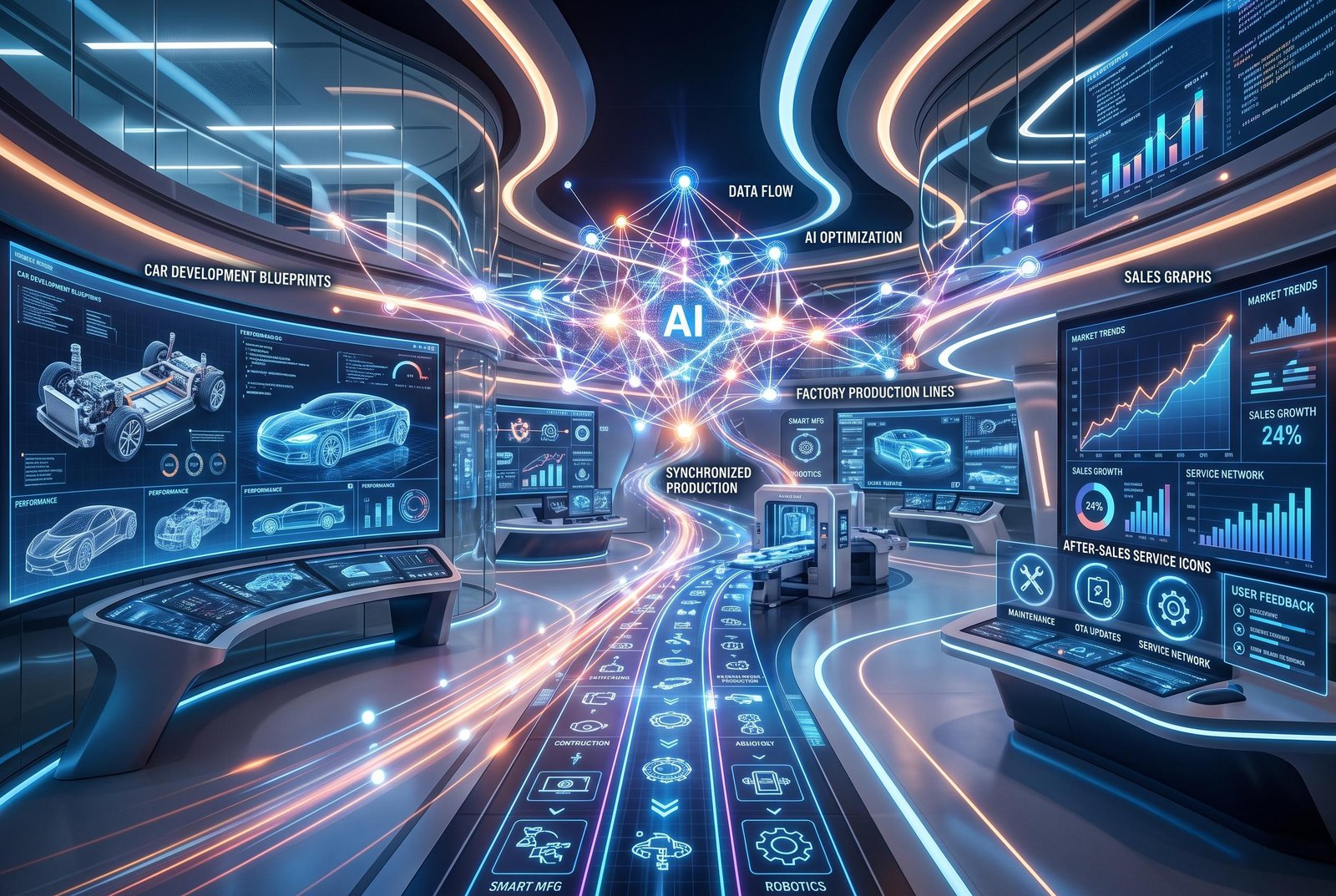
Mercedes-Benz is moving to embed artificial intelligence far more deeply into the way it designs, builds and brings vehicles to market, in a bid to shorten development cycles and tie together processes that have traditionally been handled in separate silos.
The German carmaker says its new PLM.AI programme will create an AI-native digital backbone linking development, procurement, production, sales and after-sales across the full vehicle lifecycle. In the company’s telling, t...
Continue Reading This Article
Enjoy this article as well as all of our content, including reports, news, tips and more.
By registering or signing into your SRM Today account, you agree to SRM Today's Terms of Use and consent to the processing of your personal information as described in our Privacy Policy.
he system is intended to replace a patchwork of disconnected workflows with a single, shared knowledge base in which data is available in real time and decisions can be made more quickly and with less duplication.
Mercedes-Benz says the initiative should cut development time by as much as 30 per cent, or roughly 17 months, while some individual engineering processes could become up to 50 per cent more efficient. The company is investing about half a billion euros in the project, underlining the scale of its attempt to use software and data architecture as a competitive advantage rather than simply a support function.
The programme sits within a broader push by Mercedes-Benz to make artificial intelligence a central part of its operations. The company has already been using AI in areas such as material-cost optimisation, approval processes, defect detection and software development, but these applications have mostly been confined to separate stages of the process. PLM.AI is designed to connect those islands, with the aim of making the underlying product data fully usable by AI systems.
One of the clearest examples given by the company is weight optimisation. A change to a single component can affect cost, crash performance, hardware, software and manufacturing at the same time. Mercedes-Benz says specialist AI agents will increasingly be used to analyse those interdependencies in parallel, making trade-offs visible earlier in the process and helping engineers avoid late-stage surprises.
The company is also looking to reduce its reliance on physical testing by using AI-supported simulations more intensively. Mercedes-Benz says that could ultimately halve the number of physical tests required, although it stresses that final product decisions will remain with human teams and that quality and safety standards will not be compromised.
To build the system, Mercedes-Benz is working with CONTACT Software on an open PLM core layer and with Siemens on AI-supported vehicle design, simulation and digital validation of the digital twin. The group says it wants to retain data sovereignty over the platform and the AI models built on top of it, while controlling the overall architecture, governance and global rollout itself.
The project fits into a wider “AI First” strategy at Mercedes-Benz, which the company says is intended to improve efficiency, accelerate innovation and make better use of data across the business, from development and production through to sales and service. The group has also been broadening its use of AI-powered automation in other parts of the organisation, including through a low-code platform that is meant to move AI from isolated pilots into everyday workflows.
For Mercedes-Benz, the message is clear: the next phase of automotive competition will not be defined only by batteries, software or styling, but by how effectively a manufacturer can connect all three through intelligent digital systems.
Source: Noah Wire Services