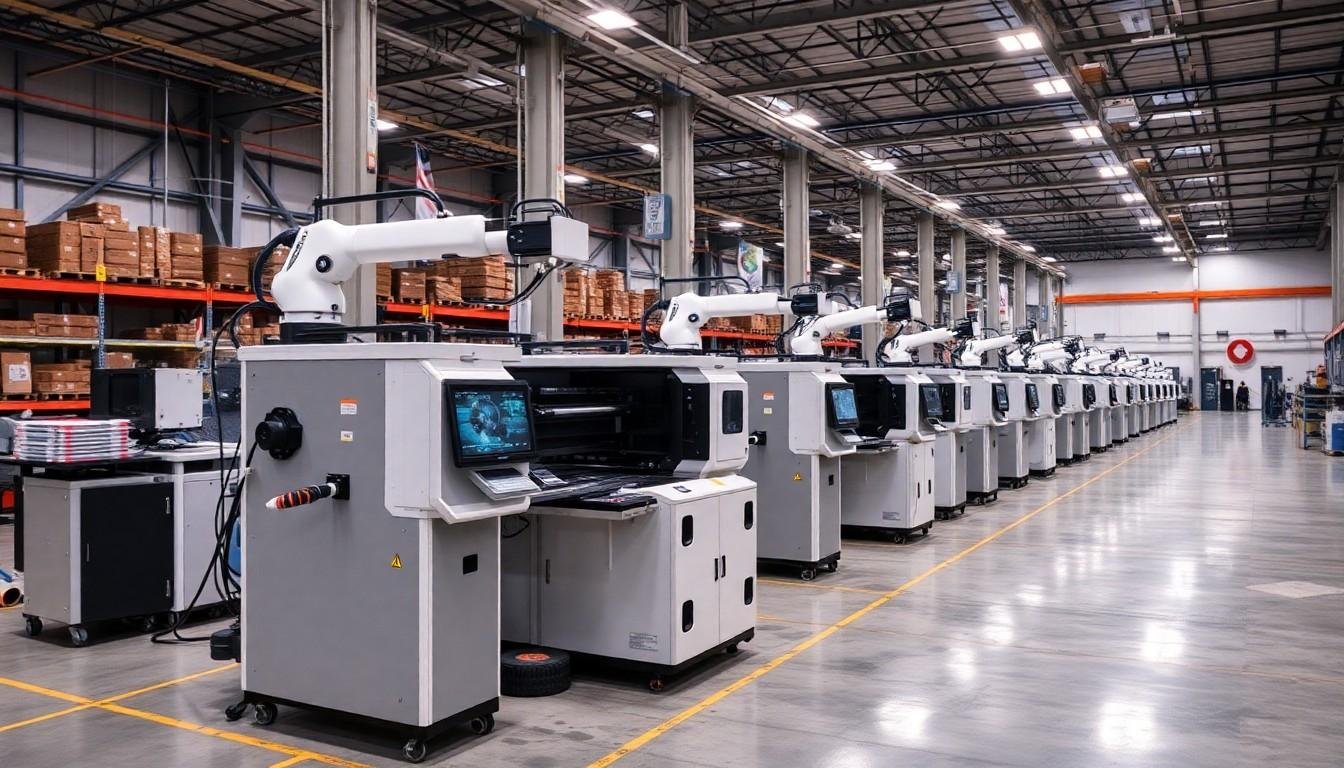
HP’s digital print strategy has helped turn what was once a specialist technology into a mainstream production method across labels, packaging and industrial applications, and the company is now framing the next phase as one of continuous, connected manufacturing rather than standalone presses.
That argument runs through a series of FuturePrint conversations that reflect how much the sector has changed over the past decade. What emerges is not just a story about faster print ...
Continue Reading This Article
Enjoy this article as well as all of our content, including reports, news, tips and more.
By registering or signing into your SRM Today account, you agree to SRM Today's Terms of Use and consent to the processing of your personal information as described in our Privacy Policy.
engines, but about packaging as a communications channel, supply chains as a strategic asset and automation as a response to rising complexity across production.
In one discussion highlighted by FuturePrint, HP’s Abel Sanchez Hermosilla-Martinez and Guy Bibi described how packaging is increasingly expected to do more than protect a product. It is now being used to carry brand stories, support short-run personalisation and create more immediate consumer engagement. Examples cited in the podcast included campaigns for Hershey’s and Toblerone, alongside AI-enhanced Nutella jars, underlining how digital print can support targeted marketing without requiring changes to the underlying product.
That wider shift is also visible in the way manufacturers think about speed and inventory. FuturePrint’s coverage of conversations with Jose Gorbea, Fernando Hernandez and Yael Barak centred on the pressure to build more agile and resilient supply chains in a volatile market. Digital production, by enabling output closer to demand and reducing stock risk, is increasingly being treated as a practical tool for managing uncertainty rather than simply a route to greater variety.
Cost pressure is adding another layer. In a separate FuturePrint podcast, Amir Raziel, HP Industrial Print’s head of strategy, described the combined effect of materials, logistics and energy costs as “printflation”, while also pointing to structural changes that are reshaping the industry: wider use of AI and automation, more resilient supply networks, sustainability becoming operational rather than aspirational, and a move towards service-led and data-driven business models.
HP has been making similar points in its own announcements. In May 2025, the company unveiled HP Nio, an AI agent designed to work with PrintOS, Site Flow and Brand Centre, in what it presented as a step towards more autonomous presses and fully connected workflows from creation to delivery. HP has also continued to position its software stack as central to productivity gains, not just the presses themselves.
That emphasis on automation fits with comments from Joan Perez Pericot, HP’s vice-president and general manager of Industrial Print Software and Solutions, who has described the sector as entering a fourth era of printing: intelligent automation. His argument is that labour shortages, supply chain disruption and the need for more responsive production systems require an enterprise-wide approach, with AI helping operators and managers reduce waste, improve throughput and support sustainability goals.
The sustainability debate has become more formalised as well. HP’s Carlos Lahoz discussed the Sustainable Print Manifesto on the FuturePrint Podcast, presenting it as a way to make environmental guidance more accessible to small and medium-sized printers, which make up much of the sector’s business base. The broader message was that sustainable production depends as much on shared standards and clearer language as on technology itself.
Community has also played a defining role in HP’s digital print story. Dscoop, the independent user network built around HP Indigo customers, marked its 20th anniversary as a reminder of how much peer collaboration has mattered to the industry’s development. Peter van Teeseling of Dscoop has said that independence has created space for both the user community and HP to innovate, with overlap between the two producing the most valuable ideas.
More recently, HP has been pushing the same message through its product and strategy events. At Dscoop Edge and again at FESPA in Barcelona, the company has stressed that the next gains in digital print will come less from press hardware alone and more from connected workflows, intelligent automation and software that reduces friction across the business.
Yoav Lotan has described that direction as part of a move away from equipment-centric operations towards smart, data-enabled ecosystems. The underlying theme is that print businesses will increasingly be judged on how well they integrate production, data and service, not just on the quality of the machine on the floor.
As FuturePrint prepares its H2 2026 editorial themes under the banner of Non-Stop Digital Printing, the trajectory is clear enough. Digital print is no longer being positioned as a useful alternative to analogue methods. It is being recast as a central production platform for a faster, more fragmented and more demanding market.
The next chapter, if HP and its partners are right, will be defined by scale, automation and connectivity. The technology is no longer merely catching up. It is beginning to set the pace.
Source: Noah Wire Services