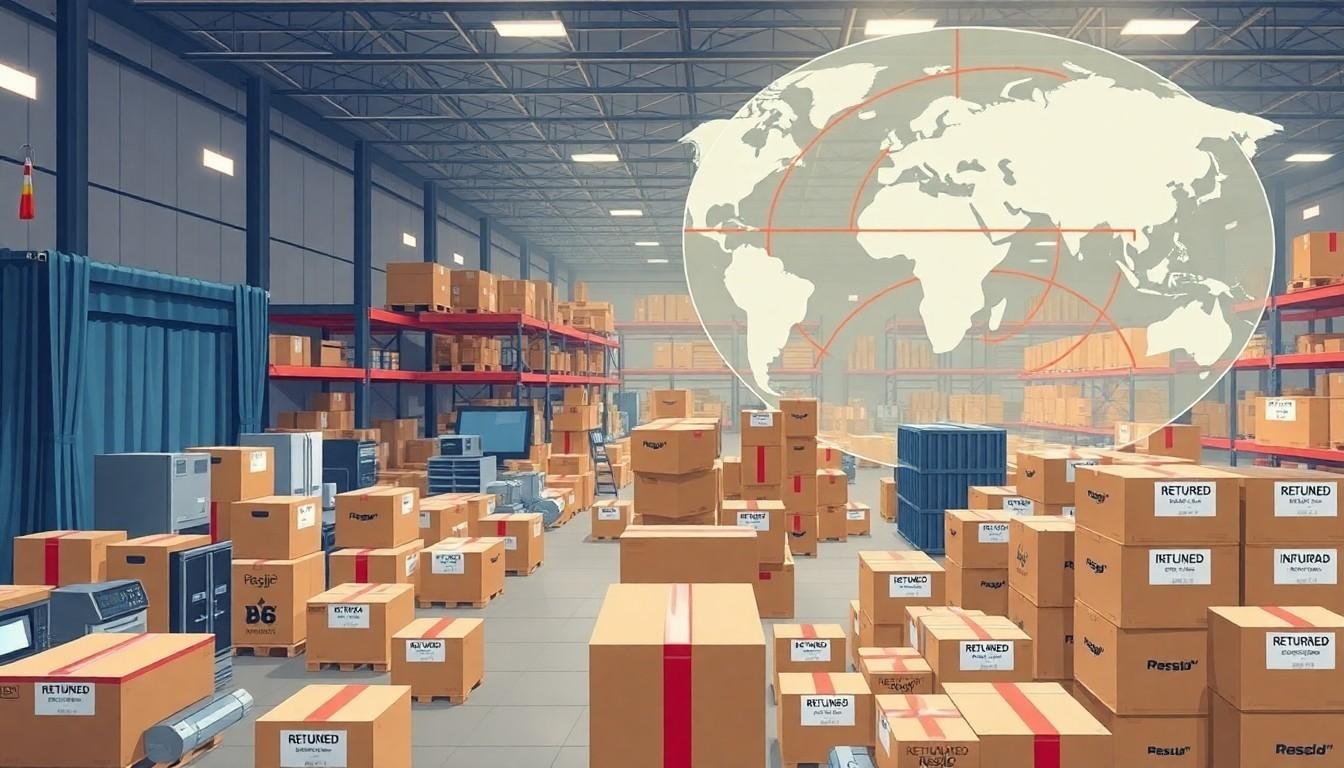
Costco’s famously permissive returns policy feeds a resale machine that is far more tightly controlled than most shoppers realise. B-Stock’s current Costco marketplace page and FAQ say the retailer’s liquidation channel is an official business-to-business operation, open only to approved buyers, with applications requiring a state resale certificate in the US or proof of business for overseas applicants, and with stock shipped only to a valid US address. The same FAQ says approv...
Continue Reading This Article
Enjoy this article as well as all of our content, including reports, news, tips and more.
By registering or signing into your SRM Today account, you agree to SRM Today's Terms of Use and consent to the processing of your personal information as described in our Privacy Policy.
al decisions are typically made within one business day and that there is no charge to apply. (
bstock.com)
That makes the auction site less a hidden members’ perk than a reverse-supply-chain tool. Costco’s own customer-service page still advertises a “Risk-Free 100% Satisfaction Guarantee”, but it also carves out a 90-day return window for televisions, computers, major appliances, cameras, mobile phones and other electronics. ConsumerAffairs reported in February that returns usually begin at the warehouse before being sent to regional depots for inspection and grading, with only the best items likely to be repackaged and put back on Costco shelves; opened food, perishables and badly damaged goods are more likely to be discarded. (customerservice.costco.com)
What turns up in liquidation is broader than simple buyer’s remorse. B-Stock’s own Costco material says the marketplace handles member returns, excess inventory and “rare shelf pulls”, meaning stock no longer considered saleable to regular shoppers. Recent explainers from SlashGear and AOL, both published on 7 September, said the lots span categories from clothing and sporting goods to major appliances and consumer electronics, and that Costco’s returns depot grades goods visually rather than testing whether they still work. In that system, Grade A/B stock can include either returns or unsold merchandise, while Grade C/D stock may arrive damaged or with parts missing. (bstock.com)
The bargains can also be more complicated than they first appear. B-Stock says Costco lots are usually sold by the pallet, with less-than-truckload consignments covering one to 10 pallet spaces and full truckloads starting at 11; smaller boxed “small pack” shipments also appear. Techwalla’s guide to Costco Canada liquidation warned buyers not to focus on the hammer price alone, arguing that freight, fees, labour, repairs and disposal losses all have to be included before a bid makes sense. Costco’s US terms add more possible expense: shipping is the buyer’s responsibility, a liftgate can cost $65, residential delivery $90, and buyers have five business days after delivery to report missing or damaged goods. (bstock.com)
There is also a dispute over the scale of the trade. SlashGear and AOL both said thousands of Costco items go into B-Stock auctions every week. Techwalla pushed back on that claim on the same day, saying B-Stock’s own public wording supports only a broader figure: thousands of liquidation auctions running across more than 50 marketplaces in total, not a verified weekly count for Costco alone. What is clear from B-Stock’s official pages is that Costco’s liquidation network is not confined to the US. Costco Canada has its own dedicated marketplace for approved Canadian business buyers, with payment collected in Canadian dollars and stock shipping from facilities in Vaughan, Ontario, and Airdrie, Calgary. (slashgear.com)
The resale rules are stricter than the marketing around “liquidation pallets” often suggests. B-Stock’s Costco terms say successful buyers must not identify Costco as the seller, must not advertise that the goods came from Costco, must strip labels and price stickers tying products to the chain, and must not use Costco’s name or logos in promotion. The same terms require resellers to keep clear of any Costco warehouse within a five-mile radius and to remove personal information and software from devices with digital storage capability before resale. B-Stock’s public marketplace page says auctions are currently closing daily from 14 US locations, including Atlanta, Dallas, Fresno, Monroe Township and West Palm Beach. (bstock.com)
The importance of that secondary market is now showing up on the high street as well as on wholesale auction platforms. Axios Chicago recently reported on BuyWander, a new suburban shop in Addison selling returned, excess and out-of-season goods from about 40 retailers, with collection from its warehouse rather than home delivery. Axios said its founders pitched the concept as a home for “misfit inventory”, underscoring how returns from chains such as Costco, Amazon, Target and Walmart are now substantial enough to support dedicated retail formats of their own. (axios.com)
The upshot is that a returned toaster, tablet or jacket may have several possible fates: a quick trip back to the shelf if it is nearly new, a pallet slot in a wholesale auction if it is saleable but inconvenient, a refurbished second life through another seller, or the bin if it is food, perishable or too far gone. What Costco presents to members as a broad satisfaction guarantee is matched, behind the scenes, by a formal liquidation system designed to keep stock moving, recover value from overhangs and stop the returns desk from becoming a dead end. (consumeraffairs.com)
Source: Noah Wire Services