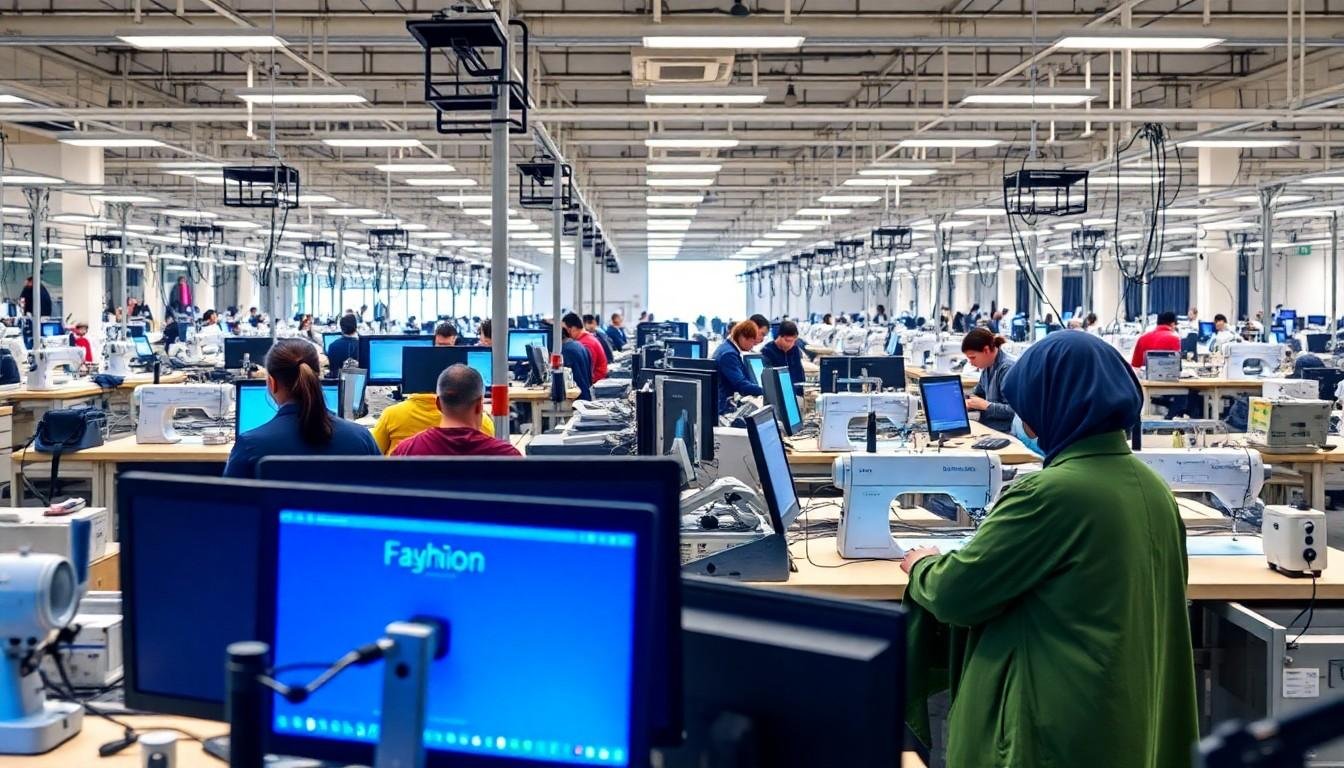
PDS and Future Fashion Assembly have unveiled a collaboration aimed at tackling one of fashion’s most persistent problems: the gulf between promising technology and actual use on the factory floor.
The initiative brings together PDS, a global sourcing and manufacturing group with a large network of brands and factories, and Future Fashion Assembly, a platform created to help fashion businesses identify and deploy vetted technology. According to the companies, the goal is to r...
Continue Reading This Article
Enjoy this article as well as all of our content, including reports, news, tips and more.
By registering or signing into your SRM Today account, you agree to SRM Today's Terms of Use and consent to the processing of your personal information as described in our Privacy Policy.
eplace ad hoc tech scouting with a more disciplined route from discovery to pilot to wider adoption.
The timing reflects a wider frustration across the industry. Fashion has spent years talking about artificial intelligence, circularity, digital passports and other innovations, yet many factories and sourcing teams still operate much as they did a decade ago. Margins remain tight, materials are more expensive and supply chains are still often opaque. The problem, as the partnership frames it, is not a shortage of ideas but a shortage of systems that can convert those ideas into commercially workable tools.
For PDS, the idea emerged from a late-night conversation in Mumbai between Paul Wright, the group’s executive director for ESG, and Ankur Agarwal, head of venture capital investments at PDS Ventures, after an industry technology summit. PDS Ventures already backs more than 80 startups and has direct links with more than 250 brands and 700 partner factories, but translating that network into practical solutions for specific operational pain points had remained a manual process.
Future Fashion Assembly was founded in London by Sofia Strazzanti, who has spent 25 years working across design, manufacturing and wholesale. She said the platform was designed to speak the language of commerce, not just innovation theatre, and to help brands distinguish between useful tools and marketing noise. In an interview with Sourcing Journal, she said the partnership combined PDS’s manufacturing reach with FFA’s vetting and orchestration model, creating a route from a real business problem to a tested solution.
The collaboration is built around FFA’s Digital Innovation Showroom, powered by its Forward intelligence engine and developed with technology partner Remarkably. Rather than acting as a static directory, the platform groups innovations by part of the value chain, from sourcing and product development through to logistics, retail and circularity. The companies say every listed innovator is screened for commercial readiness and scalability, with case studies presented in business terms rather than technical jargon.
FFA also points to examples intended to show the financial case for incremental innovation. Strazzanti said supply chain auditing recovered £1.5 million in overpaid import duty in one case, while a denim producer saved $120,000 a month by changing its washing process without replacing machinery. The platform also says AI-led product discovery can materially lift e-commerce conversion rates.
Beyond the digital marketplace, the partnership includes workshops for brands and a concierge service that supports longer pilots over three to six months. The idea is to define a commercial goal, match it with a suitable verified technology and test it in a live supply chain.
That operational setting matters. PDS says its own factories and manufacturing partners provide a way to prove whether a tool works under real production pressure, not just in a presentation. For an industry that has often treated innovation as an expensive side project, the collaboration is being pitched as a more practical model: focused, measurable and designed to deliver value quickly.
The broader message is that fashion innovation may be shifting from aspiration to execution. As Strazzanti told Sourcing Journal, meaningful progress is more likely to come from targeted interventions with clear metrics than from sweeping transformation programmes that drain time and resources before producing anything tangible.
Source: Noah Wire Services