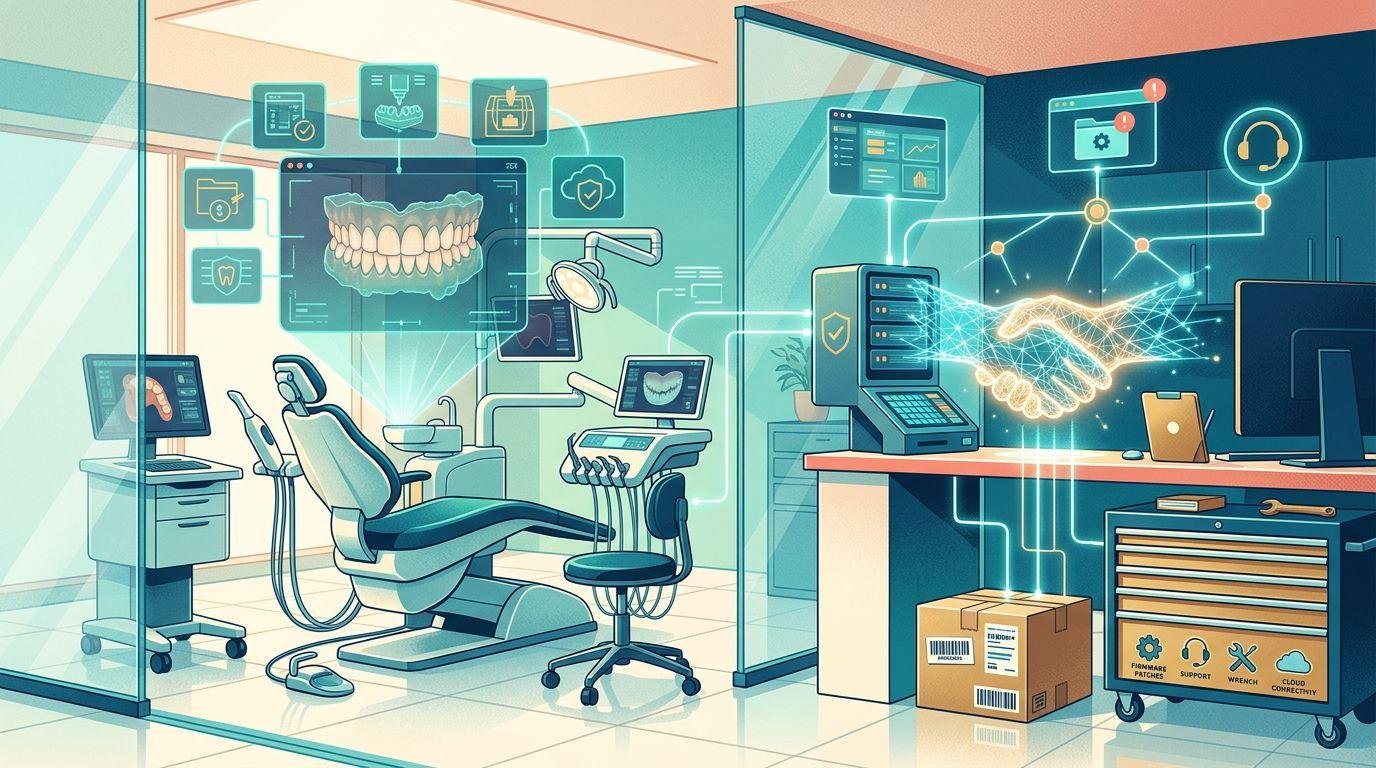
As dentistry becomes ever more digital, the value of strong vendor relationships has not diminished; in many practices, it has become more important. Holly Sadowski, writing for the Association of Dental Office Management, argues that while online ordering systems, automated stock tools and virtual demonstrations have made procurement faster and more convenient, they have not replaced the need for people who know a practice well and can solve problems quickly.
That view is echo...
Continue Reading This Article
Enjoy this article as well as all of our content, including reports, news, tips and more.
By registering or signing into your SRM Today account, you agree to SRM Today's Terms of Use and consent to the processing of your personal information as described in our Privacy Policy.
ed across the wider dental sector, where technology is increasingly framed not as a substitute for relationships but as a reason to deepen them. Incisive, a dental lab resource, says the best laboratory partners in the digital era are those that can work confidently with modern materials and digital workflows while remaining transparent, consistent and collaborative. In other words, the relationship still matters, but so does technical fluency.
For Sadowski, one of the clearest benefits of a trusted representative is practical insight before a purchase is made. Digital catalogues can make products look interchangeable, yet small differences in design, operation or workflow can have a major impact on day-to-day efficiency. She points to the purchase of an autoclave as an example: a unit that matched the old machine’s dimensions still created unexpected bottlenecks because of the way instruments had to be loaded. A representative familiar with the product could have highlighted that detail in advance and prevented wasted time.
That kind of guidance is especially valuable when practices are trying to keep pace with constant change. Representatives do more than sell equipment, Sadowski writes; they often use it themselves and can therefore explain how it performs in real clinical settings. That shared knowledge can help offices feel more confident when introducing new techniques, products or protocols, while also improving the patient experience by ensuring teams are better equipped and better informed.
The importance of connected workflows is a recurring theme in digital dentistry. Avadent, in a guide to evaluating a prosthodontic lab partner, says an effective relationship should join clinical records, digital design, manufacturing and delivery into a single accountable process. The company argues that good lab partners should be able to clarify missing information, support clinical decisions and preserve digital files so future replacements are predictable. DentistryIQ, meanwhile, notes that better communication with laboratories depends on stronger digital records, photography and intraoral scanning workflows, which can reduce remakes and improve restorative outcomes.
Sadowski also stresses the role of human support when things go wrong. Equipment faults, error messages and long waits on third-party helplines can stall a busy surgery and disrupt the patient journey. A local representative, she argues, may be able to diagnose the issue more quickly, draw on closer ties with the manufacturer or even solve the problem in person. That sort of responsiveness can be the difference between a minor interruption and a day lost to avoidable downtime.
This emphasis on partnership is also reflected in how some companies now position themselves in the market. Oryx Dental says it is building a connected ecosystem combining technology, expertise and strategic alliances, including integrations with firms such as Pearl and Overjet, to strengthen clinical and patient-centred care. Nobel Biocare similarly promotes integrated digital workflows, training and support across a range of customer groups, from dental service organisations to universities and new graduates. The direction of travel is clear: digital tools are increasingly being sold alongside support, advice and training, not merely as standalone products.
Sadowski’s broader point is that vendor relationships should be personal, not transactional. A practice can set boundaries, choose how often it meets representatives and decide how communication should work, yet still benefit from a partnership that feels responsive and tailored. She describes vendors who know when to call, when to visit and when simply to drop off information without expecting a meeting. That flexibility, she suggests, is part of what makes the relationship worthwhile.
Even in an age of automated systems and remote support, the dental office still relies on trust, continuity and direct access to people who understand its needs. The technology may have changed the route to the sale, but it has not removed the need for human connection.
Source: Noah Wire Services