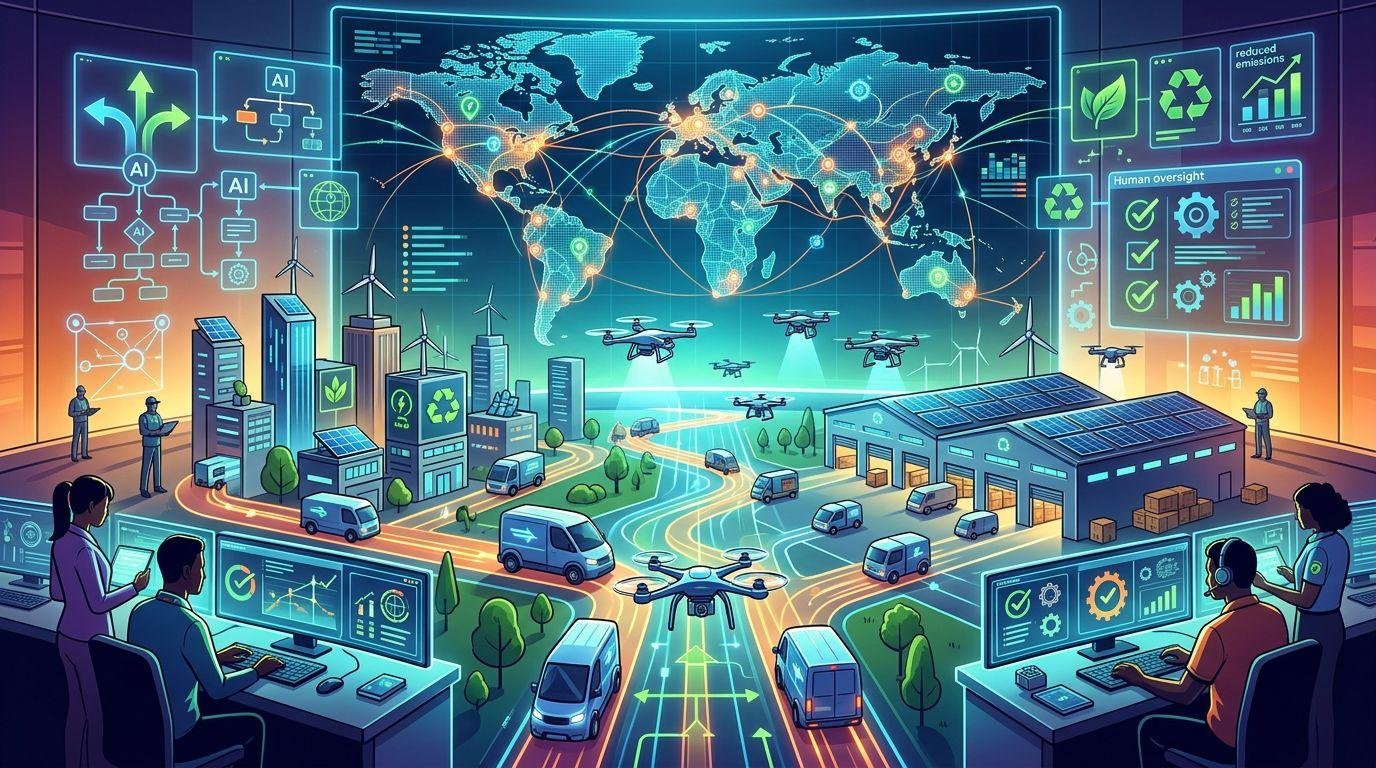
Artificial intelligence is moving from a support tool to an increasingly independent force in logistics, according to DHL’s latest Logistics Trend Radar, which argues that supply chains are entering a new phase of automation and decision-making.
The report, Logistics Trend Radar 8.0, says the most important development is Agentic AI: systems that can plan, decide and carry out tasks on their own in pursuit of defined goals. DHL says this marks a clear departure from earlier A...
Continue Reading This Article
Enjoy this article as well as all of our content, including reports, news, tips and more.
By registering or signing into your SRM Today account, you agree to SRM Today's Terms of Use and consent to the processing of your personal information as described in our Privacy Policy.
I tools that mainly answered prompts or processed information, and instead points to software that can work alongside human experts while taking on routine operational actions with far greater autonomy.
The company says the technology is already reshaping how logistics networks are managed. Its report points to AI analytics and related applications that can spot patterns, anticipate disruption, forecast outcomes and suggest interventions faster and at a larger scale than traditional systems. In practical terms, that could mean identifying impending inventory shortages, redirecting shipments when routes are interrupted, or adjusting transport capacity in real time.
Katja Busch, DHL’s chief commercial officer and head of DHL Customer Solutions and Innovation, said: “Supply chains are changing faster than ever as AI and workforce trends increasingly influence one another. The organizations that succeed will be those that understand these shifts early and are able to turn them into practical advantages for their business and their people.”
The report also broadens the discussion beyond software alone. DHL highlights AI Commerce, which is changing the way consumers and businesses discover and buy products, and the Compute Economy, which underlines the strategic importance of computing infrastructure and data centre logistics. Humanoid robots are described as a longer-term development with potential to transform automation in physical settings.
At the same time, DHL stresses that the workforce remains central to logistics even as systems become more capable. Thomas Ogilvie, the group’s chief human resources officer, said: “Technology is transforming the way we work, but people remain the driving force behind every successful supply chain. We are already seeing AI assistants, wearable devices, and collaborative robots helping employees work more safely, reduce repetitive work, and focus on higher-value tasks.”
That emphasis on people comes with a warning that greater autonomy also brings greater responsibility. The report flags AI Ethics and Cybersecurity 2.0 as increasingly important trends, arguing that organisations will need stronger governance, resilience and security as intelligent systems become more deeply embedded in operations.
DHL also places sustainability at the centre of the logistics transition. The trend radar points to decarbonisation, sustainable fuels, circularity and the electrification of both heavy and light vehicles as key areas of change, alongside efforts to redesign supply chains for reuse and better resource efficiency.
The latest edition builds on previous DHL trend reports, which had already identified generative AI, computer vision and advanced analytics as important themes. This time, the company says, the shift is more profound: AI is no longer just helping people interpret supply chains, but is beginning to act within them.
Source: Noah Wire Services